
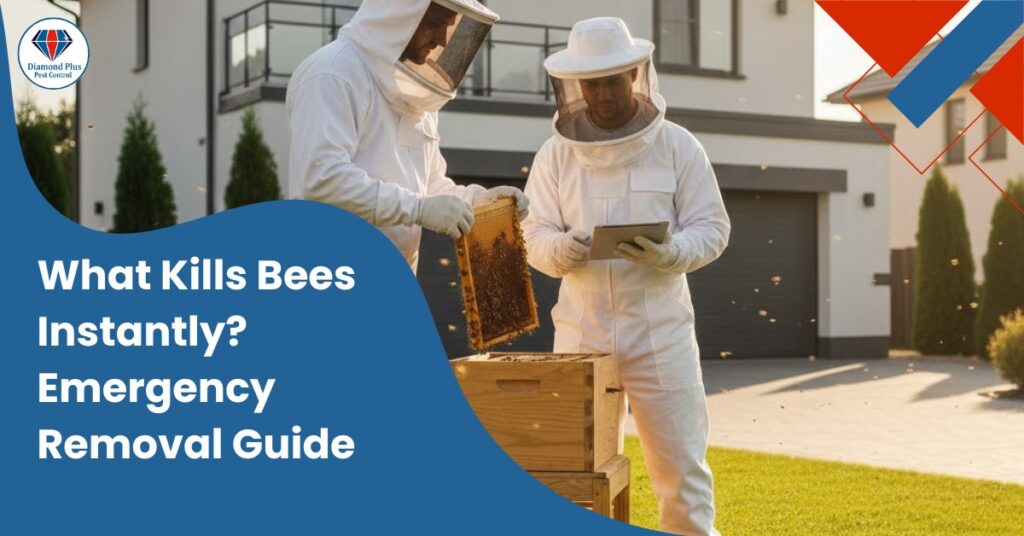
Finding bees in your home, yard, or walls can trigger panic. When people feel unsafe or unprepared, they often search for terms like “what kills bees instantly” or “how to get rid of bees quickly.” But despite the frightening moment, the fastest way to make the situation worse is by trying to kill bees yourself.
The U.S. Environmental Protection Agency (EPA) and multiple university extension programs warn that misusing pesticides harms ecosystems, risks human health, and often fails to eliminate the root of the problem.
we will help you understand the real dangers Emergency Bee Removal , what actually kills bees (and why you shouldn’t do it), how to assess emergencies, and the safest path forward.
Why People Search “What Kills Bees Instantly” And Why DIY Is Dangerous
Homeowners don’t usually want to harm bees; they want protection. Fear and urgency lead to quick decisions, but killing bees creates bigger issues.
• Bees become aggressively defensive
Spraying or swatting triggers alarm pheromones that cause mass stinging behavior. Even calm bees defend their colony when threatened.
• Family and pets are exposed to chemicals
Improper pesticide use contaminates indoor air, surfaces, and soil. Many bee-toxic chemicals are regulated for good reason.
• The hive stays intact
Killing visible bees does nothing to the thousands inside the wall. The hive either continues operating or collapses and rots, creating odors, mold, and pests like ants and rodents.
• It may violate local or federal laws
Some pesticides are illegal for homeowner use, especially on honey bees, which are protected in many regions.
• It ignores the root cause
DIY killing only affects the bees you can see. The real issue the colony remains.
This is why the goal should never be “kill instantly.” It should be remove safely and permanently.
Can Anything Kill Bees Instantly? (The Real Answer)
Yes, a few things can kill bees quickly, but homeowners should ever use none.
1. Highly toxic pesticides
Certain insecticides kill bees on contact, but:
- They’re tightly regulated.
- Many require a licensed applicator.
- They harm children, pets, and beneficial insects.
- They contribute to pollinator decline.
EPA and pollinator-protection programs warn strongly against using bee-toxic pesticides without professional oversight.
2. Extreme temperatures
Heat and freezing can kill bees, but using temperature to eliminate a colony is unsafe and damaging to your home. This is only seen in controlled lab or commercial environments — never as a DIY method.
3. Soapy water
Some online advice suggests soap as a quick killer. While it can suffocate insects, extension programs warn against it because:
- It doesn’t remove the hive.
- It leaves honey, brood, and pheromones behind.
- It encourages reinfestation.
- It can trigger defensive behavior.
- It’s inhumane and environmentally harmful.
Bottom line:
The right question isn’t what kills bees, but how to remove them safely and correctly.
How to Know If Your Bee Situation Is an Emergency
Not every bee encounter is dangerous. Identifying the situation helps you take the right next step.
1. NOT an emergency
- Temporary swarm on a branch or fence. Swarms are gentle and normally leave in a few hours.
- Bees visiting flowers. A sign of normal pollination.
- Solitary bees near the ground. Most solitary bees don’t sting.
2. POSSIBLE emergency
- Bees entering holes in siding, roof edges, or brick mortar. This suggests a developing colony inside the structure.
- Bees entering vents, chimneys, or attic gaps. Structural colonies grow quickly and cause damage.
- A swarm near doors or windows. Increases accidental contact.
University extension programs recommend professional help for any colony inside walls or structures.
3. IMMEDIATE emergency
- Multiple stings.
- Bees inside living spaces.
- Someone with allergies or asthma nearby.
- Loud buzzing or scratching inside a bedroom wall.
In these cases, call a professional or emergency services right away.
Emergency Bee Safety Guide (Step-by-Step)
When bees appear unexpectedly, reacting correctly protects everyone, including the bees.
1. Move people and pets indoors
Distance prevents stings. Close all windows, doors, and blinds. Pets should be secured since sudden movement or barking can provoke bees.
2. Do NOT spray anything
EPA and university guidelines strongly warn against using pesticides, soapy water, gasoline, or homemade sprays.
Spraying bees can cause:
- Aggressive colony defense
- Chemical exposure indoors
- Hive collapse inside walls, leading to odor, mold, and pests
Spraying feels quick but guarantees long-term problems.
3. Identify the situation from a distance
- Swarm: Harmless cluster that usually moves on.
- Established colony: Bees entering a single hole requires professional removal.
- Indoor bees: High urgency; bees have accessed interior voids and may spread.
4. Maintain a buffer of 10–15 feet
Bees avoid conflict unless provoked. Stay back, avoid loud equipment, and let neighbors know if the hive is near shared property.
5. Call the correct professional
A. Local beekeeper, best for outdoor swarms
Beekeepers often remove swarms for free or low cost. Diamond Plus Pest Control offers Bee Removal and Extermination services In all 5 NYC Broughs.
Beekeepers can:
- Capture and relocate swarms safely
- Preserve colonies for pollination
- Prevent unnecessary extermination
B. Licensed bee removal or pest specialist — best for structural colonies
Once bees enter walls or attic spaces, DIY becomes dangerous. University extensions recommend professionals for structural hive removals.
Experts can:
- Locate the hive using inspection tools
- Remove queen, workers, brood, and honeycomb
- Clean and sanitize the cavity
- Seal entry points to prevent return
This ensures the issue is resolved fully and safely.
Why Killing Bees Doesn’t Work (And Makes Things Worse)
Even if someone manages to kill bees at the entrance, the hive inside the structure remains the real danger. A colony is an ecosystem, thousands of bees, dozens of pounds of honey, layers of wax, heat, moisture, and pheromones. DIY “instant kill” attempts create far more chaos than relief.
Here’s what most online DIY guides fail to mention:
• The hive stays alive or decays, causing secondary infestations
Dead bees mixed with melting comb and dripping honey create a perfect storm:
- Ant infestations
- Cockroach outbreaks
- Rodent attraction
- Mold and mildew growth
- Strong sour or rotten odors
- Structural staining and wood rot
The hive becomes a rotting biological mess inside your walls.
• The pheromone trail remains active
Bees communicate through smell. Even after death, pheromones tell new swarms:
“This cavity is a good home.”
That means another swarm may arrive in weeks or months.
• DIY pesticides spread into your living space
Sprays can seep through drywall, cracks, insulation, light fixtures, and air vents. You end up breathing chemicals that were never meant for indoor environments.
• Bees may retreat deeper into the structure
When threatened with sprays, bees often migrate into new areas; bedrooms, attic spaces, closets, or wall voids.
• Killing honey bees is often illegal or restricted
Many regions have regulations that discourage or restrict killing honey bees due to their ecological importance.
Professional removal prevents all of this which is why experts, the EPA, and university institutions consistently recommend removal, not killing.
Safe & Humane Bee Removal (What Experts Recommend)
Across environmental agencies, university extension offices, and beekeeping organisations, one message appears again and again:
Do not kill bees; remove them safely and correctly.
Proper professional removal provides long-term protection and preserves local pollinators.
Professional removal typically includes:
- Inspection or thermal imaging to locate the full hive
- Safe opening of walls, soffits, ceilings, or siding
- Live removal of queen and workers when possible
- Full extraction of honeycomb, brood, wax, and residue
- Cleaning and deodorizing the cavity
- Sealing all entry points
- Preventing reinfestation through exclusion work
Why this method works:
- Protects vital pollinators
- Keeps your family safe
- Prevents hidden rot and damage
- Removes pheromones so bees don’t return
- Aligns with EPA and university recommendations
- Solves the problem permanently
This is the gold standard for bee removal.
NYC Bee Removal Challenges (And Why You Need a Pro)
Bee removal in New York City comes with challenges that homeowners in suburban or rural areas never face. Dense architecture, older buildings, and limited access points make DIY removal incredibly risky.
Here’s why professional help is non-negotiable in NYC:
• Thick brick walls hide hive growth
NYC’s brick structures mask sound and vibration. Colonies can reach 40,000+ bees before anyone notices.
• Brownstones and pre-war buildings have vulnerable mortar joints
These gaps make ideal entry points for scouting bees. Once inside, bees spread through wall cavities rapidly.
• Multi-family buildings increase sting risk
Shared walls, hallways, and courtyards mean more people, especially children and seniors, are at risk if bees feel threatened.
• Rooftop, exterior, and fire escape access is limited
Many NYC hives are located in hard-to-reach areas: parapets, gutter lines, vents, AC sleeves, and soffits.
Professionals have the ladders, equipment, and permits to access them safely.
• Bees exploit small architectural gaps
NYC homes are full of micro-openings around:
- Air conditioners
- Window frames
- Conduit lines
- Cable penetrations
- Bricks and masonry gaps
These entry points must be sealed properly after removal to prevent return visits.
Conclusion
The real question isn’t “What kills bees instantly?” It’s “What keeps your home, family, and the bees safe?” While certain pesticides can kill bees quickly, environmental agencies and university experts all agree: DIY bee killing is dangerous, ineffective, and often illegal.
Safe, humane removal by a beekeeper or licensed professional is the only real emergency solution that protects your home and prevents reinfestation.
Need emergency bee removal in NYC?
We provide fast, safe, humane hive removal and repair across all five boroughs. If you’re in Manhattan, Brooklyn, Queens, the Bronx, or Staten Island, DIY isn’t just ineffective, it’s dangerous.
You need trained bee removal experts or professional beekeepers right away.
Stay safe — call our team now.
FAQs
1. What kills bees instantly?
Highly toxic pesticides can kill bees quickly, but EPA guidelines state that misusing them is unsafe, harmful to pollinators, and not recommended for homeowners. Humane removal is the preferred option.
2. Is it illegal to kill bees?
In many areas, yes — especially honey bees. Local laws and environmental policies often require relocation rather than extermination.
3. Should I call a beekeeper or pest control?
For outdoor swarms, a beekeeper is ideal. For bees inside walls or structures, extension services recommend trained specialists or licensed professionals.
4. Will bees go away on their own?
Swarms sometimes leave within 12–48 hours. Established colonies inside walls almost never go away and get worse over time.
5. Can I use dish soap to kill bees?
While soap can harm bees, university programs strongly discourage this due to safety risks, hive damage, and legal concerns.
6. How do professionals remove bees?
They locate the hive, remove the colony alive when possible, extract comb, clean the area, and seal entry points to prevent returns.