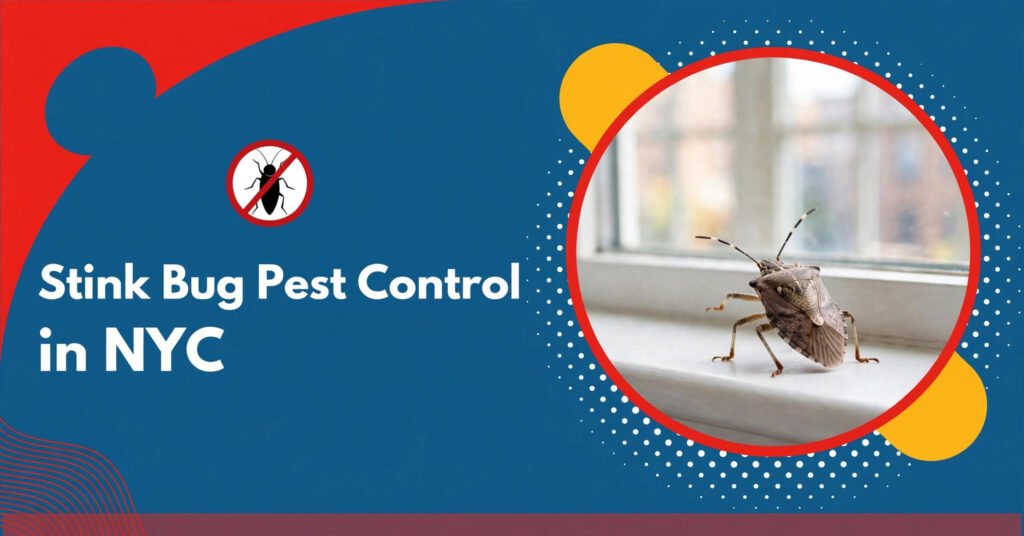
Stink bugs show up in New York City homes every fall — usually on warm, sunny walls, around windows, and in attics — and once a few find their way in, more tend to follow. The brown marmorated stink bug, the species most common in the NYC area, does not bite, sting, or damage your home, but it is a stubborn nuisance: it gathers in large numbers, hides in wall voids all winter, and releases a strong, unpleasant odor when disturbed or crushed. Diamond Plus Pest Control provides stink bug pest control in New York City for homes, apartments, and businesses — safe removal of the insects you can see, sealing of the gaps they use to enter, and practical prevention so they do not come back next fall. Call (718) 427-6200 to schedule a free inspection.
What Are Stink Bugs?
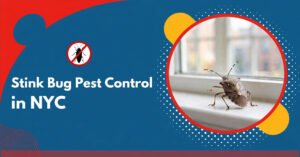
The brown marmorated stink bug is a shield-shaped insect about 1/2 inch long, mottled brown-grey in color, with light bands on its antennae and dark bands on the edges of its abdomen. It is originally from East Asia and has spread across much of the United States over the past two decades, including the New York City area. Stink bugs feed on plants outdoors during spring and summer — fruits, vegetables, and ornamental trees — and are mostly an outdoor insect until the weather turns cold.
Why Stink Bugs Invade NYC Homes in Fall
As temperatures drop in September and October, stink bugs look for a warm, sheltered place to spend the winter. Your home is ideal: sun-warmed exterior walls, gaps around windows and doors, attic vents, and chimneys all offer easy entry. They are strongly attracted to south- and west-facing walls, which stay warmest in the afternoon — so brownstones and houses with sunny exposures often see the most activity. Once inside, stink bugs settle into wall voids, attics, and ceiling spaces, where they stay mostly inactive until a warm spell wakes them up. That is why homeowners often find live stink bugs crawling on windows in January or February: the insect was overwintering inside all along.
Signs of a Stink Bug Problem
The most obvious sign is the insects themselves — slow-moving, shield-shaped bugs on walls, ceilings, window sills, and light fixtures, especially on the sunny side of the building. You may also notice them in attic spaces, behind curtains, or clustered around window frames. A faint, cilantro-like odor in a room can indicate that stink bugs have been disturbed or crushed nearby. Unlike roaches or rodents, stink bugs leave no droppings or gnaw marks, and they do not nest inside your home — they are simply sheltering there until spring.
What Not to Do — Don’t Squash Them
The worst thing you can do with a stink bug is squash it. Crushing the insect releases the defensive odor the species is named for, and the smell can linger on surfaces and fabrics. Vacuuming large numbers of them has the same problem — the vacuum bag or canister will smell for weeks. Do not spray insecticide on stink bugs indoors either: it does not prevent more from entering, and it leaves pesticide residue in living spaces. The right approach is removal without crushing (see below), followed by sealing the entry points so the next wave cannot get in.
Our Stink Bug Removal Process
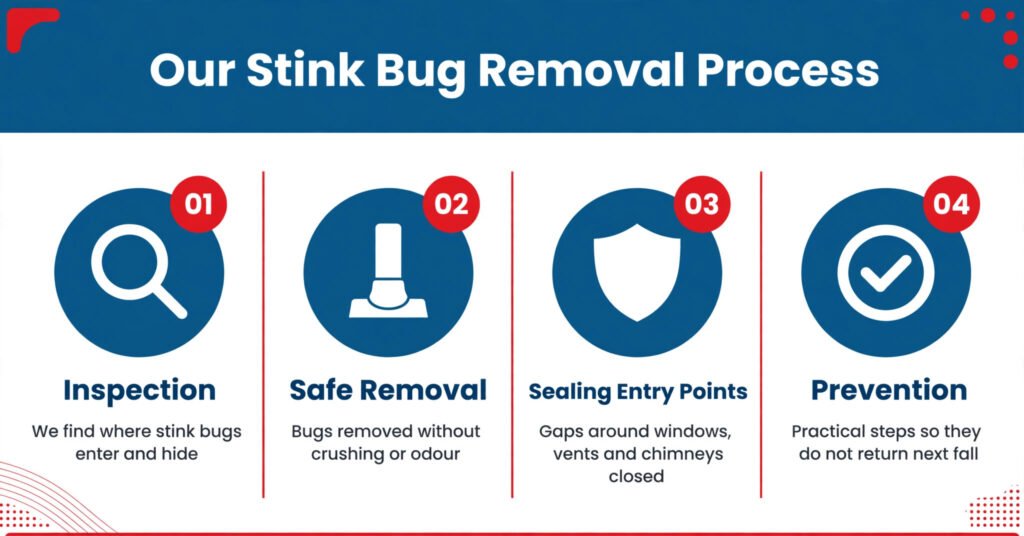
Diamond Plus Pest Control starts with an inspection of your property’s exterior and the rooms where stink bugs appear. We identify the entry points — gaps around windows, doors, vents, utility lines, and rooflines — and the sheltered spaces where insects are gathering. Visible stink bugs are removed safely without crushing, and we advise you on the sealing and screening work that keeps them out. For large aggregations in attics or wall voids, we can recommend targeted exterior treatment timed for the fall entry period, when it does the most good. Treatment is planned around your household, including children and pets.
How to Keep Stink Bugs Out
Exclusion is the most effective long-term stink bug control. Seal cracks around windows, doors, and siding with caulk; repair damaged window screens and add fine mesh over attic and soffit vents; check the seals around air-conditioning units, dryer vents, and utility penetrations. Keep exterior lights near entry points to a minimum in early fall — stink bugs are drawn to light — and trim back vegetation touching the building. Inside, a few stink bugs can be picked up with a tissue or a jar and released outside; for larger numbers, use a vacuum with a disposable bag and empty it outdoors immediately.
When to Call a Professional
A handful of stink bugs in fall is normal and manageable on your own. Call a professional when you are finding dozens of them, when they appear in rooms throughout the house, when they keep returning after you have sealed visible gaps, or when they are gathering in an attic or wall void you cannot reach. Commercial properties — restaurants, offices, and retail spaces — should also act early: customers notice stink bugs, and a visible infestation reflects badly on the business. Diamond Plus Pest Control serves homes and businesses across all five boroughs. Call (718) 427-6200 for a free inspection and a stink bug control plan for your property.
Frequently Asked Questions
Do stink bugs bite or sting?
No. Stink bugs do not bite people or pets, and they do not sting. They are a nuisance pest, not a health threat — the main problems are their numbers, their odor, and the annoyance of finding them indoors all winter.
Why do stink bugs come inside in fall?
Stink bugs enter buildings in fall to find a warm, sheltered place to spend the winter. They follow sun-warmed walls and slip through small gaps around windows, doors, vents, and siding, then settle into wall voids and attics until spring.
What kills stink bugs?
The most effective approach is exclusion — sealing entry points — combined with safe removal of the insects already inside. Insecticide sprays alone do not solve a stink bug problem because they do not stop new insects from entering, and spraying indoors is not recommended.
Can stink bugs damage my home?
Stink bugs do not damage structures, wiring, or food the way rodents or termites do. They do not eat wood or fabric indoors. The damage is limited to their odor and, in large numbers, staining on walls or curtains if many insects are crushed.