Bed bugs are small pests that can remain hidden for long periods inside an apartment. Their flat bodies allow them to fit into mattress seams, furniture joints, wall gaps, and many other narrow spaces. Because they usually stay close to places where people sleep or rest, bedrooms are often the first areas where an infestation becomes noticeable.
NYC apartments can provide many possible hiding areas because rooms often contain beds, upholstered furniture, storage, baseboards, wall fixtures, and other small gaps. Knowing where do bed bugs hide can help you recognize a possible problem earlier and decide whether professional treatment may be necessary.
This guide explains the most likely hiding places in an apartment, the warning signs to look for, how to perform a basic inspection, and what you can do to reduce the risk of bed bugs spreading.
Why Are Bed Bugs Difficult to Find in NYC Apartments?
Bed bugs are good at staying out of sight. They prefer small, protected areas where they are not frequently disturbed. During the day, they may remain inside cracks, seams, and furniture joints and become more active when people are resting.
Understanding where do bed bugs hide in apartments is important because checking only your mattress may not be enough. Bed bugs can also move into nearby furniture, couches, wall gaps, luggage, and stored belongings.
Apartment living may make inspection more difficult because units can have many small openings around walls, floors, pipes, and fixtures. If bed bugs are present, careful inspection and early action can help limit how far the problem spreads.
1. Bed Bugs Hide in Mattresses and Box Springs
Mattresses are one of the first areas to inspect when bed bugs are suspected. The pests often remain near sleeping areas because this allows them to stay close to people without traveling far.
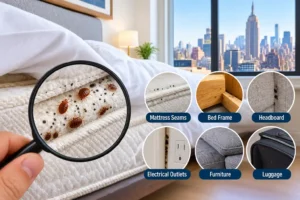
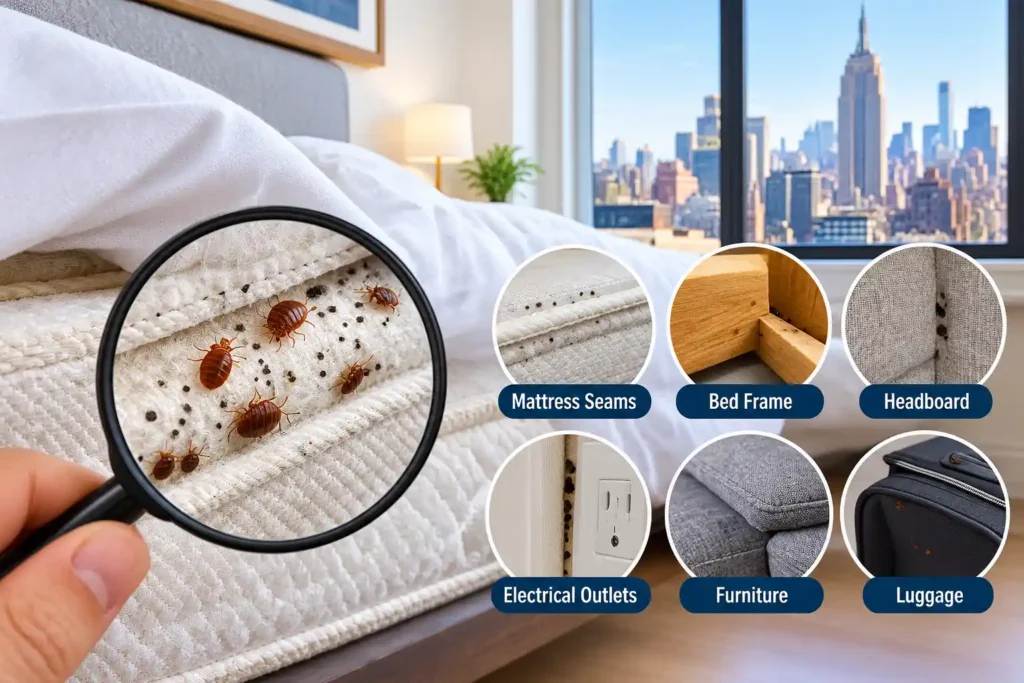
If you want to know where do bed bugs hide in mattresses, check the seams, piping, fabric folds, labels, corners, and edges. Small gaps between stitched sections can provide enough room for bed bugs to remain hidden.
The box spring should also be inspected carefully. Look around its edges, underneath the fabric, and along the wooden or metal frame. Bed bugs may stay inside protected areas that are difficult to see from the outside.
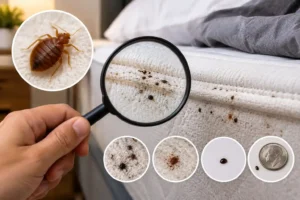
During your inspection, watch for live insects, shed skins, tiny pale eggs, dark spots, or small stains. These signs can appear around the areas where bed bugs have been hiding.
Do not assume that replacing the mattress will solve the problem. Bed bugs may also be present in the bed frame, headboard, nightstand, or other nearby locations.
2. Bed Bugs Hide in Bed Frames and Headboards
Bed frames contain many joints, corners, screws, and small gaps that can become useful hiding places.
Wooden bed frames may develop narrow cracks, while metal frames can have hollow sections and openings around connection points. Upholstered headboards may also contain seams and fabric folds where insects can stay out of sight.
Inspect the entire bed frame with a flashlight. Pay close attention to screw holes, joints, corners, brackets, and the places where the headboard attaches to the frame.
If possible, move the bed slightly away from the wall so you can inspect behind the headboard. The back of the bed is often overlooked during a quick inspection.
A mattress may appear clean while insects remain hidden in the frame, so always check the complete sleeping area.
3. Bed Bugs Hide in Bedroom Furniture
People often ask where do bed bugs hide in bedroom areas besides the mattress. Nearby furniture is one of the most important places to check.
Nightstands, dressers, wardrobes, chairs, and storage units can all provide dark, protected spaces. Furniture that sits close to the bed deserves the most attention.
Remove drawers when possible and inspect their corners and joints. Look underneath furniture and along the back panels. Small cracks where pieces of wood meet can be difficult to see without a flashlight.
Avoid moving suspicious furniture into another bedroom or living area. If bed bugs are present, moving the item may carry them into a part of the apartment that was previously unaffected.
4. Bed Bugs Hide in Couches and Upholstered Furniture
Bed bugs do not only stay in bedrooms. They may also appear in living rooms, especially when people spend long periods sitting or sleeping on couches.
When checking where do bed bugs hide in furniture, focus on seams, folds, frames, joints, and areas that are rarely disturbed.
Remove sofa cushions and inspect both sides. Check along zippers, stitching, and the places where cushions touch the frame.
It is also useful to understand where do bed bugs hide in couches because sofas contain many deep folds and hidden sections. Look underneath the furniture and inspect the fabric attached to the bottom of the frame.
Recliners and upholstered chairs should receive the same attention. If someone regularly sleeps on a couch, it should be inspected just as carefully as a bed.
5. Bed Bugs Hide Along Baseboards and Wall Cracks
A common question is can bed bugs hide in walls. They can sometimes use cracks, gaps, and openings around walls as protected hiding areas.
Check baseboards around the bedroom and living room, particularly near beds and couches. Look closely where the baseboard meets the floor and where pieces of trim join together.Bed bugs may also hide behind loose wallpaper, around wall cracks, or near openings where pipes enter the wall.
Wall hiding places can be more difficult to inspect than furniture. If signs appear to be coming from wall openings, professional inspection may be a better option than applying products into areas you cannot clearly see.
6. Bed Bugs Hide Along Carpet and Floor Edges
Bed bugs are not normally deep-carpet pests, but they can stay near carpet edges and small flooring gaps.
Inspect the area where carpeting meets the wall, especially around beds, couches, and upholstered chairs. The edges of carpeting may provide small protected spaces that are rarely disturbed.
Hardwood and laminate flooring can also contain narrow gaps between boards or around the edges of the room.
If you notice signs near the floor, inspect the furniture immediately around that area as well. Bed bugs often stay close to places where people rest.
7. Bed Bugs Hide Behind Curtains and Wall Decorations
Curtains, mirrors, picture frames, and wall decorations can become secondary hiding areas.Check these items carefully when they are located close to a bed or couch. Bed bugs may remain behind a picture frame or inside a curtain fold where they are difficult to notice.
Inspect curtain seams, the areas around mounting hardware, and the backs of frames. Pay special attention to items that are rarely moved.
These are not always the first bed bug hiding spots people inspect, but they should not be ignored when other areas show signs of activity.
8. Bed Bugs Hide in Luggage, Bags, and Clothing
Travel can create opportunities for bed bugs to enter an apartment. The insects may be carried on luggage, backpacks, bags, clothing, or other belongings.
After traveling, inspect your suitcase before putting it away. Check the seams, zippers, pockets, handles, and fabric folds. Keep luggage away from your bed until it has been inspected.
Clothing and travel belongings should also be handled carefully if you think you may have been exposed to bed bugs.
Our guide How to Avoid Bed Bugs While Travelling This Holiday Season can help you understand practical ways to reduce the chance of bringing these pests home after a trip.
Busy travel periods may involve more hotels, public transportation, and overnight stays. You can also read How Christmas Travel Increases the Risk of Bed Bugs for more information about managing bed bug risks during holiday travel.
9. Bed Bugs Hide Behind Electrical Outlets and Wall Fixtures
Electrical outlets, switches, and wall fixtures can contain small gaps around their edges.
Bed bugs may use these spaces when an infestation has spread beyond the bed and nearby furniture.
Inspect the outside edges of outlet plates and switches near sleeping or resting areas. Look for dark marks, shed skins, or visible insects around the surrounding wall.
Do not spray liquid pest control products into electrical outlets. If you suspect activity inside wall fixtures, consider professional inspection rather than trying to treat these areas yourself.
10. Bed Bugs Hide in Clutter and Stored Items
Clutter does not cause bed bugs, but it can make an existing problem harder to locate and control.Cardboard boxes, bags, piles of clothing, papers, books, and stored belongings can create additional protected spaces.
Check items stored underneath beds and beside couches. Pay attention to belongings that have remained untouched for a long time.
Reducing unnecessary clutter can make inspection easier because there are fewer places for insects to remain hidden.
However, do not move suspected infested belongings from one room to another without taking precautions. This may spread bed bugs to a new part of the apartment.
Most Common Bed Bug Hiding Places
The common bed bug hiding places are usually located near beds, couches, or other areas where people remain still for long periods.
| Area | What to Check |
| Mattress | Seams, corners, piping, labels |
| Box spring | Edges, underside, frame |
| Bed frame | Joints, cracks, screw holes |
| Headboard | Back, corners, attachment points |
| Nightstand | Drawers, joints, back panel |
| Couch | Seams, cushions, frame, underside |
| Baseboards | Gaps, corners, wall edges |
| Flooring | Carpet edges and floor gaps |
| Curtains | Seams and folds |
| Luggage | Zippers, pockets, seams |
| Wall fixtures | Outer edges and nearby gaps |
| Stored items | Boxes, bags, clothing |
Start with the bed and nearby furniture before moving farther into the room. This gives you a clear inspection order and helps reduce the chance of overlooking an important area.
What Are the Signs of Bed Bugs in an Apartment?
Knowing the signs of bed bugs in apartment rooms can make it easier to recognize a possible infestation.
Live bed bugs are one of the clearest signs. Adults are small, flat, and generally reddish-brown. Younger bed bugs can be smaller and lighter in color.
Dark spotting on mattresses, sheets, bed frames, or furniture can also indicate activity. These spots may be bed bug waste.
You may notice pale shed skins around seams and cracks. Small eggs or eggshells may also appear in protected areas.
Blood stains can sometimes be found on bedding, although stains alone do not confirm an infestation.Some people first suspect bed bugs because of bites. However, bites can look different from person to person and are not enough on their own to identify the pest.
For more examples of warning signs, review Signs of Bed Bugs in NYC before inspecting your apartment.
If dark marks are one of the main things you are finding, What Does Bed Bug Poop Look Like? explains what bed bug waste may look like and where it may appear.
How to Check for Bed Bugs in an Apartment
Learning how to check for bed bugs in apartment rooms is easier when you follow a clear inspection order instead of searching randomly.
Start With the Mattress and Box Spring
Remove the bedding and inspect the mattress carefully. Check the seams, corners, piping, labels, and fabric folds. Then inspect the edges and underside of the box spring.Use a bright flashlight to see into narrow areas. Take your time because small insects, eggs, and dark spots may be easy to miss.
Inspect the Bed Frame and Headboard
Once the mattress is checked, move on to the frame and headboard. Examine joints, screw holes, cracks, corners, brackets, and connection points.
Move the bed away from the wall if this can be done safely. Check behind the headboard and inspect the nearby baseboards.
Check Nearby Furniture
Next, inspect nightstands, dressers, chairs, and other furniture close to the bed.Remove drawers when possible and check around the corners, underside, joints, and back panels. Furniture near a sleeping area should receive more attention than items located farther away.
Inspect Couches and Upholstered Furniture
Check sofas, chairs, recliners, and other upholstered furniture.Remove cushions and inspect seams, folds, zippers, frames, and the underside of the furniture. Pay extra attention if someone regularly rests or sleeps there.
Check Baseboards, Walls, and Flooring
After inspecting furniture, move around the room and check baseboards, wall cracks, carpet edges, flooring gaps, curtains, and nearby decorations.A flashlight will make it easier to see into small spaces.
Inspect Luggage and Personal Items
If you recently traveled, inspect suitcases, backpacks, handbags, and other belongings.
Check seams, zippers, pockets, and areas where fabric folds together. Keep suspicious luggage away from beds and upholstered furniture until you have completed your inspection.
Look for Evidence of Activity
During your inspection, look for more than one type of evidence. Live insects, shed skins, eggs, dark marks, and repeated activity in the same area can all indicate a possible infestation.If you find a suspected bug, place it carefully in a sealed container if possible so it can be identified.
If you continue finding warning signs but cannot locate the source, a professional bed bug inspection NYC service may help identify areas that are difficult to examine on your own.
Why Can Bed Bugs Spread Through an Apartment?
Bed bugs can spread when they move away from an established hiding area or when infested belongings are carried to another location.
Moving a couch, mattress, clothing, or luggage from one room to another may unintentionally carry insects with it.
Apartment buildings also contain many narrow gaps around walls, pipes, floors, and fixtures. These spaces can make detection more challenging.
For this reason, it is important to act carefully when a bed bug problem is suspected.
Avoid dragging furniture through the apartment or hallway without first considering whether it may contain insects.
Why Do Bed Bugs Sometimes Return After Treatment?
A bed bug problem may return for several reasons.Some insects or eggs may remain in small areas that were difficult to locate. Bed bugs may also be introduced again through travel, used furniture, bags, or other belongings.A nearby untreated area can also contribute to continued activity.
If you have treated your apartment and continue finding evidence, read Why Do Bed Bugs Keep Coming Back After Treatment? to understand some common reasons the problem may continue.Repeated activity is a good reason to inspect the property again instead of assuming the insects will disappear on their own.
What Attracts Bed Bugs to an Apartment?
Bed bugs are not a sign of poor housekeeping.They mainly seek access to people and protected places where they can remain hidden between feedings.Body heat and carbon dioxide produced when people breathe can help bed bugs locate a host.
Clutter does not attract them directly, but it can provide more hiding areas.
Our guide What Attracts Bed Bugs to Your Home and How to Keep Them Away explains these behaviors in more detail and can help clear up common misconceptions.
Can You Get Rid of Bed Bugs Yourself?
Some home measures may help manage a small problem, but bed bugs can be difficult to eliminate because they hide in narrow spaces.Vacuuming can remove some visible insects. Reducing clutter can improve access to hiding places. Mattress encasements may also be useful as part of a broader management plan.
Appropriate laundering and high-heat drying of suitable fabrics may help with bed bugs on clothing or bedding.
However, these steps do not always reach insects hidden inside furniture, wall gaps, or other protected locations.
Be careful when using pesticides or other pest products. Follow the label and do not apply chemicals to surfaces or electrical areas where they are not approved.
A Bug Repellent for Bed should not be treated as a complete solution for an established infestation. If bed bugs are already present, finding and treating their hiding areas is more important than relying only on repellents.
How to Help Prevent Bed Bugs in an NYC Apartment
There is no single method that can guarantee you will never encounter bed bugs, but a few habits can lower your risk.
Inspect secondhand furniture carefully before bringing it into your apartment. Pay close attention to mattresses, couches, upholstered chairs, and furniture joints.
After traveling, inspect your luggage before storing it near sleeping areas.Keep clutter under control so beds, baseboards, furniture, and floors are easier to inspect.Check beds and upholstered furniture periodically, especially after travel or when purchasing used items.
If you notice suspicious insects or signs, act early instead of waiting for the problem to become more widespread.
For other household pest concerns, professional Pest control nyc services can help determine which pest is present and which treatment approach may be suitable.
When Should You Call a Bed Bug Exterminator in NYC?
Consider professional help when you find live bed bugs, eggs, shed skins, repeated dark spots, or activity in several parts of your apartment.Professional inspection can also be useful when you are experiencing warning signs but cannot locate the hiding areas.
Bed bugs can remain inside spaces that are difficult to inspect without experience and proper tools. Treating only the visible insects may leave other hiding areas untouched.
Diamond Plus Pest Control offers Bed Bug Extermination Services NYC for people dealing with suspected or confirmed bed bug activity.A professional can inspect the affected areas, identify likely hiding places, and recommend a treatment plan based on the condition of the property.
If you are finding bed bug activity in your NYC apartment, contact Diamond Plus Pest Control to discuss your situation and available treatment options.
Frequently Asked Questions
Where Do Bed Bugs Usually Hide During the Day?
During the day, bed bugs usually remain in dark, protected areas near places where people sleep or rest. Mattress seams, box springs, bed frames, headboards, furniture joints, couches, and wall gaps are common areas to inspect.
Can Bed Bugs Live in a Clean Apartment?
Yes. Bed bugs can appear in clean or cluttered apartments. They are not attracted to dirt. They can be introduced through luggage, furniture, clothing, bags, or other belongings.
Can Bed Bugs Hide in Clothes?
Bed bugs can be carried on clothing or hide among stored items, especially when clothing is kept close to an infested area. Check clothing carefully and avoid moving suspicious items into other rooms.
Should I Throw Away My Mattress if I Find Bed Bugs?
Not automatically. An infestation may involve the mattress, bed frame, furniture, and surrounding areas. Throwing away one item without dealing with other hiding places may not solve the problem.
Can Bed Bugs Move From One Room to Another?
Yes. Bed bugs can move to other rooms, especially as an infestation grows or when infested belongings are moved. Avoid carrying untreated furniture, bedding, or clothing from one room to another.
When Is Professional Bed Bug Treatment Worth Considering?
Professional help is worth considering when you repeatedly find bed bugs or signs of activity, when several areas are affected, or when you cannot identify where the insects are hiding.
Get Professional Bed Bug Help in NYC
Bed bugs can hide in very small areas, which makes them difficult to locate and control without a thorough inspection. Mattresses, bed frames, couches, furniture, baseboards, wall gaps, luggage, and stored items should all be checked when you suspect activity.
Early action can help prevent an infestation from becoming more difficult to manage. Avoid moving suspicious furniture or belongings around the apartment, and do not rely only on visible bugs to judge the size of the problem.