Every restaurant owner in New York knows that pests are bad for business. One rat sighting in the dining room can lead to a bad review, a failed inspection, or a lost customer. The problem is that pests rarely announce themselves. They hide, they work at night, and they leave small clues that are easy to miss on a busy shift.
This guide covers the most common signs of a restaurant pest problem, what each sign usually means, and when it is time to bring in a professional. If you want a broader overview of how we help local businesses, start with our Pest control nyc services.
Why Restaurants in NYC Are So Exposed to Pests
A restaurant gives pests everything they need: food, water, warmth, and shelter. In a dense city like New York, that appeal is even stronger. Buildings sit close together, walls are shared, and older structures often have gaps around pipes, doors, and foundations. A pest problem next door can become your problem in days.
Deliveries add another risk. Cardboard boxes, produce crates, and bulk packaging can carry cockroaches or their eggs into your kitchen. Back doors that stay open during unloading give rodents an easy way in. Good housekeeping matters, but even clean kitchens can have pests when the surrounding conditions favor them.
Signs of Rodent Infestation in a Restaurant
Rats and mice are two of the most serious threats to food service operations. They contaminate food, chew through packaging and wiring, and spread bacteria across surfaces. Knowing the signs of rodent infestation in a restaurant helps you act early.
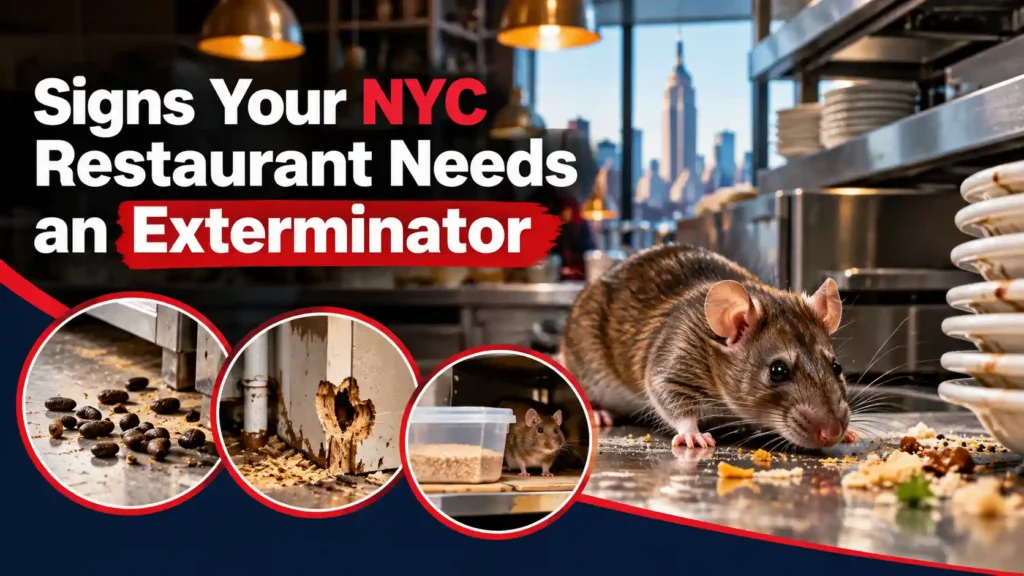
Droppings are often the first clue. Mouse droppings are small and dark, about the size of a grain of rice. Rat droppings are larger and blunt at the ends. Check along walls, behind equipment, under shelving, and inside dry storage. Fresh droppings look dark and moist, while old ones look dry and gray.
Rodents also chew constantly. Torn flour bags, chewed boxes, and nibbled wood or plastic are strong warning signs, and gnawed wires can create a fire risk. Rats follow the same paths along walls and baseboards, so dark grease marks along those routes point to regular activity. Scratching in the ceilings or walls after closing, or a musky odor in storage areas, can mean a nest is close.
Seeing a rat in a restaurant during the day usually means the population is large and space is getting crowded. If you notice any of these signs, our Rodent Control NYC team can find out what you are dealing with and where the animals are getting in.
Seeing a mouse in a restaurant, even once, is rarely a one-time event. Mice breed quickly, so one sighting often means more are hiding nearby. A targeted Mice Control Service NYC plan focuses on finding nesting spots and closing the routes mice use to travel through your kitchen and storage areas.
Signs of Cockroach Activity and Other Bugs in Restaurants
Cockroaches are the most common of the bugs in restaurants, and they are hard to spot because they avoid light. By the time you see one in the open, the infestation is often well established.
Watch for live roaches near sinks, drains, dishwashing stations, and under equipment. Look for small dark specks that resemble coffee grounds or pepper, which are roach droppings. Egg cases, which look like tiny brown capsules, are another clear sign. A strong, oily odor in closed cabinets or storage rooms can also point to a heavy infestation.
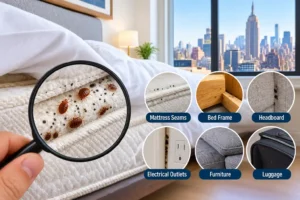
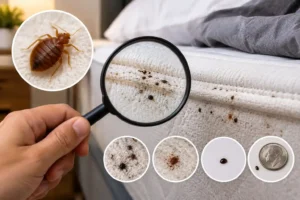
Flies near trash areas and drains may signal sanitation gaps or hidden buildup. Ants trailing toward sugar, syrups, or spills can point to a food source you have missed. Bed bugs are far less common in kitchens, but staff lockers, break rooms, and upholstered waiting areas can still be affected, and a prompt Bed Bug Treatment NYC service helps keep those spaces from spreading the problem to employees’ belongings and customers.
Signs of Pest Contamination in Your Food and Storage Areas
Restaurant pest contamination can happen quietly. Pests walk across prep surfaces, nest in dry goods, and leave droppings, hair, and bacteria behind. Common signs include open or torn packaging in dry storage, droppings on shelves or prep tables, small holes in bags of rice, flour, or grain, and unexplained odors near walk-in coolers or storage rooms.
If you are asking which is a sign of pests in an operation, the answer is almost always a pattern rather than a single clue. Droppings, damage, odors, and sightings together tell the story. Any one of them is reason enough to take a closer look. The same applies to businesses that handle larger volumes of product, and a Food Processing Exterminator in NYC can help prep kitchens, commissaries, and production spaces meet the same high standard of protection.
Food contamination risk is also why pests matter for compliance. Health inspectors look for evidence of pest activity, and a violation can affect your grade and your reputation.
Common Entry Points Pests Use in NYC Restaurants
Understanding pest entry points is half the battle. Pests do not appear from nowhere. They come in through specific gaps, and closing them is one of the most effective ways to protect your business.
Common entry points include gaps under and around doors, especially back and delivery doors, openings around pipes and utility lines, cracks in walls or foundations, floor drains, and vents. Mice can squeeze through very small openings, so even tiny gaps matter. Installing pest-proof door sweeps, sealing wall and pipe gaps, and keeping doors closed when not in use all help. Restaurants located inside hotels face added challenges from shared kitchens, loading docks, and guest areas, which is why Pest Control for Hotels in NYC often takes a coordinated approach across the entire building.
What Attracts Pests: Storage, Garbage, and Sanitation Gaps
Even when pests find a way in, poor conditions are what make them stay. Proper food storage makes a big difference. Store dry goods in sealed, pest-resistant containers off the floor, rotate stock so old product does not sit untouched for weeks, and limit how long cardboard boxes stay in storage, since pests love to nest in them.
Garbage management is just as important. Use lidded bins, empty them often, and clean them regularly. Keep dumpsters away from entrances when possible, and wash the area around them. Spills and food residue near the back door quickly attract rodents and roaches. Daily cleaning also matters, especially around floor drains, mop sinks, and areas behind appliances where grease and crumbs build up.
These steps lower your risk, but they do not replace professional service. If pests are already active, sanitation alone will not remove them. Many owners wonder how the two approaches differ, and our guide on Pest Control vs. Extermination explains why most restaurants need both ongoing prevention and targeted treatment.
When Should You Call a Restaurant Exterminator?
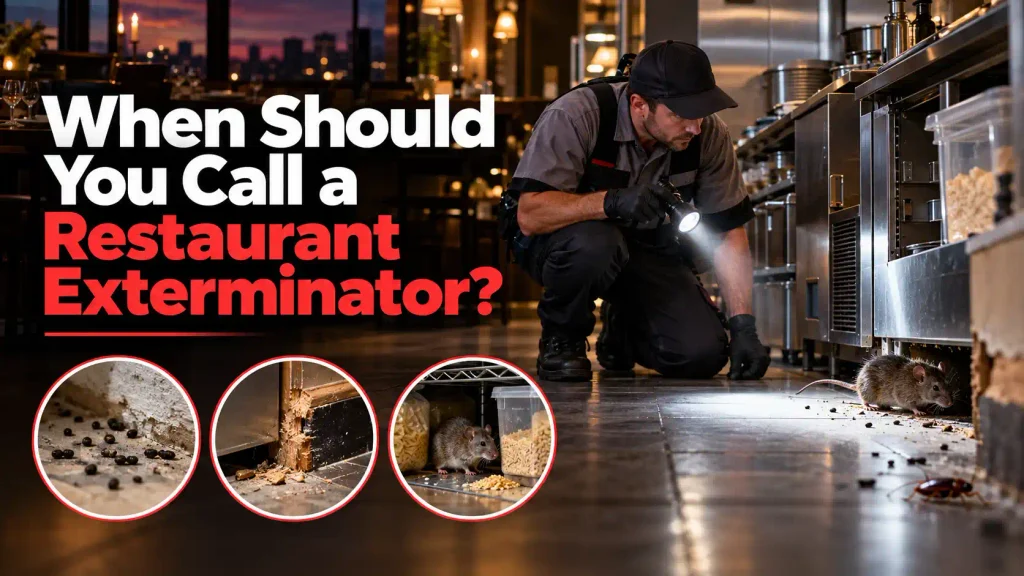
Call a professional as soon as you see clear signs of activity. Do not wait for a problem to get worse. Call right away if you see live rats or mice, find droppings or gnaw marks, spot cockroaches in the open, or notice the same pests returning after you have cleaned or used store-bought products. Recurring pest activity usually means the source has not been found.
If you are still unsure about timing, our guide on When Should You Call an Exterminator in NYC? walks through the situations that call for fast action.
Some situations are urgent, such as a rodent sighting in the dining room or a failed inspection. If that sounds like your restaurant, read about the Signs You Need Emergency Pest Control so you know when a same-day response matters.
What Professional Restaurant Pest Control Looks Like
Effective restaurant pest management is more than spraying. Good providers follow an Integrated Pest Management (IPM) approach, which focuses on finding the cause, removing what attracts pests, and using targeted treatments only where needed.
A typical service starts with a professional pest inspection. The technician checks kitchens, storage areas, dining rooms, and exterior spaces for signs of activity and conditions that support pests. From there, a plan is built around your space. It may include rodent exclusion, which means blocking the routes rodents use, along with entry point sealing, treatment for roaches or other insects, and advice on sanitation and storage. Follow-up visits then confirm the problem is under control and help prevent recurring pest activity.
Restaurants have special needs, including treatments that fit food service areas and schedules that do not disrupt your operation. A provider that understands commercial pest control can work around your hours and focus on long-term results.
Get Help From a Restaurant Exterminator in NYC
If you have noticed any of the warning signs above, do not wait for a bad review or a failed inspection to act. Diamond Plus Pest Control helps NYC restaurants find the source of pest problems and take steps to stop them from coming back. Learn more about our Restaurant Exterminator in NYC service, or contact us to talk about your situation and schedule an inspection.
Frequently Asked Questions
What are the first signs that a restaurant has a pest problem?
The earliest signs are usually droppings, gnaw marks, grease smears, and odd odors in storage areas. Cockroaches often show up first near drains, sinks, and under equipment. Noises in the walls or ceiling after closing can also be an early clue.
Is seeing one mouse in a restaurant a big deal?
Yes. A single mouse often means others are hiding nearby, since mice reproduce quickly. It is best to schedule an inspection right away.
Can a restaurant stay open during pest treatment?
This depends on the pest, the treatment method, and the areas involved. A professional can explain what is needed and plan service around your hours. Ask your provider about timing and any preparation before the visit.
How can I prevent pests in my restaurant?
Keep food in sealed containers, manage garbage carefully, clean regularly, and seal gaps and cracks. Door sweeps and good housekeeping help. Ongoing inspections catch small problems before they grow.
How much does restaurant pest control cost in NYC?
Cost depends on the size of your space, the type of pest, and how serious the problem is. Our guide on How Much Does Pest Control Cost in NYC? explains what affects pricing, and you can contact us for a quote based on your restaurant.
How much does rodent control cost for a restaurant?
Rodent work is priced by the size of the infestation, the number of entry points, and how much exclusion work is needed. Read more in our breakdown of Rodent Control Cost in NYC, or reach out for an inspection and estimate.