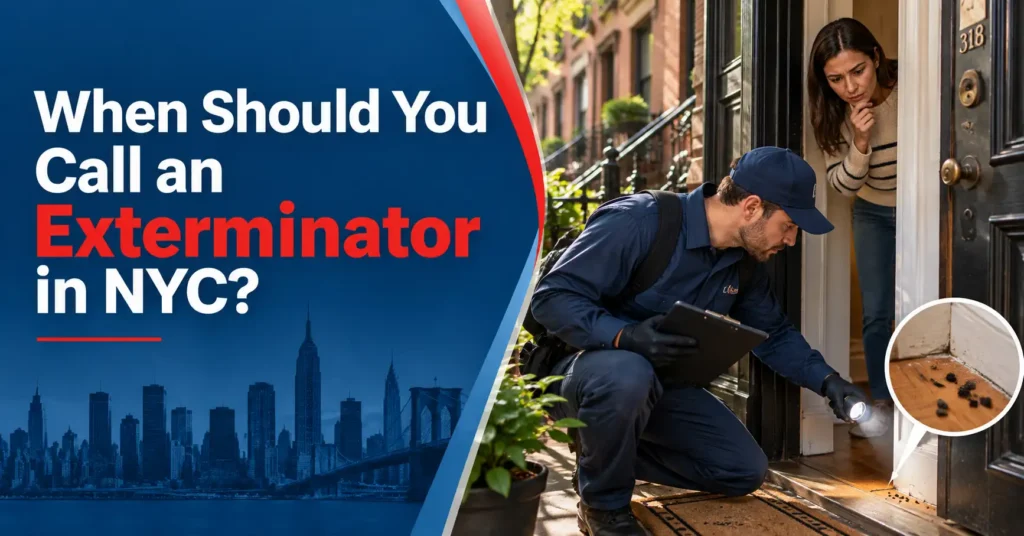
Seeing one cockroach in the kitchen or hearing a scratching sound behind a wall can leave you wondering whether you have a small pest problem or a larger infestation. In New York City, waiting too long can allow pests to move through walls, plumbing lines, storage areas, or neighboring units.
The question When Should You Call an Exterminator in NYC? usually becomes important when pest activity keeps returning, you find droppings or damage, or simple home treatments stop working. Some problems can be handled with cleaning and prevention. Others need a trained pest control technician to find the source and build a treatment plan.
NYC homes and businesses create many places for pests to hide. Older buildings may have cracks around pipes and walls. Apartment buildings have shared utility lines. Restaurants and commercial properties may have frequent deliveries, food storage areas, garbage rooms, and loading spaces. Even a clean property can develop a pest problem when insects or rodents enter from another part of the building.
Knowing when to call an exterminator can help you act before pests spread further. Early inspection can also identify entry points, nesting areas, moisture problems, food sources, and other conditions that allow an infestation to continue.
Diamond Plus Pest Control helps homeowners, tenants, landlords, property managers, and businesses identify pest activity and choose an appropriate solution. If you are unsure whether your problem needs professional attention, the warning signs below can help you decide.
10 Signs You Should Call an Exterminator in NYC
The most important signs you need an exterminator are not limited to seeing live insects or rodents. Hidden infestations often leave evidence before pests become easy to see.
Watch for these warning signs:
- Repeated sightings of cockroaches, ants, mice, rats, bed bugs, or other pests in the same area.
- Pests appear during the daytime when that species is normally more active at night.
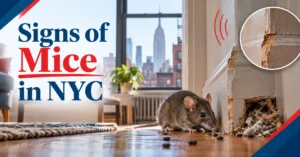
- Droppings near cabinets, food storage areas, appliances, basements, utility rooms, or walls.
- Scratching, scurrying, chewing, or movement inside ceilings, walls, attics, or floor spaces.
- Gnaw marks on wood, cardboard, food packaging, insulation, cables, or other materials.
- Unusual odors coming from hidden spaces, cabinets, wall voids, garbage areas, or storage rooms.
- Nests, shed insect skins, wings, egg cases, webbing, nesting materials, or similar evidence.
- Unexplained bites, stains on bedding, or signs that may point to bed bug activity.
- Property damage that continues without a clear cause, including damaged wiring or entry holes.
- Pest activity that returns soon after traps, sprays, baits, or other home treatments have been used.
These signs of pest infestation become more important when several appear together. One small clue may have a simple explanation. Droppings plus scratching sounds plus chewed food packaging, however, can suggest that rodents have already found food and shelter inside the property.
If these warning signs continue, the question is no longer only whether pests are present. It becomes how far they have spread and what conditions are helping them survive.
Pests Keep Coming Back After DIY Treatment
Repeated activity after home treatment is one of the clearest reasons to request an inspection. Store-bought products may kill pests that are visible without reaching a nest, hidden population, breeding site, or entry point.
A recurring pest infestation often means the source has not been corrected. A cockroach treatment may fail if insects continue entering through plumbing gaps. Mouse traps may provide temporary results while holes around utility lines remain open. Ants may keep returning when the colony is outside the treated area.
This is where the difference between DIY pest control vs professional pest control becomes important. Professional service should look beyond the pest you can see. The goal is to understand where it is entering, where it is hiding, what is attracting it, and what steps may reduce the chance of another infestation.
For readers dealing with urgent activity, our guide to Signs You Need Emergency Pest Control explains which situations may need faster attention.
When Should You Call an Exterminator in NYC? If pest activity continues after reasonable cleaning, sealing, traps, or basic treatment, it is usually time to stop guessing and have the property inspected.
Does Seeing One Pest Mean You Need an Exterminator?
Not every single insect means your property has a major infestation. An ant near an open window or a fly that entered through a door does not always require professional treatment.
Context matters.
Where did you see the pest? Was it close to food or water? Have you seen the same pest before? Are there droppings, nests, eggs, or other pest infestation signs nearby? Are neighboring apartments reporting similar activity?
A single cockroach inside a kitchen may deserve more attention than one outdoor ant near a doorway. One mouse sighting can also be important because mice usually look for protected areas where they can find food, nesting material, and warmth.
Frequency is another useful clue. Seeing the same type of pest several times during one week is different from one isolated sighting months apart. The location also matters. Pest activity around a restaurant kitchen, childcare facility, food storage room, medical setting, or multifamily property may require faster action because the consequences of an untreated infestation can be greater.
If you are unsure, a pest control inspection NYC service can help identify the pest, locate activity, and determine whether immediate treatment or monitoring makes more sense.
Professional inspection can save you from treating the wrong problem. It may also prevent unnecessary pesticide use when sanitation, exclusion, or a simple building repair is the better first step.
When to Call an Exterminator for Different NYC Pests
When Should You Call an Exterminator in NYC? The answer can depend on the pest species because cockroaches, rodents, bed bugs, termites, ants, and wasps do not behave the same way.
For cockroaches, repeated sightings, egg cases, droppings, or insects appearing in several rooms can suggest that activity is no longer isolated. Kitchens, bathrooms, pipe chases, basements, and garbage areas are common places to investigate.
With mice and rats, homeowners should pay attention to droppings, scratching sounds, gnaw marks, grease marks, torn food packages, nesting material, and holes near pipes or doors. It is also useful to know whether you are dealing with mice or rats because treatment, monitoring, and exclusion needs may differ. Our Rodent Control NYC service explains how inspection and entry-point sealing fit into a broader rodent control plan.
Bed bugs require a different approach. Bites alone do not prove bed bugs are present, but dark spotting, shed skins, live insects, eggs, or activity around mattresses and furniture deserve close inspection. Moving furniture or using random sprays can sometimes make a difficult situation even harder to track.
Ant problems should be evaluated when trails continue, colonies appear to be inside the structure, or ants return after surface treatment. The visible trail may represent only workers traveling between a food source and a colony.
Termites are different again because structural damage can remain hidden. Mud tubes, discarded wings, damaged wood, or suspected termite activity should be professionally evaluated rather than left for months.
Wasps and similar stinging insects deserve greater caution when a nest is close to doors, balconies, walkways, work areas, children, pets, or people with known sting allergies. Avoid disturbing an active nest when you are unsure of the species or the safest removal method.
A knowledgeable NYC exterminator should first identify the actual pest and level of activity instead of using one treatment approach for every situation.
When Is a Pest Problem an Emergency in NYC?
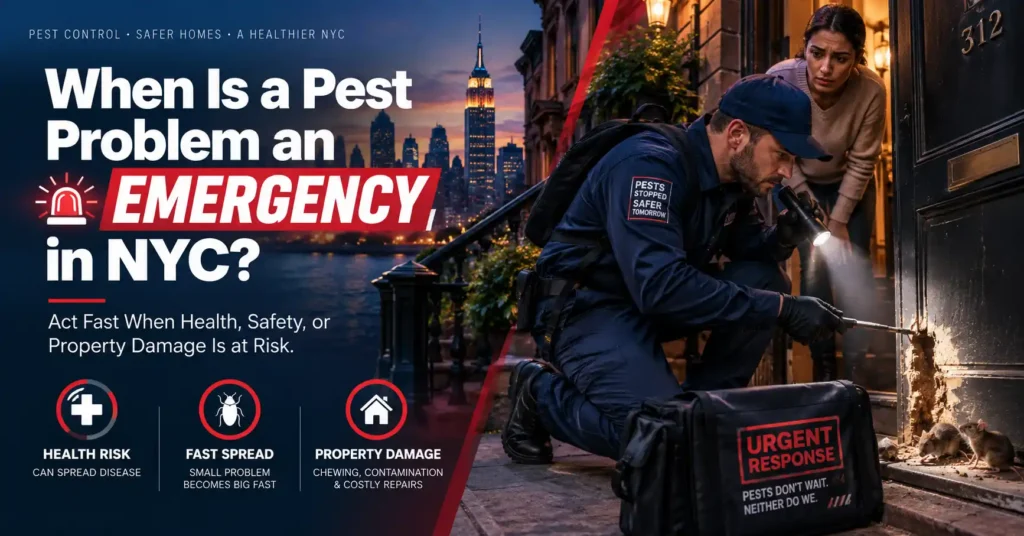
Many pest problems require timely service, but not every infestation is a true emergency.
A situation may need faster attention when pests create an immediate safety risk, significant contamination, rapid property damage, or a serious disruption to a residential or commercial space.
For example, exposed rodent damage to electrical wiring should not be ignored. An active wasp nest next to a busy entrance can create a sting hazard. Heavy rodent activity around food storage can create a sanitation problem. A large infestation in a restaurant, hotel, daycare, healthcare facility, or food-handling business may also require prompt professional assessment.
An emergency exterminator NYC may be appropriate when waiting for a routine appointment could allow the problem or risk to become significantly worse.
However, avoid turning every pest sighting into panic. The better approach is to judge urgency based on the pest, location, number of signs, people at risk, and type of property.
Professional advice can help you determine whether same-day action, standard treatment, monitoring, or prevention is the right next step.
When Should You Call an Exterminator for an NYC Apartment?
Apartment pest problems can be more complicated than infestations in detached homes because units are connected.
Cockroaches can move along pipes and wall openings. Mice may travel through utility gaps. Pests can move between kitchens, bathrooms, garbage areas, basements, hallways, and neighboring units. Treating one apartment may not completely solve a problem that originates somewhere else in the building.
For renters asking When Should You Call an Exterminator in NYC?, repeated sightings in several areas, pest movement between units, visible entry points, droppings, or unsuccessful treatment are strong reasons to report the issue and request a proper inspection.
Effective apartment pest control NYC should consider the affected unit and the surrounding building conditions. This is especially important in properties with shared plumbing, utility chases, trash rooms, laundry rooms, and adjoining walls.
Our guide to Pest Control Solutions for NYC Apartments explains how tenants, landlords, prevention, inspection, and building maintenance can work together.
High-rise properties may require an even wider approach. Pests can move through plumbing penetrations, utility spaces, mechanical areas, trash systems, and adjoining floors. Building managers dealing with repeated complaints can learn more in Pest Control for High-Rise Buildings in NYC.
Should NYC Tenants Call Their Landlord or an Exterminator?
Tenants should normally report pest problems and conditions that may attract pests to the property owner, landlord, or building management.
NYC Health advises residents to report pests, leaks, cracks, holes, and related building conditions to the owner or manager. If the problem is not corrected, tenants can contact 311. NYC guidance also places responsibilities on property owners to keep apartments and common areas free from pests and to address underlying conditions.
This means tenants should not assume that repeated roach or rodent activity is simply their own problem to solve.
Take clear notes about where and when activity occurs. Photos of droppings, entry holes, insect activity, or damage may also help building management understand the extent of the problem.
A tenant can ask management whether a licensed pest professional will inspect the unit and whether adjoining areas need to be checked. When pests are moving between apartments, treatment that focuses on only one room may provide limited results.
If you are the property owner or manager, responding early can help reduce complaints and prevent a small issue from spreading into several units.
DIY Pest Control vs Professional Extermination
Small prevention steps can be useful.
Keeping food sealed, removing trash, cleaning spills, fixing leaks, reducing clutter, and sealing safe-to-repair gaps can all make a property less attractive to pests.
The problem begins when DIY treatment becomes a cycle.
You apply a product, activity disappears for several days, and then pests return. Another product is added. The visible insects decrease, but the source remains hidden.
Knowing when to call pest control means recognizing when home treatment is no longer solving the underlying problem.
A professional should inspect before deciding how to treat. This may involve checking pest activity, moisture, sanitation conditions, entry points, nesting materials, droppings, and structural gaps. Depending on the problem, the plan may include treatment, exclusion, monitoring, sanitation changes, or follow-up visits.
NYC Health recommends an Integrated Pest Management approach that focuses on correcting the conditions behind pest problems rather than relying only on routine pesticide spraying. IPM can combine inspection, pest proofing, sanitation, monitoring, repairs, and carefully selected treatments when needed.
That is why good pest management is more than simply spraying where an insect was seen.
When Should NYC Businesses Call a Pest Control Professional?
Commercial properties often need to respond earlier than residential properties because a pest problem can affect employees, customers, inventory, operations, food areas, or the reputation of the business.
Restaurants may face risks around kitchens, drains, storage rooms, deliveries, grease areas, dumpsters, and food preparation spaces. Offices may experience mice, cockroaches, ants, or flies. Warehouses can develop rodent or stored-product pest problems. Hotels and multifamily properties may require wider monitoring because pests can spread between rooms and common areas.
Business owners should contact a professional exterminator in NYC when pest activity becomes repeated, affects food or stored products, appears in customer-facing areas, or suggests movement through more than one part of the property.
Commercial pest control costs can vary because a small office does not need the same plan as a restaurant, warehouse, apartment complex, or multi-floor commercial building. Property size, pest species, severity, access, treatment method, exclusion needs, service frequency, and follow-up can all affect the final cost.
The value of early service is not only pest removal. It can also help a business identify structural or sanitation conditions before they support larger pest populations.
For companies with ongoing pest pressure, scheduled monitoring may be more practical than repeatedly waiting for visible activity to become serious.
What Happens During a Professional Pest Inspection?
A good inspection starts with questions.
The pest control technician may ask what you have seen, where activity occurs, when you first noticed it, whether you have tried any treatments, and whether the problem has happened before.
The technician then looks for evidence. This can include droppings, nesting materials, damage, live insects, entry points, moisture, food sources, cracks, utility openings, wall gaps, or conditions around garbage and storage areas.
A local exterminator NYC also benefits from understanding the types of buildings common across New York City. A pre-war apartment may present different access points than a newer high-rise. A restaurant has different pest pressures than a single-family property. A warehouse may require wider monitoring than a small apartment.
After inspection, the next step should be a clear treatment plan.
That plan may include targeted pest treatment, exclusion work, monitoring devices, repairs, sanitation recommendations, or follow-up visits. The aim should be to deal with current activity while also reducing the conditions that allow pests to return.
For rodents in particular, NYC Health recommends inspection before quoting and notes that moderate or serious rat problems may require repeated visits and monitoring rather than a single treatment.
Good pest control is therefore a process, not always a one-visit event.
Why Exclusion and Follow-Up Matter After Pest Treatment
Removing visible pests is only part of long-term control.
If a mouse can still enter through a gap, another mouse can eventually use the same opening. If cockroaches continue moving through an untreated wall void, activity may return. If an ant colony remains active near the property, surface treatment may not stop future trails.
Exclusion means reducing pest access by identifying and closing appropriate entry points. This can involve cracks, holes around utility lines, gaps around doors, damaged screens, openings around pipes, or other structural routes.
Follow-up is equally important.
Monitoring after treatment helps determine whether activity is falling, whether new areas have become active, and whether more work is needed. This is particularly useful for rodents, bed bugs, cockroaches, and building-wide infestations.
The goal of professional pest control NYC should be more than short-term removal. Inspection, treatment, exclusion, monitoring, and prevention should work together when the infestation requires them.
How Property Type and Infestation Size Affect Pest Control Cost
Pest control pricing is not based only on the pest name.
A small ant problem in one kitchen can require less work than rodent activity across a basement, several apartments, and a garbage room. A bed bug problem limited to one sleeping area may be different from activity across several rooms. A commercial property may require ongoing monitoring and more access points than a small residence.
Treatment cost can also change when exclusion, multiple visits, special equipment, difficult access, or larger affected areas are involved.
Queens homeowners who want a local pricing overview can read our Pest Control Cost in Queens guide.
Property owners outside the five boroughs may face different property sizes and pest pressures. Our Pest Control Cost in Long Island guide explains several factors that influence service prices in that market.
For another local comparison, How Much Does Pest Control Cost in Staten Island looks at pest type, infestation level, property conditions, and service needs.
The best way to understand the likely cost for your property is usually to identify the pest and extent of activity first. A low price for the wrong treatment is not useful if pests return because the original source was never addressed.
Why Acting Early Can Prevent a Larger Infestation
Pests rarely improve because they are ignored.
Rodents can continue using established travel paths. Cockroaches can remain hidden near food, warmth, and moisture. Ant colonies may expand their foraging routes. Bed bugs can spread to additional furniture or rooms.
Early action gives a technician a better chance to inspect the problem before activity becomes widespread.
It can also reduce secondary problems. Rodents may gnaw materials. Cockroaches can contaminate surfaces. Stored food may be damaged. Tenants may begin reporting activity in neighboring units. Commercial businesses may face greater disruption when an infestation reaches public areas.
This does not mean every insect requires an emergency call. It means a clear pattern should not be ignored.
If you see repeated activity, keep finding fresh droppings, hear movement inside walls, notice damage, or continue treating the same pest without success, professional evaluation is a reasonable next step.
Choosing the right company matters as well. Before booking service, property owners can review How to Choose a Pest Control Company You Can Trust in NYC to understand the value of licensing, inspection, communication, treatment planning, and prevention.
Call Diamond Plus Pest Control for Professional Pest Control in NYC
When Should You Call an Exterminator in NYC? You should consider calling when pest activity repeats, DIY efforts fail, property damage appears, pests spread into more areas, or you need help identifying the source of the problem.
Diamond Plus Pest Control provides pest services for residential and commercial properties across New York City, including Manhattan, Brooklyn, Queens, the Bronx, and Staten Island.
Our approach starts by understanding the pest and the property. A pest control technician can look for activity, nesting areas, possible entry points, sanitation concerns, and conditions that may allow pests to keep returning.
If treatment is required, the plan can be matched to the pest species, infestation size, property type, and areas affected.
Homeowners may need help with cockroaches, rats, mice, ants, termites, bed bugs, wasps, or other common pests. Property managers may need building-wide monitoring. Businesses may need a treatment and prevention program designed around their operating environment.
For a complete look at our local services, visit Pest control NYC and learn how Diamond Plus Pest Control helps protect homes and businesses across the city.
If pest activity is already affecting your home, apartment, office, restaurant, store, or commercial property, call Diamond Plus Pest Control at (718) 427-6200 to discuss the problem and schedule an inspection.
Do not wait for a small warning sign to become a larger infestation.
FAQs About When to Call an Exterminator in NYC
1. When Should You Call an Exterminator in NYC?
Call when pests repeatedly appear, you find droppings or nesting evidence, hear activity inside walls, notice property damage, or home treatments are not stopping the problem. A professional inspection is especially useful when you do not know where pests are entering or how large the infestation may be.
2. What are the clearest signs that a hidden pest problem is getting worse?
Fresh droppings, new gnaw marks, repeated nighttime sounds, increasing sightings, pest activity in several rooms, unusual odors, damaged food packages, shed insect skins, and continued activity after treatment can all point to a growing problem. The more evidence you find, the more useful a professional inspection becomes.
3. Should I call an exterminator after seeing one mouse?
One mouse does not tell you exactly how many rodents are present, but it should not be ignored. Check for droppings, gnawing, food damage, holes, and scratching sounds. Mice can use very small openings, so locating and sealing entry routes can be as important as controlling the rodents already inside.
4. Can I solve cockroach problems with store-bought products?
A very small, isolated issue may improve with better sanitation and properly used products, but repeated cockroach sightings can indicate hidden activity. If roaches continue appearing, especially in daytime or across several rooms, professional inspection can help locate harborages, moisture sources, movement routes, and conditions that are supporting the infestation.
5. Who is responsible for pest problems in an NYC rental apartment?
NYC guidance requires property owners to maintain pest-free housing and address conditions that contribute to infestations. Tenants should report pest problems and related building conditions to their landlord or management. When the issue is not corrected, NYC residents can use 311 to report the problem.
6. Is professional pest control only needed after an infestation becomes severe?
No. A professional can also help when early signs are difficult to identify, the same pest keeps returning, or a property has conditions that make future infestations more likely. Early inspection can make it easier to identify entry points and address the problem before pest activity spreads.