You pull back the sheets and see a few tiny dark dots. They were not there last week. Now you wonder if you are looking at a bed bug problem. If you live in NYC, that worry is fair, since apartments, hotels, and crowded trains give bed bugs many ways to travel.
So, what does bed bug poop look like? This guide answers that in plain words. You will learn the size, color, and shape of the marks, where to find them, and how to tell them from look-alikes. You will also learn what to do next and when to call a professional.
Quick Answer: Size, Color, and Shape
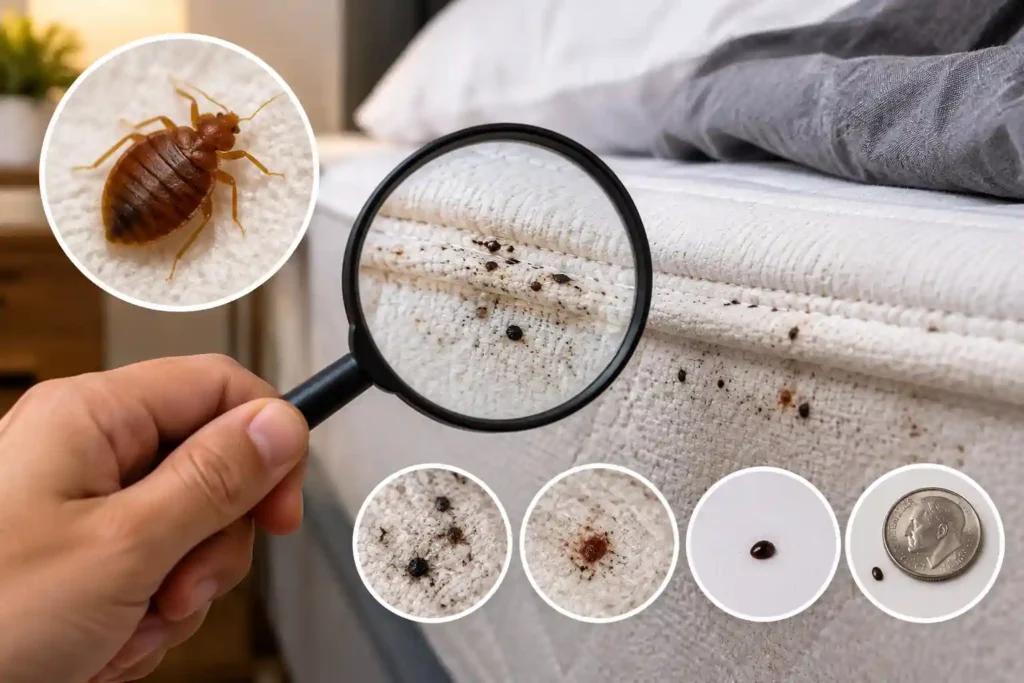
Bed bug droppings are very small. Most spots are about 1 to 2 millimeters wide, roughly the size of a pinhead or a marker tip. They look like tiny ink dots or small smudges. The color is usually rusty brown, dark brown, or black.
The dark color has a simple cause. Bed bugs feed on blood, and their waste is digested blood. Some people call it bed bug excrement, but the marks look the same no matter what name you use. Fresh spots can look darker and a little wet. Older spots look dull and dry.
Texture is a useful clue. A fresh spot can smear, and a dry one turns into a flat stain that sinks into the fabric. It does not sit on top like a flake or a crumb. That is why bed bug poop stains are hard to brush off with your hand.
Where to Look Around Your Bed
Start with your bedding. Look closely at bed bug spots on sheets, especially near the corners, along folds, and close to the edge of the mattress. Pillowcases deserve a check too, since bed bugs live close to where people sleep.
Next, check the mattress itself. Bed bug poop on bed surfaces tends to gather in seams, along the piping, near tags, and in tufts. These tight spots give bed bugs cover, so the waste builds up right where they hide. Use a bright flashlight and look slowly.
Then look at the furniture around the bed. Check wooden or upholstered headboards and the box spring. Move on to nearby baseboards, wall corners, and electrical outlets. In small NYC apartments, the bed is often close to walls, shared outlets, and baseboards, so these spots matter. Marks in these places, with others on the bedding, point more strongly to bed bugs.
How to Test a Suspicious Spot
A simple smear test can help. Wet a cloth or a baby wipe and gently press it on the dot. If it is bed bug waste, it will usually smear or bleed a reddish-brown color. Dirt, pen ink, and many other marks behave differently. Some will not smear at all.
Do this test on a small spot, and be gentle. If you are checking bed bug poop on sheets, take a photo before you wipe or wash. That keeps the evidence if you decide to call for help. Then move the bedding straight into a sealed bag and carry it to the washer.
Why Photos Help
Many people search for bed bug poop pictures to compare with what they see. Pictures can help, but screen colors and room lighting change how a spot looks. A photo from the internet should never be your only guide.
Take your own clear photos instead. Place a coin or a ruler next to the spot to show size. Take one close shot and one wider shot that shows where the mark sits. Looking at pictures of bed bug excrement online can teach you the basic look, but your own photos show your real situation. They also help when you describe the problem to a technician.
Look-Alike Marks That Are Not Bed Bugs
Not every dark dot is a bed bug problem. Many homeowners describe bed bug black stains on mattress edges, but ink, mold, dirt, and small crumbs can look the same at first glance. Mold usually looks fuzzy or spreads in patches. Ink from a pen tends to be uniform and may be on the surface of the fabric.
Other pests can leave dark waste too. Cockroach droppings are often larger and look like grains of pepper or coffee grounds. Mouse droppings are larger still and shaped like small grains of rice. Fleas leave tiny dark flecks, often near pets. The key difference is where you find them. Bed bug marks cluster near seams and sleeping areas, and they smear into a reddish-brown color.
Other Clues That Often Appear With Droppings
Spotting bed bugs droppings is a strong start, but one clue rarely tells the whole story. Look for small rusty or reddish blood spots on sheets, which can come from a bug crushed during sleep. Look for pale, empty shells that young bed bugs leave behind as they grow. Look for tiny pale eggs in tight seams. Some people also notice a sweet, musty smell when the problem is larger.
Bites can add to the picture, but they are not proof by themselves. Reactions vary from person to person, and other insects cause similar marks. For a longer checklist of early warnings, read our guide on Signs of Bed Bugs in NYC. Combining several clues gives a much clearer answer than relying on one.
Why Bed Bugs Show Up in NYC Homes
Bed bugs are not a sign of a dirty home. They spread by hitching a ride on luggage, clothing, bags, and used furniture. In a dense city, they can also move between apartments through wall gaps and shared pipes. A clean apartment can get them as easily as a cluttered one.
If you want to understand the causes in more detail, read about What Attracts Bed Bugs. It explains why people, warmth, and hiding places draw them in, and why cleanliness is not the main factor.
Travel is a big risk too, and the holidays bring extra trips, visitors, and crowded hotels. You can learn more in our post on How Christmas Travel Increases the Risk of Bed Bugsz, which shows how a family trip can end with unwanted guests at home.
Prevention starts before you leave. Our guide on How to Avoid Bed Bugs While Travelling This Holiday Season covers simple steps, like keeping your suitcase off the bed and checking mattress seams in hotel rooms.
A Quick Room Check You Can Do Tonight
You only need a flashlight, a plastic card, and about twenty minutes. Strip the bed and inspect every seam of the mattress. Run the edge of the card along the seams to push out anything hiding there. Then lift the box spring and check the underside and the frame joints.
Move to the headboard, the nightstand, and the wall behind them. Look inside drawers and under lamp bases. Check the couch and chairs if you sit there often. Work slowly and write down each spot you find. If you find several marks in more than one place, that pattern is more meaningful than a single dot.
Repeat the check a week later. New spots in the same places suggest the problem is active, while no new marks may mean the first dot had another cause. Either way, the notes you keep will help you decide your next step.
What to Do Right After You Find Spots
Stay calm and avoid spreading the problem. Do not carry bedding through the house in open arms, because eggs and bugs can drop along the way. Bag it where you strip the bed, then wash it hot and dry it on high heat.
Clean carefully. Wear gloves when you handle bed bug feces on fabric, and wash your hands afterward. A damp paper towel works for hard surfaces. Throw the towel away in a sealed bag. Keep in mind that cleaning bed bug poop only removes the mark. It does not remove the bugs that made it.
You may be tempted to buy a Bug Repellent for Bed from a store. Be careful with that idea. A repellent may not stop bed bugs that are already hiding in your mattress and frame, and some products can scatter bugs into other rooms. Treat any store product as a short-term step at best, not a full solution.
Finally, write down what you found. Note the dates, the places, and the photos you took. These notes help a technician understand how far the problem has spread.
Why DIY Often Falls Short
Bed bugs hide in cracks, folds, and wall voids that sprays and home tools may not reach. Eggs are also hard to find and hard to kill. This is one reason many people see the marks again a few weeks later. If you are wondering Why Do Bed Bugs Keep Coming Back After Treatment?, the answer is usually that some bugs or eggs survived, or new bugs were brought in.
If you want to learn about the process step by step, our guide on How To Get Rid of Bed Bugs explains what works at home and where a professional makes a difference. Heavy infestations, multi-unit buildings, and repeated returns almost always need expert help.
What Professional Treatment Looks Like
A professional visit starts with an inspection. The technician checks the bed, furniture, baseboards, and nearby rooms. They look for live bugs, eggs, shed skins, and dark spots, then explain what they found. This step matters because the right plan depends on the size of the problem and the layout of the home.
If bed bugs are confirmed, the next step is a treatment plan. Diamond Plus Pest Control offers Bed Bug Treatment NYC residents can book for apartments, houses, and businesses. Our process starts with an inspection, then a targeted treatment, then follow-up guidance to help prevent bugs from returning. We explain any preparation steps, so you know what to expect before service begins.
Property managers and building owners should act early. Bed bugs can move through shared walls and hallways, so a quick inspection can help protect neighboring units too.
Get Help From Diamond Plus Pest Control
Finding dark spots on your bedding is stressful, but you do not have to figure it out alone. Diamond Plus Pest Control is based in Staten Island and serves homes and businesses across New York City. If you need dependable Pest control NYC residents can call, our team is ready to help. Call (718) 427-6200 to talk about what you found, or ask about a free inspection and quote.
Bed Bug Dark Spot FAQs
How big are the dark spots left by bed bugs?
Most are about 1 to 2 millimeters wide, close to the size of a pinhead or a marker tip. They can look like round dots or small smudges.
Can I wash the stains out of my sheets?
Hot water and high heat in the dryer can clean the fabric, but they will not solve the cause. Some stains may fade, while others may stay. If you see them again, bed bugs may still be nearby.
Does finding dark spots mean I definitely have bed bugs?
Not always. Mold, ink, dirt, and other pest waste can look similar. The smear test, the location of the marks, and other clues like blood spots or shed skins help confirm the cause.
Are bed bugs more common in some NYC buildings?
Bed bugs can appear in any type of building, from new apartments to older homes. They spread through travel and shared spaces, so property type matters less than how often people and items come and go.
When should I call a professional?
Call as soon as you see repeated spots, live bugs, eggs, or blood stains. Early action usually means a smaller problem and a simpler plan.