You open a bag of flour and find tiny beetles. Moths flutter out of the cereal box. Fine webbing coats the inside of a rice bag. Pantry pests are among the most common — and most frustrating — kitchen insects in New York City apartments and homes, and they usually arrive in food you bought, not through any fault of your housekeeping. This guide explains pantry pest control in NYC: how to identify the insects, how they get in, how to get rid of them step by step, and how to keep them from coming back. If the problem keeps returning or affects a restaurant or food business, Diamond Plus Pest Control can help — call (718) 427-6200 for a free inspection.
What Are Pantry Pests?
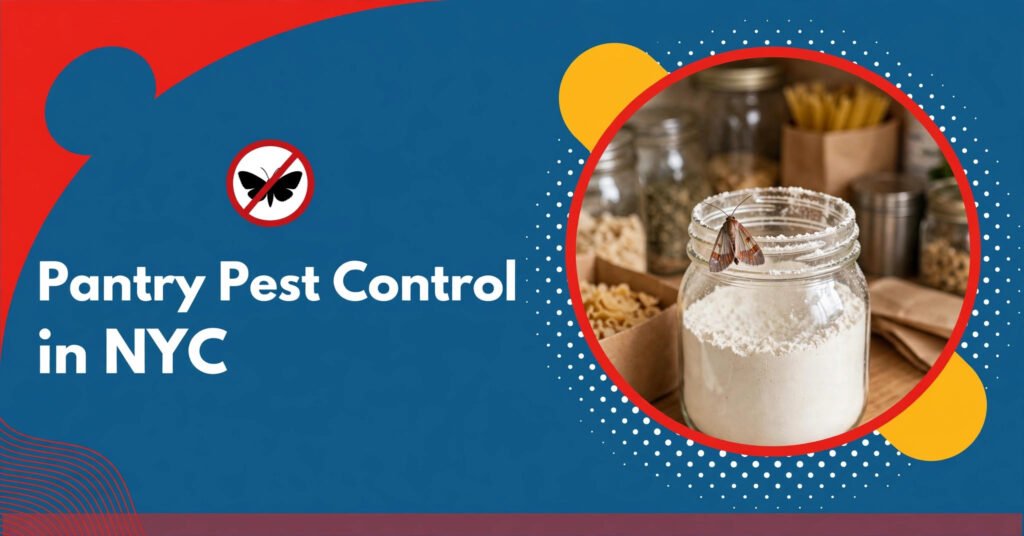
Pantry pests — also called stored-product pests — are insects that live and breed in dry food. The most common in NYC kitchens is the Indianmeal moth, a small moth with coppery-brown wing tips whose larvae spin fine silk webbing through flour, cereal, rice, pasta, dried fruit, nuts, pet food, and birdseed. Other common species include sawtoothed grain beetles (tiny, flat, brown beetles in flour and grain), weevils (small beetles with a distinctive snout, often in rice and whole grains), and flour beetles (small reddish-brown beetles in flour and meal). All of them can go unnoticed for weeks: the eggs and larvae are tiny, and the adults are small and easy to miss.
How Pantry Pests Get Into Your Kitchen
Pantry pests almost always arrive in infested food. Eggs or larvae may already be inside a bag of flour, a box of cereal, or a bag of pet food when you buy it — they are too small to see at the store. Bulk bins, birdseed, and pet food are common sources, and once one infested item enters your pantry, the insects spread to nearby packages. They can chew through paper, thin plastic, and cardboard, so a sealed-looking box is not always protection. In apartment buildings, pantry pests can also travel between units through shared walls and gaps, which is why the problem sometimes returns even after a thorough cleanout.
Signs of Pantry Pests
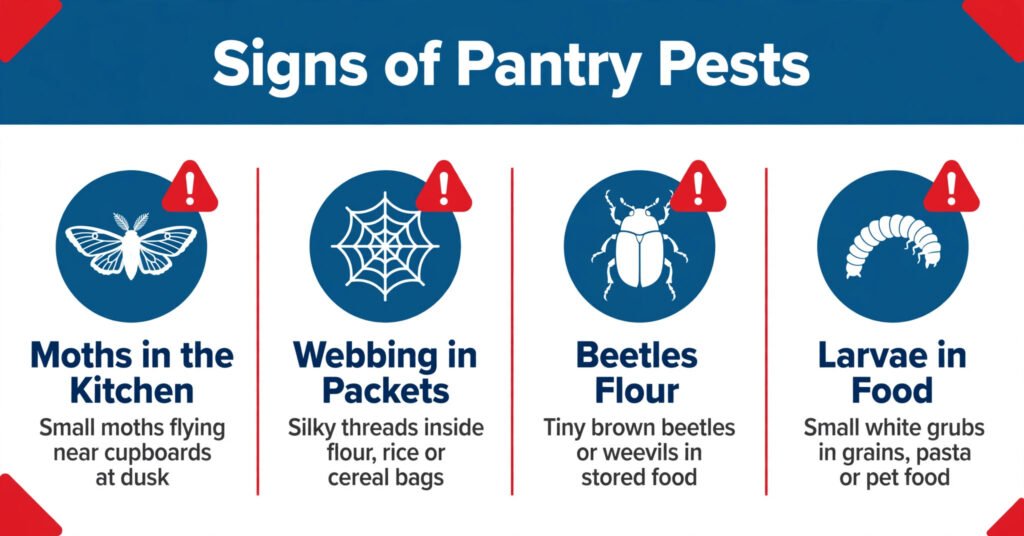
Look for small moths flying in the kitchen, especially in the evening; tiny beetles in or around dry food; fine silk webbing or clumps in flour, cereal, or rice; small holes in packaging; and a stale or musty smell from an infested container. Larvae — tiny white caterpillars with brown heads, in the case of Indianmeal moths — may be visible in the food itself or crawling on pantry shelves and walls. Check pet food and birdseed too: these are frequently the original source of an infestation that later spreads to human food.
How to Get Rid of Pantry Pests (Step by Step)
Step 1 — Inspect everything. Empty the pantry completely and check every bag, box, and jar of dry food, including items you rarely use. Pay special attention to flour, rice, cereal, pasta, nuts, dried fruit, spices, pet food, and birdseed. Step 2 — Discard infested food. Put anything with insects, larvae, or webbing into a sealed plastic bag and take it straight outside to the trash — do not leave it in the kitchen bin. When in doubt, throw it out: trying to save a half-used bag usually restarts the problem. Step 3 — Clean thoroughly. Vacuum pantry shelves, corners, cracks, and crevices, then wash shelves with hot soapy water. Pay attention to shelf edges and the gaps where shelves meet the wall — larvae hide there. Empty the vacuum outside immediately. Step 4 — Protect what remains. Move surviving dry goods into sealed glass jars or hard plastic containers with tight-fitting lids. As a precaution, you can freeze flour, rice, and grains for at least 4 days, which kills any eggs or larvae present. Step 5 — Monitor. Pheromone traps for Indianmeal moths (available at hardware stores) catch adult males and show whether activity continues. If moths keep appearing after two weeks, something infested is still in the kitchen — check pet food, birdseed, and rarely used items again.
What NOT to Do
Do not spray insecticide inside your pantry or on food storage shelves. Pesticide residue near food is a health risk, and sprays do not reach the eggs and larvae hidden inside packaging — so the problem returns anyway. Do not rely on mothballs or strong scents either; they do not control pantry pests. And do not assume the problem is solved after one cleanout: eggs can hatch over several weeks, so monitoring for at least a month is part of the job.
Preventing Pantry Pests
Buy dry goods in quantities you will use within a few months, and check packaging for damage or webbing before you buy. Transfer flour, rice, cereal, and pasta into sealed containers as soon as you get home. Store pet food and birdseed in sealed bins away from human food, and clean up spilled food promptly. Wipe pantry shelves regularly and check older items every few months — the earlier you catch pantry pests, the smaller the cleanout. In restaurants, cafes, and food retail spaces, rotate stock, inspect deliveries, and schedule regular professional inspections: a pantry pest problem in a commercial kitchen is a health-code issue, not just a nuisance.
When to Call a Professional
Most home pantry pest problems can be solved with the steps above. Call a professional when moths or beetles keep returning after two thorough cleanouts, when the infestation has spread beyond the kitchen, when you run a restaurant, cafe, grocery, or food storage business, or when the source cannot be found. Diamond Plus Pest Control inspects kitchens and food storage areas, identifies the species, finds the source, and recommends a treatment and prevention plan that is safe around food. Call (718) 427-6200 to schedule a free inspection.
Frequently Asked Questions
What are the tiny bugs in my flour?
Tiny beetles in flour are usually flour beetles or sawtoothed grain beetles, and tiny white caterpillars with webbing usually mean Indianmeal moth larvae. All are pantry pests that arrived in infested food. Discard the affected flour in a sealed bag, clean the shelf, and check nearby items.
Are pantry pests harmful?
Pantry pests do not bite, sting, or spread disease to people, but they contaminate food with webbing, droppings, and dead insects, and infested food should be discarded. The main harm is wasted food and, in businesses, health-code and reputation risk.
How long does it take to get rid of pantry moths?
A thorough cleanout plus monitoring usually resolves a home infestation within 2–4 weeks. Eggs can keep hatching for several weeks after the cleanout, so keep checking traps and shelves for at least a month before declaring the problem solved.
Can pantry pests spread to other rooms?
Yes. Adult Indianmeal moths can fly into other rooms, and larvae can crawl along walls and ceilings. Pet food, birdseed, and dried flower arrangements in other rooms can also harbor them — check those if kitchen activity continues after a cleanout.