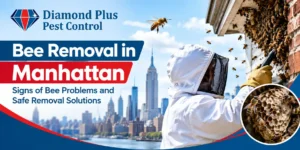
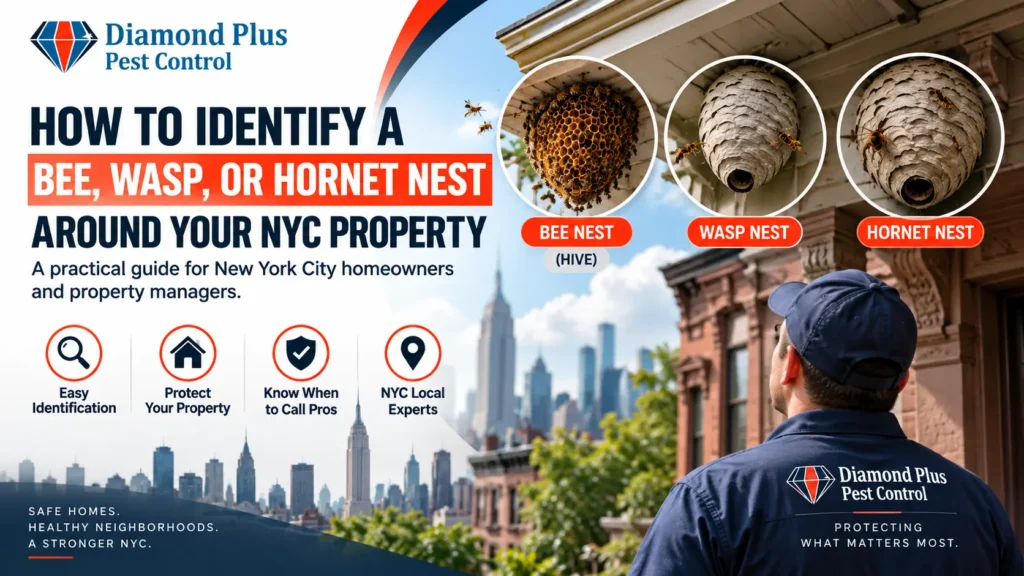
Finding a bee, wasp, or hornet nest around your NYC property can be confusing and stressful. Many homeowners notice insects flying around their home, yard, roof, balcony, or business location but do not know what type of nest they have found.
Correct identification is important because bees, wasps, and hornets behave differently. They also build different types of nests and may require different removal methods.
A nest near your property should not be ignored, especially when it is close to entrances, walkways, outdoor areas, customers, employees, or family members.
This guide explains how to identify a bee, wasp, or hornet nest around your NYC property, what signs to look for, and when professional help may be the safest option.
Diamond Plus Pest Control helps residential and commercial property owners throughout NYC identify and manage stinging insect problems.
Why Identifying Bee, Wasp, and Hornet Nests Matters in NYC
Not every stinging insect problem is the same.
A bee colony inside a wall requires a different solution than a paper wasp nest under a roof edge. A hornet nest high in a tree may create a different risk compared with a hidden nest near a building entrance.
Many property owners search for Pest Control NYC when they notice repeated insect activity but cannot identify the source.
Proper identification helps answer important questions:
Where are the insects coming from?
Is there an active nest?
What type of insect is present?
Is professional removal needed?
Trying to remove the wrong type of nest can create unnecessary risks. Some colonies may become defensive when disturbed.
How to Identify a Bee Nest Around Your NYC Property
Bee nests are often hidden inside protected areas. Unlike many wasps, bees usually build their colony inside a hive structure or protected cavity.
Common bee nesting locations include walls, roof spaces, tree cavities, sheds, chimneys, and outdoor structures.
One common sign of a bee nest is repeated activity around the same opening. You may notice bees entering and leaving a small crack in a wall or roof.
A large number of bees flying around one location usually means there is a nearby colony.
Do not block the opening while bees are still active. This can force bees into other areas of the building.
If you find a bee colony around your property, Bee Removal NYC can help you understand the safest professional removal options.
How to Identify a Wasp Nest Around Your NYC Property
Wasp nests can look different depending on the species.
Paper wasps usually create small open nests. These nests often look like an upside-down umbrella with visible cells.
Yellowjackets create enclosed nests. They may build nests underground or inside walls, ceilings, and other hidden areas.
Common wasp nesting areas include:
- Roof edges
- Wall gaps
- Trees and shrubs
- Garages
- Decks
- Outdoor structures
People researching types of wasps in ny often find that different species can create nests in very different locations.
The location of the nest is one of the best clues for identifying the insect.
How to Identify a Hornet Nest in NYC
Hornet nests are usually larger and more enclosed compared with many wasp nests.
They are often made from paper-like material created from wood fibers. The outside layer protects the colony inside.
A hornet nest may appear:
- Gray or brown
- Round or oval
- Attached to trees or structures
- Located above ground
Many people confuse large wasps with hornets because they look similar.
Reading What’s the Difference Between Wasps and Hornets can help homeowners understand the differences between these insects before choosing a removal option.
The size of the insect alone is not enough to identify the species.
Signs That Help You Identify a Stinging Insect Nest Safely
The safest way to identify a nest is from a distance.
You do not need to approach the nest closely. Watching insect movement can provide useful information.
Pay attention to where insects enter and leave. Look for repeated activity around the same location.
A nest may be active if you notice:
- Regular insect traffic
- A visible paper structure
- Bees entering a small opening
- Increased activity during warm weather
Avoid touching or disturbing the nest.
An active colony may defend itself when threatened.
Common Places Where Bees, Wasps, and Hornets Build Nests Around NYC
NYC properties provide many areas where stinging insects can build nests.
Residential properties may have nests around:
Rooflines, balconies, gardens, garages, sheds, fences, and exterior walls.
Apartment buildings may experience activity near:
Exterior cracks, roof areas, window spaces, vents, and shared outdoor locations.
Commercial properties may find nests near:
Store entrances, outdoor seating areas, dumpsters, loading areas, rooftops, and landscaping.
Diamond Plus Pest Control provides services throughout:
Pest Control Queens, Pest Control Brooklyn, Pest Control Manhattan, Pest Control Bronx, Pest Control Staten Island, Pest Control Long Island, and Pest Control New Jersey.
Every property has different conditions, so professional inspection helps determine the safest solution.
Difference Between Bee, Wasp, and Hornet Nests
Bee, wasp, and hornet nests have different structures.
Bee colonies usually contain wax comb protected inside a hive or cavity.
Wasp nests are often made from paper-like material. Some are open while others are completely covered.
Hornet nests are usually enclosed and larger. They often have a protective outer layer around the colony.
People searching for wasps of New york may discover several species with different nesting habits.
A nest under a roof edge may require a different approach than a colony hidden inside a wall.
Are Wasps or Hornets More Dangerous Around NYC Properties?
Many homeowners ask are wasps or hornets worse after discovering a nest.
The answer depends on the situation.
The insect species, nest location, colony size, and human activity around the nest all affect the risk.
A single insect flying through a garden is different from a colony near a front door or business entrance.
Wasps and hornets may become defensive when they feel their nest is threatened.
The biggest concern is usually not the insect itself. The main concern is disturbing an active colony in an area where people cannot avoid it.
What To Do When You Find a Bee, Wasp, or Hornet Nest
The first step is to keep distance from the nest.
Do not knock it down.
Do not spray random chemicals.
Do not seal the opening while insects are still entering and leaving.
These actions may make the colony more aggressive or force insects into other parts of the property.
If you find a nest, monitor the activity from a safe location.
You can also review What to Do When You Find a Wasp to understand the safest steps after discovering a stinging insect nest.
For nests near homes, businesses, or high-traffic areas, professional inspection is usually the safest choice.
Why Professional Nest Identification Is Important
Many homeowners try DIY methods after finding a nest.
However, visible insects are often only part of the problem.
The main colony may be hidden inside a wall, roof, tree, or another protected location.
A professional technician can identify:
The insect species
The nest location
The activity level
The safest removal approach
People searching bee exterminators near me usually need quick help because the nest is affecting their home or business.
Professional identification helps prevent unnecessary risks.
Professional Bee, Wasp, and Hornet Removal Options in NYC
Professional removal focuses on solving the source of the problem.
Removing a few visible insects does not always eliminate the colony.
A trained technician can inspect the area and recommend the right solution.
For example, hidden bee colonies may require a different process than exposed wasp nests.
Homeowners and businesses looking for bee removal services should choose a company that understands local NYC property conditions.
Diamond Plus Pest Control helps manage stinging insect problems for homes, apartments, offices, restaurants, and commercial buildings.
Safe Wasp and Bee Removal Methods
Different nests require different approaches.
A nest inside a wall should not be treated the same way as a small outdoor nest.
Professional removal may include:
Inspection
Nest identification
Safe treatment
Prevention recommendations
If you are dealing with wasps specifically, How to Get Rid of Wasps NYC provides additional information about safe wasp control.
For homeowners who want to understand safe removal practices, How to Remove Wasp Nest Safely explains why nest location and insect identification matter before treatment.
Understanding Bee Control in NYC
Bee problems require careful identification because not every bee situation should be handled the same way.
Some colonies may require removal because they are inside structures or creating safety concerns.
Others may require different management approaches.
Learning What Is Bee Control in NYC helps property owners understand why professional inspection is important before choosing a solution.
Bee control is not only about removing insects. It is also about preventing future problems.
How to Prevent Future Bee, Wasp, and Hornet Nests
After a nest problem is resolved, prevention is important.
Property owners can reduce future nesting opportunities by checking exterior areas regularly.
Look for:
Small wall openings
Roof gaps
Damaged screens
Exterior cracks
Unsealed spaces
Keep outdoor garbage covered and clean food spills quickly.
Businesses should pay extra attention to outdoor dining areas, dumpsters, and customer entrances.
Regular inspections can help find small nests before they become larger problems.
Choosing a Professional Bee Removal Company in NYC
Choosing the right company matters when dealing with stinging insects.
A reliable bee removal company should provide inspection, proper identification, and a clear treatment plan.
Diamond Plus Pest Control helps NYC property owners understand the source of their insect problem and choose the right solution.
Professional help is especially important when:
- The nest is hidden
- The colony is large
- The location is unsafe
- People are regularly near the nest
Some homeowners search for free bee removal options, but availability depends on location, situation, and available programs.
Frequently Asked Questions
1. How can I identify a bee, wasp, or hornet nest?
Look at the nest shape, location, and insect activity from a safe distance. Bees usually create protected hive structures, while wasps and hornets often create paper nests.
2. Can I remove a nest myself?
DIY removal is risky because disturbing an active colony can cause defensive behavior. Professional inspection is usually safer.
3. Why are bees entering my wall?
Bees may have created a colony inside a wall cavity. Blocking the entrance without removing the colony can create additional problems.
4. Are wasps and hornets the same?
No. Hornets are related to wasps but have different characteristics and nesting habits.
5. When should I call a professional?
Call when the nest is near people, inside a structure, difficult to reach, or causing repeated insect activity.
6. Does Diamond Plus Pest Control remove bee and wasp nests?
Yes. Diamond Plus Pest Control helps NYC homeowners and businesses inspect and manage bee, wasp, and hornet problems safely.
Conclusion
Identifying a bee, wasp, or hornet nest around your NYC property is the first step toward safe removal.
Different insects create different nests and require different solutions.
Whether you own a home, apartment building, restaurant, office, or commercial property, professional identification can help protect people and prevent future problems.
Diamond Plus Pest Control provides expert stinging insect solutions throughout NYC and surrounding areas.
If you discover an active nest, contact a local pest professional to determine the safest next step for your property.