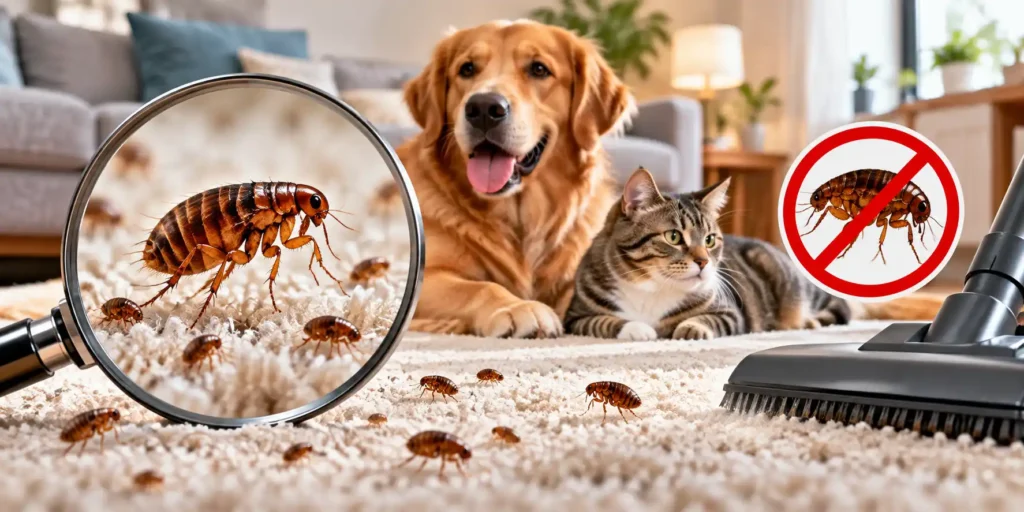
Finding fleas inside your home can quickly become a serious problem. These tiny pests can hide in carpets, furniture, pet bedding, floor cracks, and other protected areas. Even when you remove the fleas you can see, eggs and developing fleas may remain hidden around your property.If you are wondering how to get rid of fleas at home, the key is to treat the whole infestation instead of only killing adult fleas. Cleaning, vacuuming, treating pets when needed, and targeting flea breeding areas all play an important role.Flea problems can affect apartments, houses, rental properties, offices, and other buildings across New York City. A small problem can also become harder to manage when fleas have enough time to reproduce.
This guide explains how fleas enter homes, where they hide, how their life cycle affects treatment, what steps you can take yourself, and when professional flea control may be the better option.
Why Fleas Can Become a Serious Problem Inside NYC Homes
Fleas are small, but an indoor infestation can be difficult to control. Adult fleas feed on blood and may use pets, wildlife, rodents, or people as hosts. Once they enter a suitable indoor environment, they can spread beyond the area where they were first noticed.
A flea infestation in a house may involve several stages of the flea life cycle at the same time. Adult fleas are only one part of the problem. Eggs, larvae, and pupae can remain in protected locations around the property. NYC homes can provide many hiding areas, including rugs, upholstered furniture, pet resting areas, floor gaps, and spaces along walls. Apartment living can make the source even harder to identify when pets, previous occupants, rodents, or wildlife are involved, which is why homeowners may need to understand How to Kill Fleas in House Quickly.Understanding the source is therefore an important first step before choosing a treatment plan.
Where Do Fleas Come From in a House?
Many homeowners assume fleas only appear when they have a dog or cat. Pets are a common source, but they are not the only possible source.
Fleas can be carried indoors on pets or associated with rodents and other animals. They may also remain in a property after an infested animal is no longer present. This is one reason people sometimes need to know how to get rid of fleas in a house without pets or need pest control NYC.Possible sources include pets, rodents, wildlife activity, secondhand upholstered items, or an existing infestation that was not completely eliminated.If fleas keep returning after cleaning, identifying and correcting the source becomes especially important.
Understand the Flea Life Cycle Before Starting Treatment
Successful flea removal becomes easier when you understand how the pest develops.A flea goes through four main stages: egg, larva, pupa, and adult. Adult fleas live on a host and feed on blood. Eggs can fall from the host into carpets, bedding, furniture, and floor areas. Larvae then develop in protected locations before forming pupae.The pupal stage can make flea problems frustrating because developing fleas are protected inside cocoons. This means a single cleaning session may not eliminate every stage.
People searching for how to get rid of fleas should therefore focus on breaking the entire life cycle rather than expecting one quick treatment to solve an established infestation.
Signs You May Have Fleas in Your NYC Property
Fleas are very small, so you may notice evidence of them before clearly seeing the insects.Common warning signs include unexplained itchy bites, pets scratching more than usual, tiny dark insects moving through carpets or fabrics, and flea dirt around pet resting areas.One simple way to investigate is to inspect areas where pets sleep or where bites are most common. Pay close attention to rugs, sofas, bedding, baseboards, and other protected areas.
The earlier you identify the problem, the easier it may be to stop it from spreading to more rooms.
How to Get Rid of Fleas in the House Step by Step
If you want to know how to get rid of fleas in the house, begin with a coordinated approach. Treating one sofa or one room while ignoring other affected areas can allow the flea life cycle to continue.Start by identifying the rooms where flea activity is highest. Then inspect pets, bedding, rugs, upholstered furniture, floor edges, and nearby hiding places.
Vacuum floors and carpets carefully. Wash washable fabrics using suitable cleaning instructions. Clean pet resting areas and continue monitoring the property after the first round of cleaning.
For larger infestations, professional inspection and treatment may be needed to reach areas that ordinary household cleaning misses.
Vacuum Carpets, Rugs, Floors, and Hidden Edges
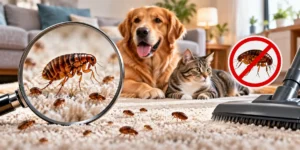
Vacuuming is one of the most useful physical control steps for an indoor flea problem.Pay special attention to carpets, rugs, upholstered furniture, floor edges, underneath furniture, and places where pets spend time. Move furniture when practical so you can reach protected areas.Anyone researching how to get rid of fleas in carpet should understand that the visible surface is not the only concern. Eggs and developing fleas may be present deeper in carpet fibers or around nearby floor edges.Empty the vacuum contents carefully after use and continue vacuuming during the control process. Repeated cleaning helps address newly emerging fleas rather than giving them time to reproduce again.
Wash Bedding and Other Washable Fabrics
Pet bedding, blankets, removable furniture covers, and other washable fabrics can provide flea hiding areas.
Wash affected items according to their care labels and dry them thoroughly. Do not move potentially infested fabrics through several rooms without containing them first, as this may spread flea material to new areas.If your pet frequently sleeps on your bed or sofa, include those locations in your cleaning plan.Regular washing alone may not solve a major infestation, but it can remove fleas and eggs from important resting areas.
How to Kill Flea Eggs and Stop the Life Cycle
Learning how to kill flea eggs is important because eggs can be distributed throughout areas where an infested host spends time.For homeowners asking how to get rid of flea eggs in your home, consistent vacuuming, washing suitable fabrics, treating the host when applicable, and addressing the surrounding environment are key steps.Do not focus only on adult fleas. Even if adult activity drops quickly, immature stages can continue developing.Follow-up is therefore an important part of flea control. Keep inspecting and cleaning affected rooms after the initial treatment rather than assuming the problem is gone as soon as bites decrease.
Treat Sofas, Chairs, and Upholstered Areas Carefully
Furniture gives fleas many protected places to develop.
If you are trying to learn how to get rid of fleas on furniture, inspect seams, cushions, gaps, fabric folds, and the space beneath the furniture. Vacuum accessible areas thoroughly and follow the furniture manufacturer’s cleaning guidance.For a broader problem involving both rugs and upholstery, how to get rid of fleas in carpets and furniture comes down to treating these areas as connected parts of the same infestation.
Avoid treating only the place where you were bitten. Fleas may be developing elsewhere in the room.
What Kills Fleas Inside a House?
Homeowners often ask what kills fleas in the house, but there is rarely one action that solves every stage of an established infestation.
Vacuuming can physically remove some fleas, eggs, and debris. Washing suitable fabrics helps clean bedding and other materials. Appropriate flea-control products may also be used according to their labels.When people search what kills fleas instantly, they are usually looking for a fast solution to adult fleas. Killing exposed adults what kills fleas instantly can provide immediate relief, but it does not automatically eliminate eggs, larvae, or pupae elsewhere in the home.
The better goal is complete control of the infestation rather than only immediate knockdown.
Treat Pets at the Same Time as the Home
If you have dogs or cats, environmental flea control and pet flea management should happen together.A veterinarian can advise you about suitable flea prevention or treatment for your pet. Do not use a product on an animal unless it is specifically intended for that animal and used according to professional or label directions.If the home is cleaned but an untreated pet remains a flea host, fleas can continue feeding and reproducing.
Check pet beds, blankets, crates, favorite chairs, and other resting areas because eggs can fall into these locations.
How to Kill Fleas in the House Without Missing Hidden Areas
Understanding how to kill fleas in the house requires more than treating open floor space.
Inspect under beds, sofas, cabinets, rugs, and other furniture. Look along baseboards and floor edges. Pay attention to dark, protected areas where pets rest.In apartment buildings, you should also consider whether rodents or other animals could be contributing to the problem.A thorough approach is especially important when flea activity has been present for several weeks or appears in multiple rooms.
Can You Get Rid of Fleas Fast?
People dealing with bites naturally want to know how to get rid of fleas in your house fast. Immediate cleaning can reduce flea activity, but complete control may take longer because different flea life stages can be present.
Start with intensive vacuuming, laundering suitable fabrics, addressing pets, and identifying the source. Continue checking affected rooms rather than stopping after one day.If fleas remain active despite your efforts, professional help can save time and reduce the risk of repeating ineffective treatments.
Why Fleas Sometimes Return After DIY Treatment
Fleas may appear to disappear and then return. This does not always mean that nothing worked.Developing fleas can emerge after the first cleaning or treatment. Hidden areas may also have been missed. In other cases, the original host or source may still be present.For this reason, people researching how to get rid of fleas in your home permanently should focus on long-term prevention as well as removal.Control the current infestation, address the host or source, clean affected environments, and keep monitoring for renewed activity.
What to Do About a Severe Flea Problem
A large infestation requires a more thorough response.
Knowing how to get rid of a severe flea infestation in your home may involve professional inspection because widespread activity can indicate that several rooms or hidden areas are affected.Signs of a more serious problem can include frequent bites, fleas appearing in multiple rooms, continued activity after repeated cleaning, or a problem linked to rodents or other animals.Professional pest control can help identify where flea activity is concentrated and determine which areas require treatment.
Choosing the Right Flea Treatment for Your Property
The best flea treatment for home depends on the size of the infestation, property layout, presence of pets, likely source, and areas where fleas are developing.A small and recently discovered problem may respond well to careful cleaning and source control. A widespread or recurring problem may need a more structured treatment plan.Avoid randomly applying several products without understanding their labels or where treatment is needed. More product does not automatically mean better flea control.A targeted approach is safer and more useful than treating every surface without a plan.
How Professional Flea Control Works
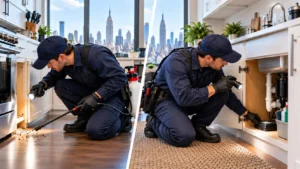
A professional flea treatment normally begins with an inspection of the property and an assessment of likely flea activity.A pest control professional may examine carpets, furniture, pet resting locations, floor edges, cracks, and other areas linked to the infestation. The treatment plan can then focus on relevant locations instead of relying on guesswork.
Homeowners may also receive preparation and follow-up instructions. Following these directions is important because cleaning, access, pet management, and monitoring can affect the overall result.Professional service becomes especially useful when DIY attempts have not stopped the infestation.
How to Get Rid of Fleas in an NYC Apartment
Learning how to get rid of fleas in an NYC apartment can involve challenges that are different from treating a detached house. Apartments may have limited floor space but many hiding locations. Previous occupants, neighboring pest activity, pets, and rodents may also affect the situation. Inspect the entire apartment, not only the bedroom or room where bites first appeared. Clean carpets, rugs, upholstered furniture, pet areas, and floor edges. If you rent, follow any appropriate building or landlord procedures when a broader pest issue may be involved. Persistent activity is a good reason to arrange Pest Control in Queens NY.
When Should You Call a Flea Exterminator in NYC?
Knowing when to call an exterminator for fleas in NYC can prevent weeks of repeated DIY treatments.Consider professional help when fleas continue appearing after thorough cleaning, the infestation affects several rooms, bites are frequent, the source is unclear, or you are dealing with a commercial property where fast control is important.A flea exterminator NYC property owners contact should be able to inspect the infestation, explain the treatment process, and provide preparation guidance.Professional help can be particularly valuable when you need to address both the current infestation and the conditions allowing fleas to remain inside.
Professional Flea Control for NYC Homes and Businesses
Effective flea control NYC property owners need should account for the type of property and severity of the infestation.
Residential flea problems can affect apartments, single-family homes, rental units, and multi-unit buildings. Commercial properties may have different concerns because flea activity can affect staff, customers, tenants, and day-to-day operations.
Diamond Plus Pest Control provides flea control services NYC customers can consider when flea activity is difficult to manage through household cleaning alone.
Our team can inspect problem areas and recommend a treatment approach based on the conditions found at the property.
Flea Prevention Tips After Treatment
Once flea activity is under control, prevention becomes important.
- Vacuum carpets, rugs, furniture, and pet resting areas regularly.
- Wash pet bedding and other washable fabrics as needed.
- Keep pets on an appropriate veterinarian-recommended flea prevention program.
- Watch for rodents or wildlife activity around the property.
- Inspect secondhand rugs and upholstered furniture before bringing them indoors.
- Seal pest entry points where practical.
- Respond quickly if you notice new bites or flea activity.
- Schedule professional pest inspection when an infestation keeps returning.
These steps can reduce the conditions that allow fleas to establish another indoor population.
Fleas May Point to Other Pest Problems
Sometimes fleas are only one part of a larger pest issue.For example, rodents can introduce or support flea activity in a building. If you notice rodent evidence along with fleas, our Rodent Control NYC service can help address the underlying pest problem.NYC properties can also experience several seasonal or structural pest issues. Diamond Plus Pest Control offers Pest control nyc solutions for residential and commercial properties that need broader pest management.
For targeted flea problems, property owners can learn more about our Flea Control Service NYC options.
Other pest issues may require separate solutions, including Bed Bug Treatment NYC, Bee Removal NYC, Mosquito Control Services NYC, and Tick Control NYC.
Treating each pest according to its behavior and source gives property owners a more focused approach than relying on general DIY products.
Local Pest Control Across New York City and Nearby Areas
Diamond Plus Pest Control serves homeowners, landlords, property managers, and businesses across the NYC area.Our service coverage includes Bronx, Brooklyn, Long Island, Manhattan, Queens, Staten Island, and New Jersey.Customers searching for Pest Control in Manhattan, Pest Control in Queens NY, or Pest Control in Bronx NY can contact our team to discuss the pest activity at their property.
Whether the problem affects a small apartment, house, rental property, office, or commercial building, identifying the pest and its source is the first step toward an effective treatment plan.
Frequently Asked Questions About Fleas in NYC Homes
Can fleas live in a home without pets?
Yes. Fleas may be associated with rodents, wildlife, previous pets, or an earlier infestation. Finding fleas without owning a pet means the source should be investigated rather than assuming the insects will disappear on their own.
How long can it take to remove fleas from a house?
The time can vary depending on infestation size, environmental conditions, treatment method, and whether the source has been controlled. Because multiple flea life stages can be present, follow-up cleaning and monitoring may be needed.
Can vacuuming alone eliminate a flea infestation?
Vacuuming is an important control step, but it may not be enough for a widespread infestation. It works best as part of a larger plan that includes source control, washing suitable fabrics, pet management when relevant, and professional treatment when needed.
Where do fleas hide most often inside a home?
Common areas include carpets, rugs, upholstered furniture, pet bedding, floor edges, cracks, and locations where animals regularly rest. A proper inspection should cover more than the area where bites occur.
Why do I still see fleas after cleaning my home?
Some immature fleas may remain protected and emerge later. You may also have missed a breeding area or failed to remove the original host or source. Continued monitoring and follow-up are important.
Should I hire a professional for fleas?
Professional service is worth considering when flea activity is widespread, keeps returning, affects several rooms, or remains after repeated DIY efforts. A professional inspection can also help identify hidden sources that may be difficult to locate yourself.
Get Professional Flea Control in NYC
Fleas can be frustrating because the insects you see are only part of the infestation. Effective control requires attention to adult fleas, eggs, larvae, pupae, host animals, carpets, furniture, and other hiding areas.
If repeated cleaning has not solved the problem, Diamond Plus Pest Control can help. We provide flea and pest control solutions for residential and commercial properties throughout NYC and surrounding service areas.
Do not allow a small flea problem to develop into a larger infestation. Contact Diamond Plus Pest Control today to discuss your flea problem, schedule an inspection, and get professional help protecting your home or business.