If you find roaches, mice, rats, or ants in your property, should you call pest control or an exterminator? The main difference in Pest Control vs. Extermination is the scope of the service. Extermination generally focuses on eliminating pests that are already present. Pest Control can include elimination along with inspection, identification, monitoring, exclusion, and prevention.However, the terms overlap. An exterminator may use many of the same methods as a pest control professional.Understanding the difference can be especially useful in New York City. Apartments, shared walls, utility openings, basements, kitchens, and common areas can affect how pests enter and move through a building.
What Is Pest Control?
Pest Control is the process of managing unwanted pests and the conditions that can support their activity.
So, what does pest control mean? It may involve finding the pest, identifying it correctly, treating active areas, monitoring the results, and reducing conditions that may contribute to another infestation.A professional Pest Inspection is often an important starting point. The technician can look for live pests, droppings, nesting material, damage, travel routes, and possible entry points.Correct Pest Identification matters because different pests require different approaches. A treatment suitable for ants may not be appropriate for cockroaches or rodents.Broader Pest Management Services may also address food, moisture, sanitation, shelter, and structural openings that support pest activity.
Common Pest Control Methods
There is no single Pest Control Treatment for every infestation.A professional may use monitoring traps, bait stations, rodent traps, targeted treatment, pesticide applications, nonchemical methods, or a combination of methods. The choice should depend on the pest and conditions found during inspection.Sanitation can help reduce accessible food and other attractants. Moisture Control may help when leaks or damp conditions contribute to pest activity.Pest Exclusion focuses on places pests can use to enter a structure. This may include gaps around pipes, utility lines, doors, walls, and other openings.Treatment and prevention therefore serve different purposes. Treatment addresses existing activity. Prevention focuses on reducing conditions that could support future pest problems.When pesticides are used, residents should follow the pesticide product label and any preparation or re-entry instructions provided for the treatment.
What Is Extermination?
Extermination generally focuses on eliminating or suppressing an existing pest population.If you are wondering what does extermination mean?, think of it as the active-control side of pest management. However, extermination does not automatically mean a one-time visit or chemical-only treatment.An Exterminator may first evaluate where pests are active and how serious the problem appears.So, What Does an Exterminator Do? Depending on the infestation, the professional may use traps, baits, targeted pesticide applications, nonchemical methods, monitoring, or other pest-specific techniques.This is why Extermination vs. Pest Control is not a choice between two completely separate industries. The methods and professional roles can overlap.
When Is Extermination Needed?
Direct treatment may be appropriate when pests are already active inside or around a property. For example, cockroaches may be appearing around kitchen cabinets. Mice may be leaving droppings in the basement. Ants may repeatedly travel across counters or near food-storage areas.The important step is identifying what is present before deciding how to control it.A visible pest can be a useful clue, but it does not always show where the infestation started or how pests are entering.
Pest Control vs. Extermination: Key Differences
The Difference Between Pest Control and Extermination is mainly one of emphasis and scope.
| Area | Pest Control | Extermination |
| Main purpose | Manage current pest activity and may address conditions linked to future problems | Primarily eliminate or suppress existing pests |
| Inspection | Often used to identify pests, activity, and contributing conditions | May identify where active treatment is needed |
| Treatment | May include traps, baits, targeted applications, exclusion, and other methods | Uses appropriate methods to reduce or eliminate active pests |
| Prevention | Often included in broader pest management | May be included depending on the service |
| Monitoring | Helps measure activity and treatment results | May be used to evaluate whether active treatment worked |
| Follow-up | Can be important for recurring problems | Depends on the pest, infestation, and treatment plan |
The terms are not opposites. Pest control can include extermination, and an exterminator may also provide inspection, monitoring, and preventive recommendations.When comparing Pest Control vs. Exterminator services, focus on what the provider actually includes rather than the label alone.
How Does Professional Pest Control Work?
Professional Pest Control usually begins with understanding the problem before choosing a treatment. The exact process depends on the pest and property, but several steps commonly work together.
Inspection and Pest Identification
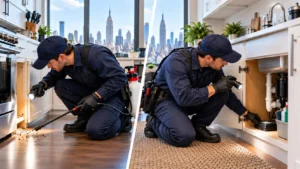
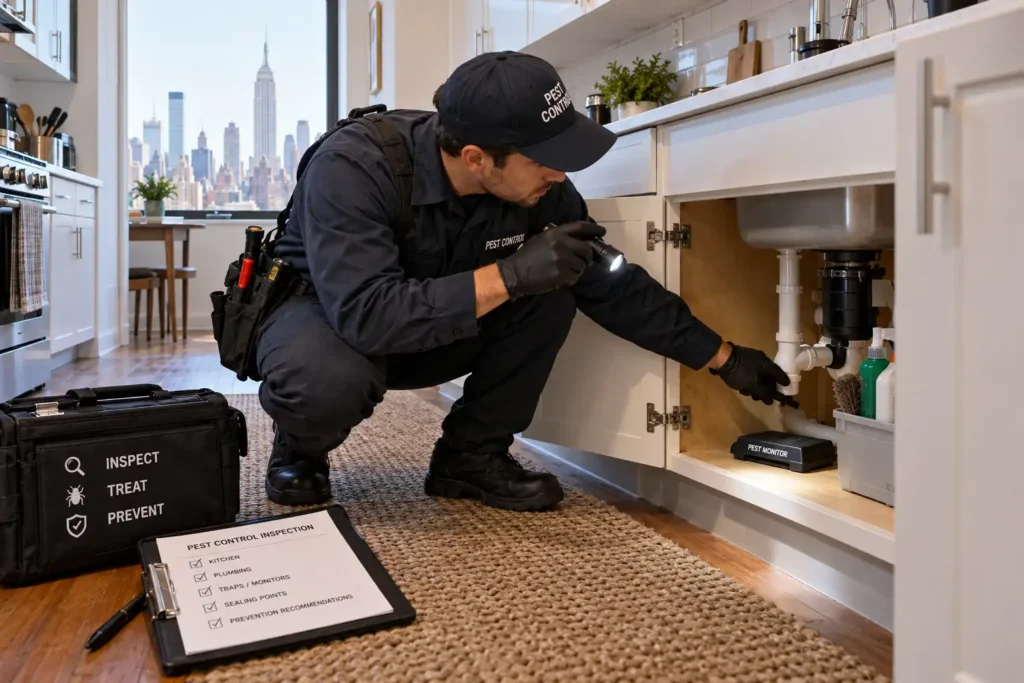
Pest Inspection and Monitoring can help establish what pest is present and where activity is occurring.A Pest Control Technician may look for live pests, droppings, gnaw marks, shed skins, nesting materials, damaged packages, and other evidence.Identification then guides the next step. Treating a pest without correctly identifying it can make it harder to address the actual source.
Assessing Pest Activity and Entry Points
The technician may inspect kitchens, bathrooms, basements, storage areas, utility openings, wall gaps, and other locations related to the problem.Possible pest entry points can include openings around pipes and utility lines, damaged seals, wall gaps, and spaces around doors.Food, moisture, shelter, and waste conditions may also be considered.
Creating a Treatment Plan
The inspection findings help shape the treatment plan.The technician can consider the pest species, extent of activity, hiding locations, access points, building layout, and other contributing conditions.Two properties with the same pest may therefore require different approaches.
Choosing Appropriate Treatment Methods
Treatment should fit the pest rather than follow a one-size-fits-all formula.Cockroach management may include monitoring and targeted baiting. Rodent management can involve traps, exclusion, sanitation, and monitoring. Ant management may focus on trails, food or moisture sources, and likely entry areas.Some infestations may require pesticide applications. Others may rely more heavily on trapping, exclusion, sanitation, or another method.
Monitoring and Follow-Up
Pest Monitoring helps determine whether activity continues after treatment.A follow-up inspection may be useful when signs remain or when the property has a recurring pest infestation.Monitoring can help determine whether another treatment is needed or whether an unresolved entry point or building condition is contributing to continued activity.
What Is Integrated Pest Management (IPM)?
Integrated Pest Management (IPM) combines information about pests with prevention, monitoring, and appropriate control methods.Instead of automatically applying the same treatment to every problem, IPM starts with identification and assessment. Monitoring helps show where pests are active and whether the problem is changing.Prevention can include sanitation, moisture management, sealing cracks and gaps, Structural Exclusion, and reducing access to food or shelter.When active control is needed, targeted methods can then be selected for the particular pest.
How IPM Can Help With Recurring Pest Problems
A pest that keeps returning may indicate that the conditions supporting its activity have not been fully addressed.For example, mice may continue entering through accessible structural gaps. Cockroach activity can continue when food, moisture, or hiding areas remain available.Treatment can address current activity. Long-term pest prevention, exclusion, sanitation, and pest monitoring and follow-up can address other parts of the problem.This does not guarantee that pests can never return. It provides a broader way to understand and manage recurring activity.
Pest Control vs. Extermination for NYC Homes and Buildings
The distinction between treatment and broader pest management can be particularly relevant in connected buildings.
NYC apartments and Multi-Family Buildings may contain shared walls, plumbing routes, utility openings, common areas, basements, kitchens, and garbage storage areas. These features can affect how some pests move through a property.A cockroach seen in one kitchen, for example, may require more than treating the exact place where it appeared. The surrounding conditions and possible movement routes can also matter.Tenants, landlords, and property managers can learn more in Pest Control Solutions for NYC Apartments. For taller multi-unit properties, Pest Control for High-Rise Buildings in NYC provides more building-specific information.
Common Pest Problems in NYC Properties
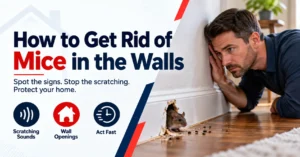
Cockroaches may be found around kitchens, bathrooms, plumbing areas, food sources, moisture, and protected hiding spaces.Mice can use structural openings and hidden building spaces. Rats may also become a concern where food, garbage, shelter, and accessible entry points are available.Property owners dealing specifically with rats or mice can review Rodent Control NYC for service-specific information.Ants may enter buildings while searching for food, water, or suitable nesting conditions. Identifying where they are active can help guide treatment.
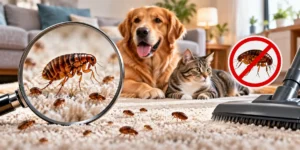
Bed bugs and spiders can also require pest-specific identification and treatment. The correct approach depends on the pest rather than simply whether the service is called extermination or pest control.
Should You Choose Pest Control or an Exterminator?
Do not make the decision based only on the job title.If you already have an active infestation, you need a professional who can identify the pest and provide appropriate treatment. If pests repeatedly return, inspection, monitoring, exclusion, sanitation, or preventive measures may also need attention.A one-time pest treatment may be appropriate for some situations. Other problems require follow-up because the source, entry points, or contributing conditions remain. If you are unsure whether professional help is necessary, read When Should You Call an Exterminator in NYC.
Questions to Ask a Pest Control Professional
Before arranging service, ask practical questions that clarify what you are getting:
- What pest appears to be causing the problem?
- Will you inspect the affected areas before treatment?
- Which treatment methods may be appropriate?
- Are there entry points or property conditions I should address?
- Will monitoring or follow-up be needed?
- Are there preparation or re-entry instructions?
Our guide on How to Choose the Best Pest Control Company in NYC provides additional questions to consider when comparing providers.
When Should NYC Property Owners Call a Pest Control Professional?
Professional assessment may be useful when pest activity keeps returning or you find clear evidence of an infestation.Repeated sightings, droppings, gnaw marks, nesting materials, damaged food packaging, or suspected structural openings can all provide useful evidence.Professional identification can also help when you are not sure which pest is present. Knowing the pest makes it easier to select an appropriate control method.In apartments and multi-family properties, landlords and Property Managers may also need to consider whether conditions outside one room or unit contribute to the problem.For broader professional services, visit Pest Control NYC.
Frequently Asked Questions
Is pest control the same as extermination?
Not exactly, although the terms often overlap. Extermination usually emphasizes eliminating active pests. Pest control may include that treatment along with inspection, monitoring, exclusion, and prevention.
Does pest control include extermination?
Yes. Eliminating an existing infestation can be one part of a broader pest management plan.
Does extermination always use chemicals?
No. Depending on the pest and conditions, control may involve traps, baits, exclusion, monitoring, sanitation, nonchemical methods, pesticide applications, or a combination of approaches.
Why do pests return after treatment?
Food, water, shelter, nesting areas, or structural entry points may remain available. In connected properties, pest activity may also involve other areas of the building.
Can pest control help prevent another infestation?
Preventive measures can reduce conditions that support pest activity. Sanitation, moisture control, exclusion, and monitoring may all contribute, but they cannot guarantee that pests will never return.
How do professionals identify pest infestations?
Professionals examine live pests and evidence such as droppings, damage, nesting material, shed skins, activity patterns, and possible entry points. Those findings help guide identification and treatment.
Need Professional Pest Control in NYC?
Whether you need active pest treatment or a broader pest management approach depends on what is happening at your property.
If pests keep appearing, you find infestation evidence, or you are unsure where the problem is coming from, Diamond Plus Pest Control can inspect the situation and recommend appropriate next steps.
Visit our Pest Control NYC service page or call (718) 427-6200 to discuss pest activity at your NYC property.