
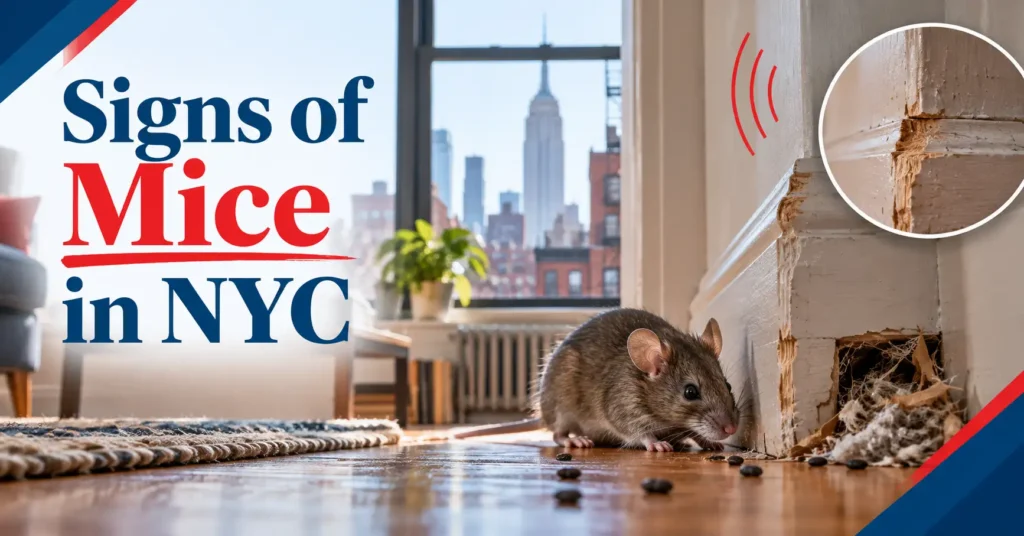
Mice are a common problem in New York City homes, apartments, restaurants, offices, and commercial buildings. Because they are small and active mostly at night, they can stay hidden for days or even weeks. Knowing the signs of mice in NYC can help you find a problem early and take action before it spreads.
You may not see a live mouse at first. In many cases, the first clues are droppings, chewing damage, strange sounds, damaged food packages, or nesting material. These warning signs can appear in kitchens, basements, storage areas, utility spaces, and behind walls.
This guide explains the most common signs of a mouse problem, how mice differ from rats, why exclusion matters, what treatment may cost, how responsibility works in rental properties, and when to contact Diamond Plus Pest Control.
1. Droppings Around Kitchens and Food Storage Areas
One of the most common mouse infestation signs is finding small dark droppings in areas where mice travel or search for food.
Fresh mouse droppings may appear under sinks, inside cabinets, behind refrigerators, near stoves, around pantries, or close to stored food.
Mice often move along walls because these areas give them cover. That is why droppings are commonly found near baseboards, corners, and hidden edges.
For business owners, check stock rooms, food preparation areas, trash storage spaces, utility rooms, and areas behind equipment.
If droppings keep appearing after cleaning, it may mean mice are still active inside the property.
A professional Pest control NYC inspection can help determine whether the activity is limited to one area or connected to a larger infestation.
2. Scratching or Scurrying Sounds at Night
Mice are often easier to hear when a building becomes quiet.
Many property owners first notice scratching sounds in walls, ceilings, cabinets, or floors during the evening.
You may also hear:
Light tapping
Rustling
Fast movement
Small squeaking sounds
Noises behind appliances
In apartment buildings, sound can travel through shared walls and utility spaces. This means the mouse may not be inside the exact room where you hear it.
Repeated nighttime noises should be taken seriously, especially when they appear together with droppings, damaged food, or gnawing.
3. Chewed Food Packages and Household Materials
Mice need to gnaw often, so chewing damage is another important warning sign.
Small mouse gnaw marks may appear on cardboard boxes, plastic food containers, bags, wood, insulation, cabinet edges, or stored items.
If mice reach food storage areas, you may notice holes in cereal boxes, snack bags, pet food, rice, grains, or other dry goods.
Chewed electrical wires should also be taken seriously because rodent damage can create safety risks.
If you keep finding new chewing damage, Rodent Removal Service nyc may be needed to inspect the property and identify how mice are entering.
4. Nesting Material in Hidden Spaces
Mice build nests in quiet, protected areas.
Common mouse nest signs include shredded paper, fabric, cardboard, insulation, tissue, or other soft materials gathered together.
Possible nesting areas include:
Behind appliances
Inside cabinets
In basements
Behind walls
Inside closets
Near insulation
Inside storage rooms
Under commercial equipment
Finding a nest usually means mice have found a place where they feel safe.
Removing the nesting material alone will not stop the problem. The entry point should also be found and sealed.
For prevention ideas, Top 10 Rodent Proofing Tips for NYC Apartments can help residents understand the types of gaps and openings mice may use.
How Mouse Activity Changes by Property Type
The signs of mice in apartment buildings can be harder to trace because mice may move through shared walls, plumbing lines, basements, utility openings, trash rooms, and neighboring units.
The signs of mice in house properties may be linked to garages, basements, rooflines, foundation gaps, crawl spaces, or doors.
Commercial properties can have even more possible entry points.
Restaurants may attract mice because of food and waste. Warehouses provide hiding places. Offices may have break rooms, storage areas, and ceiling spaces.
Because each property is different, a proper inspection should focus on the building type and where the activity is being found.
5. Unusual Odors in Hidden Areas
A mouse problem can create a stale or musky smell.
The odor may be stronger near nesting areas, cabinets, walls, storage rooms, or places with heavy activity.
A stronger smell in one location may also be caused by a dead mouse inside a wall or other hidden area.
If you notice unusual odors together with droppings or movement, further inspection may be needed.
Rodent Control Goes Undercover is especially relevant when the activity is hidden behind walls, ceilings, or other hard-to-reach areas.
6. Seeing a Live Mouse
A live sighting is one of the clearest signs of mice in NYC.
However, seeing one mouse does not tell you exactly how many are present.
The mouse you see may only be the one that came into the open. Others could remain hidden behind walls, under cabinets, or in nearby rooms.
Finding mice in NYC apartment properties can also point to activity beyond one unit. Shared utility lines, wall cavities, basements, and plumbing openings can allow rodents to move through different parts of the building.
A live sighting should be followed by an inspection for droppings, gnawing, nesting material, food damage, and entry points.
7. Food Damage and Possible Contamination
Mice are always searching for food.
They may feed on grains, bread, cereal, snacks, seeds, pet food, and stored dry goods.
Small tears or holes in packaging can be a warning sign.
For businesses, rodent activity near food storage can create sanitation concerns and damage inventory.
Restaurants should pay close attention to:
Storage shelves
Preparation areas
Trash rooms
Loading areas
Utility spaces
Floor drains
Spaces behind cooking equipment
Routine checks can help catch activity before a customer or employee notices a mouse.
8. Tracks, Smudges, and Travel Routes
Mice often use the same travel paths every day.
In dusty areas, you may notice tiny footprints or tail marks.
Dark smudges may also appear along walls or areas where rodents repeatedly pass.
Understanding movement routes can help identify where mice are feeding, nesting, or entering.
The Intriguing World of Rodent Behavior can help explain why rodents often follow familiar pathways between shelter and food.
Finding these routes is useful when deciding where traps or monitoring devices should be placed.
Mice vs. Rats: Know the Difference

Mice and rats are not the same problem.
Mice are smaller and can enter through very small gaps.
Rats are larger and are often linked to larger droppings, stronger gnawing, exterior burrows, trash areas, alleys, basements, and foundations.
Some signs of rodent infestation can look similar, so proper identification is important.
If you notice burrows outside a building, Rodent Control Eliminates Burrowing can provide more information about exterior rodent activity.
Using the wrong control approach can waste time. That is why identifying whether you have mice, rats, or both should come before treatment.
- Why Rodent Exclusion Matters for Long-Term Results
Catching mice already inside the property is only one part of effective control.
If entry points remain open, new mice may enter later.
Common access points include:
Gaps around pipes
Utility openings
Door gaps
Foundation cracks
Wall openings
Damaged vents
Cabinet openings
Spaces around heating lines
A strong exclusion plan helps reduce these access points.
Property owners should also improve food storage, reduce clutter, manage trash properly, clean food residue, and repair damaged areas.
Unleashing the Power of Xcluder Rodent Barriers can help readers learn more about physical materials used to block rodent entry points.
Exclusion is one of the most important steps for reducing repeat infestations.
How Much Does Mouse Control Cost in NYC?
Mouse control pricing can vary from one property to another.
The final cost may depend on:
Property size
Severity of the infestation
Number of rooms affected
Building type
Number of entry points
Amount of exclusion work
Need for follow-up visits
A small apartment may require less work than a restaurant, warehouse, brownstone, or multi-unit building.
The cost can also increase when mice are active in walls, ceilings, crawl spaces, or hard-to-access areas.
For a deeper look at pricing, How Much Does Rodent Control Cost in NYC can help property owners understand the factors that affect service costs.
When comparing pest control companies, do not focus only on the lowest price.
Ask what the service includes.
A complete plan may include inspection, trapping, exclusion guidance, monitoring, sanitation recommendations, and follow-up.
Why Follow-Up Service Matters
Mouse control may require more than one visit.
Follow-up helps confirm whether activity is decreasing.
During a return visit, technicians may check:
Traps
Monitoring devices
Entry points
Dropping locations
Food sources
Nesting areas
New activity
Follow-up is especially important in apartment buildings and commercial properties where mice may use more than one route.
If one opening is missed, activity may continue.
That is why good rodent control should focus on the full problem rather than only the mouse that was seen.
Who Is Responsible for Mice in an NYC Rental?
Mouse problems in rental buildings may involve both tenant behavior and building conditions.
Tenants should report rodent activity to the landlord or property manager as soon as possible.
Property owners should check common spaces, trash storage, basements, plumbing openings, structural gaps, and other areas that may support rodent activity.
Tenants can help by storing food properly, cleaning crumbs, reducing clutter, and reporting leaks or damage.
However, structural gaps and building-wide entry points usually require action from property management.
A qualified mouse exterminator NYC can help determine whether the problem is limited to one apartment or connected to other parts of the building.
Mouse Control for NYC Businesses
Businesses face different risks when mice enter a property.
Restaurants may face food contamination concerns. Retail stores can lose inventory. Warehouses can experience packaging damage. Offices may have activity in break rooms and storage spaces.
A professional Rodent Control NYC plan can include inspection, monitoring, trapping, exclusion, sanitation recommendations, and follow-up.
Business owners should pay close attention to loading areas, delivery doors, food storage, utility lines, trash rooms, stock rooms, and exterior gaps.
Taking action early can help prevent a small issue from becoming a larger commercial infestation.
When Should You Call Diamond Plus Pest Control?
DIY traps may help when activity is very limited.
However, professional help should be considered when:
Droppings keep returning.
You hear regular movement inside walls.
You see mice more than once.
Several rooms show activity.
You cannot find the entry point.
Food is being damaged.
Multiple apartments are affected.
Rodent activity appears in a business.
Effective professional mouse removal NYC should focus on more than catching the mice you can see.
The service should also look at entry points, nesting areas, food sources, sanitation conditions, and follow-up needs.
If you continue seeing signs of mice in NYC, Diamond Plus Pest Control can inspect the property and recommend a practical treatment plan based on the conditions found.
Frequently Asked Questions About Mice in NYC
1. What are the first signs of mice in a property?
The first signs often include small droppings, light noises at night, damaged food packages, gnaw marks, or nesting material. Kitchens and storage areas are usually good places to check first.
2. Does one mouse mean there is an infestation?
Not always. However, one sighting should be taken seriously. Check for droppings, damaged food, nests, tracks, and possible entry points to determine whether more activity is present.
3. Where should I look for mice in my apartment?
Check behind the refrigerator and stove, inside lower cabinets, under sinks, near pipes, around radiator openings, inside closets, and near utility lines. Basements and trash rooms may also contribute to the problem.
4. Can mice move between apartments?
Yes. Mice can travel through wall cavities, plumbing openings, utility lines, basements, ceilings, and shared building spaces. This is why activity may return even after one unit is treated.
5. Are traps enough to get rid of mice?
Traps can remove active mice, but they do not close entry points. Long-term control usually works better when trapping is combined with exclusion, sanitation, food management, and follow-up.
6. When should I call Diamond Plus Pest Control?
Call when mice keep returning, several warning signs appear together, you cannot find the source, or rodent activity is affecting apartments, food storage areas, or commercial spaces. A professional inspection can help identify the cause and recommend the right control plan.
Stop Mouse Problems Before They Spread
Recognizing the signs of mice in NYC early can make the problem easier to control.
Droppings, gnawing, noises, damaged food, nesting material, odors, tracks, and live sightings can all indicate activity.
The best approach is not only to remove mice but also to understand how they entered and what is allowing them to stay.
If you are noticing signs of mice in NYC in an apartment, house, restaurant, office, warehouse, or other commercial property, contact Diamond Plus Pest Control.
Our team can inspect the property, identify rodent activity, locate possible entry points, and recommend a treatment and exclusion plan based on your building.
Do not wait for a small mouse problem to spread into walls, food areas, storage spaces, or neighboring units. Contact Diamond Plus Pest Control today to schedule professional rodent service in New York City.