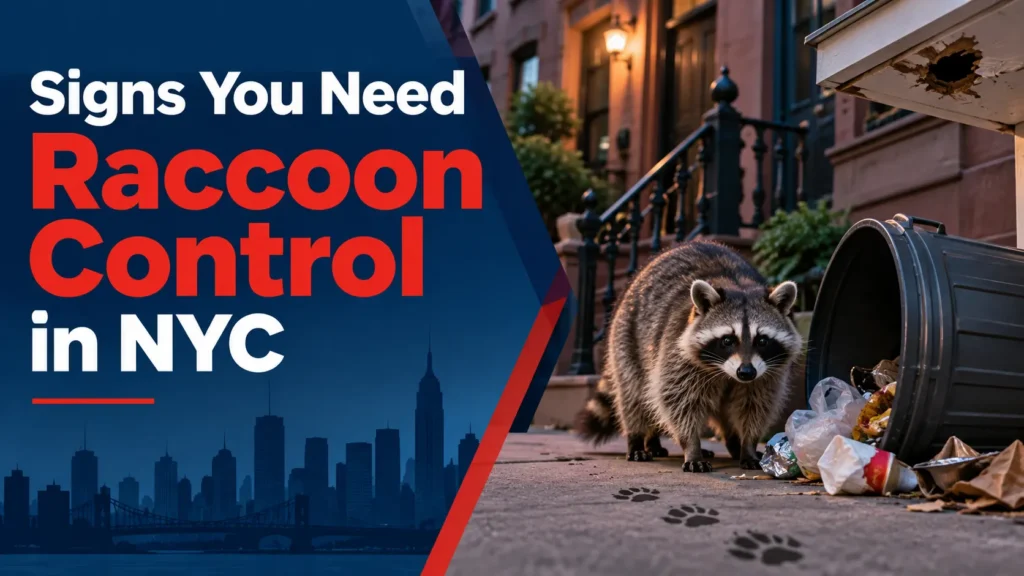
Raccoons are common wildlife in New York City. Most stay outdoors and avoid people. Problems start when they find food, shelter, or an easy way into a building. An attic, roof opening, chimney area, garage, or quiet storage space can become a den if it is easy to reach.
For homeowners, landlords, property managers, and business owners, early action matters. A raccoon can damage roofing, insulation, vents, and other building materials while trying to enter or leave a property. Waste left behind can also create health and cleanup concerns.
Knowing the Signs You Need Raccoon Control in NYC can help you act before a small wildlife problem becomes expensive property damage. This guide from Diamond Plus Pest Control explains what to look for, what not to do, and when professional inspection may be needed.
Signs of Raccoon Infestation in NYC You Should Not Ignore
The most useful clue is often a pattern. One raccoon crossing a yard at night does not mean it lives inside your building. Repeated sounds, damage, droppings, tracks, or activity around the same roof opening can be more important.
The signs of raccoon infestation in NYC can vary by property type. A private home may have activity in an attic or chimney. An apartment building may have problems around a roof, trash area, courtyard, or mechanical space. A commercial property may see wildlife near dumpsters, loading areas, or roof access points.
Raccoons live throughout New York City, including Manhattan, Brooklyn, Queens, the Bronx, and Staten Island. NYC guidance also notes that food sources such as garbage, compost, and pet food can attract them to properties.
Common Raccoon Warning Signs Around Your Property
When you suspect wildlife activity, look for several clues together rather than relying on one sign.
Raccoon Signs to Check Inside and Outside the Building
- Night noises: Heavy footsteps, scratching, shuffling, or movement above ceilings can suggest a larger animal rather than a mouse.
- Tracks: Raccoon prints often look hand-like and usually show five toes.
- Roof damage: Torn vents, loose soffits, damaged shingles, or openings near the roofline can point to wildlife entry.
- Droppings: Waste may appear repeatedly in the same location because raccoons can use shared latrine areas.
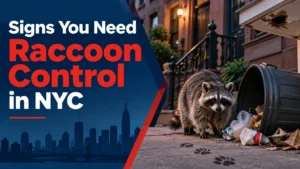
- Disturbed trash: Open garbage containers, scattered waste, and tipped bins can show that wildlife is returning for food.
A single clue does not always confirm a den. A professional raccoon inspection can help determine where the animal is entering, whether it is still present, and what parts of the building need attention.
Heavy Sounds Coming From Your Attic at Night
Raccoons are much larger than mice and rats, so movement above a ceiling often sounds like heavy walking, thumping, or dragging instead of light scratching.
The signs of raccoons in attic spaces may become more noticeable at night when the building is quiet. You may hear activity near eaves, vents, roof edges, or attic access areas.
If you suspect a raccoon in an attic NYC property, do not seal the opening right away. An adult raccoon or young animals may still be inside. Closing an active entry point can trap wildlife in the building and may cause more damage as the animal looks for another way out.
These are common Signs You Need Raccoon Control in NYC, so it is best to arrange a professional inspection first and confirm whether the den is active before any repair or exclusion work begins.
Raccoon Droppings Can Signal an Active Den
Waste in an attic, on a roof, deck, garage, or other raised area deserves attention.
Finding raccoon droppings in attic spaces can indicate that an animal has been using the area for more than a brief visit. Raccoons sometimes return to the same places to leave feces, creating what are called latrines.
This is more than a cleaning problem. The CDC states that raccoon feces can contain eggs of Baylisascaris procyonis, the parasite that causes raccoon roundworm. Infection in people is rare, but it can be serious.
Because of these raccoon feces health risks, avoid sweeping or dry-vacuuming contaminated attic material, which may disturb dust. CDC guidance recommends precautions when dealing with raccoon latrines, especially in enclosed areas.
For broader pest problems inside the building, our Pest control NYC page can help property owners understand professional inspection and control options.
Roof Damage May Be an Entry Point, Not Just a Repair Issue
A raccoon does not need a wide-open door to enter a building. A damaged vent, weak soffit, roof gap, or loose exterior material may be enough for the animal to enlarge an existing opening and get inside.
Common raccoon damage to roof areas can include pulled materials, damaged vents, disturbed shingles, or openings around the eaves and roofline. These problems are often clear Signs You Need Raccoon Control in NYC, especially when the damage appears along with nighttime noises or repeated wildlife activity.
Wildlife control should not end when the raccoon leaves. The entry point must also be repaired and secured. A complete plan may include wildlife exclusion followed by animal damage repair to help prevent the raccoon from returning and causing the same problem again.
Damaged or Flattened Attic Insulation
An attic can provide warmth, shelter, and protection from weather. Once a raccoon enters, it may walk across or compress attic insulation while creating a resting or den area.
Property owners may notice flattened insulation, torn material, odor, waste, or visible pathways.
A raccoon infestation in a house should therefore be treated as both a wildlife and property issue. Removing an animal without checking contamination and damage can leave part of the problem unresolved.
If the attic cannot be inspected safely, avoid entering narrow or contaminated spaces yourself.
Trash, Pet Food, and Outdoor Food Sources Can Keep Raccoons Coming Back
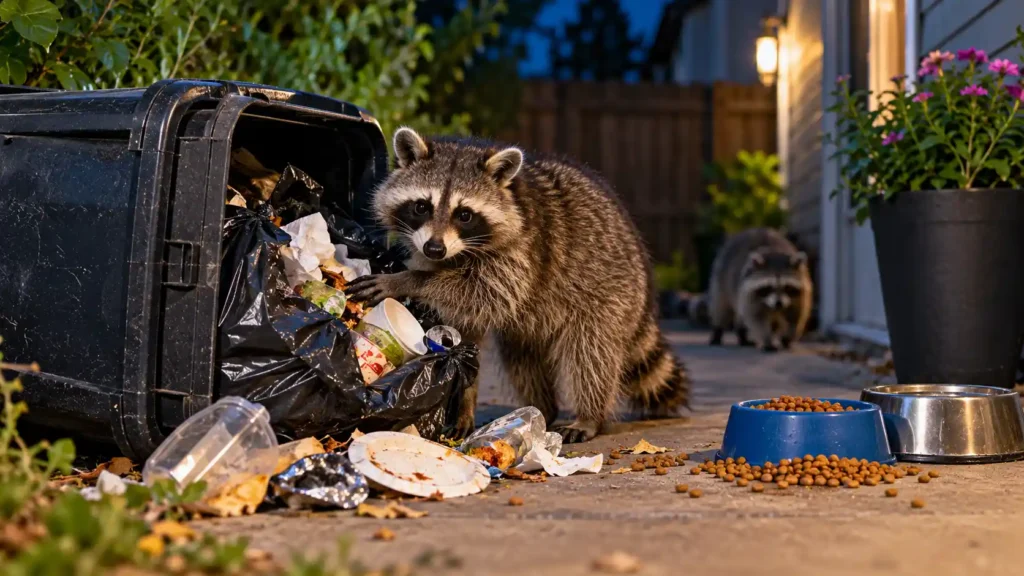
raccoons are highly adaptable, and easy access to food can encourage them to return to the same property again and again.
Open trash containers, food waste, outdoor pet food, bird feeders, compost, and other food sources may attract wildlife. In many cases, repeated feeding activity can become one of the clear Signs You Need Raccoon Control in NYC, especially when raccoons begin visiting the property regularly.
Keep garbage containers tightly closed, avoid leaving pet food outdoors overnight, and clean food waste around dumpsters and loading areas.
For commercial properties, these simple steps are especially important. Restaurants, apartment buildings, stores, warehouses, and other businesses may produce enough waste to support repeated wildlife activity if storage areas are not secure.
d.
Raccoons vs. Rats and Mice: Why Identification Matters
Heavy nighttime activity does not automatically mean you have rats.
Mice usually create lighter scratching sounds and can enter through very small openings. Rats are larger, but a raccoon can create much heavier movement and more obvious structural damage.
Droppings, tracks, entry size, noise patterns, and the location of the activity all help with identification.
If the problem turns out to involve rats or mice instead, our Rodent Control NYC service can help address those pests separately.
Correct identification matters because rodent control and raccoon removal are not the same service. Wildlife may require different equipment, exclusion methods, and legal considerations.
Why Sealing the Entry Hole Too Early Can Make the Problem Worse
Property owners often find a roof opening and want to close it right away, but this can be risky if wildlife is still inside.
A raccoon may damage another part of the structure while trying to escape. If young animals are present, sealing out the adult can also create a larger problem inside the building. This situation can become one of the clear Signs You Need Raccoon Control in NYC, especially when roof damage, noise, or repeated activity continues.
Professional raccoon exclusion NYC work should begin only after the situation has been properly assessed. The goal is to remove access safely and then secure possible re-entry points.
Roof vents, soffits, gaps, chimneys, and weak exterior areas should all be checked as part of the process.
What Professional Raccoon Control May Include
A good wildlife plan starts with inspection, not guesswork.
The technician should look for tracks, waste, roof damage, den areas, entry points, and other evidence. The property should also be checked for conditions that make it attractive to wildlife.
Professional raccoon removal NYC work may involve different steps depending on the location, building design, animal activity, and applicable wildlife rules.
New York City states that raccoons are protected wildlife and that trapping requires appropriate New York State authorization. NYC also advises residents not to try to trap or catch raccoons themselves.
If you are searching for a raccoon exterminator NYC, look beyond the wording of the search term. The goal should be lawful wildlife management, safe removal options, exclusion, and prevention rather than simply treating a wild animal like an insect pest.
Our Raccoon Control NYC page can provide more information about professional inspection and wildlife-control solutions.
What Affects Raccoon Control Cost in NYC?
There is no single price that fits every property because each raccoon problem is different. The total cost can depend on where the animal is located, how difficult the area is to reach, whether young animals are present, and how much structural work is needed.
An easy-to-access exterior issue may cost less to address than an active den inside a high roof or attic. In some cases, rising repair needs and repeated activity can also become clear Signs You Need Raccoon Control in NYC, especially when the problem starts affecting insulation, vents, roofing, or other parts of the building.
The condition of the property also matters. Some jobs may involve only inspection and wildlife management, while others may require cleanup, sanitation, insulation work, entry-point sealing, or roof repair.
Follow-up visits can also affect the total cost when a technician needs to confirm that activity has stopped before final exclusion work is completed. For that reason, an inspection-based estimate is usually more useful than choosing a service only by the lowest advertised price.
Raccoon Problems in Residential and Rental Properties
Homeowners should respond when they hear repeated attic activity or see signs of roof entry.
In rental buildings, tenants should report the problem to their landlord, building owner, or property manager as soon as possible. Photos, dates, sounds, and visible damage can help document what is happening.
Building-level repairs may be needed when wildlife is entering through a roofline, vent, soffit, or shared structural area. The exact responsibility can depend on the property, lease, and circumstances, so the focus should first be on reporting the condition and stopping access safely.
Owners should also check shared trash areas because unsecured waste can keep attracting wildlife after building repairs are made.
Raccoon Control for Commercial Properties
Commercial wildlife problems need fast attention because they can affect employees, customers, deliveries, and the overall condition of the building. Restaurants may have food waste and dumpsters, while warehouses can provide quiet roof or storage areas. Offices and apartment complexes may also have roof spaces that are rarely inspected.
Repeated wildlife activity around these areas can be one of the clear Signs You Need Raccoon Control in NYC, especially when raccoons return to the same food source or entry point.
Commercial control costs can vary based on property size, roof access, the number of entry points, cleanup needs, and whether ongoing prevention is required. A good plan should address both the animal and the reason the property is attracting it.
This problem-and-solution approach can help reduce repeat activity and protect the building after the immediate raccoon issue is resolved.
Watch for Signs of Rabies or Illness
Raccoons seen during the day are not automatically rabid. NYC specifically notes that daytime activity alone should not be treated as proof of rabies.
More concerning signs include confusion, trouble walking, unusual aggression, extreme friendliness, lethargy, or appearing sick or injured.
The NYC Health Department advises people to call 311 when a raccoon shows unusual behavior or possible signs of rabies or distemper. Do not approach or try to catch the animal.
If a person is bitten, NYC guidance says to wash the wound thoroughly with soap and water, seek medical care immediately, and report the bite through 311.
How to Reduce Future Raccoon Problems
The best long-term solution is to remove the conditions that allow repeat activity.
Secure trash containers and keep food waste closed. Do not leave pet food outside. Check vents and exterior openings. Repair damaged roof areas after confirming animals are no longer inside.
Trees and structures that provide easy roof access may also need attention.
Most importantly, combine removal with prevention. Raccoon removal solves the immediate issue. Wildlife exclusion helps protect the property afterward.
This is especially valuable for buildings that have already experienced more than one wildlife problem.
Frequently Asked Questions About Raccoon Control in NYC
1. What are the first signs that a raccoon is living in my attic?
Heavy nighttime footsteps, scratching, damaged roof openings, droppings, odor, and disturbed insulation are common clues. An inspection can confirm whether the activity is from a raccoon or another pest.
2. Should I block a roof hole if I see a raccoon using it?
Not while the den may still be active. Sealing an animal inside can create more damage. The animal should be assessed first, followed by proper exclusion and repair.
3. Is it dangerous to clean raccoon droppings myself?
Raccoon waste can carry roundworm eggs. CDC guidance recommends specific precautions and warns against unnecessary exposure to contaminated material. Professional cleanup may be safer for large or enclosed attic areas.
4. Does seeing a raccoon during the day mean it has rabies?
No. NYC says daytime activity alone does not mean a raccoon is rabid. However, confusion, difficulty walking, aggression, unusual friendliness, or obvious illness should be reported to 311.
5. How much does raccoon control cost in NYC?
Price depends on access, den location, property type, exclusion work, contamination, repair needs, and follow-up. An inspection is the best way to understand what your property requires.
6. Can raccoons return after removal?
Yes, especially if food sources and building openings remain. Sealing entry points, securing trash, repairing roof damage, and removing attractants can lower the chance of repeat activity.
Call Diamond Plus Pest Control for Raccoon Problems in NYC
The safest time to deal with a raccoon problem is before damage spreads through the roof, attic, insulation, or other parts of the building. Repeated nighttime noise, droppings, damaged vents, tracks, or regular roof activity are all reasons to arrange an inspection.
Diamond Plus Pest Control helps homeowners, landlords, property managers, and businesses identify wildlife activity and understand the next steps for their property. We serve customers across Manhattan, Brooklyn, Queens, the Bronx, Staten Island, and surrounding service areas.
If you notice the Signs You Need Raccoon Control in NYC, do not wait for the problem to grow. Call Diamond Plus Pest Control today to schedule a raccoon inspection and discuss a practical plan for removal, exclusion, cleanup, and property protection.