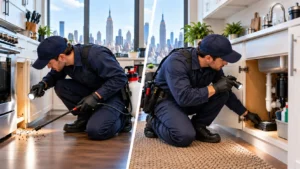

Termites can stay hidden inside an NYC property for a long time. You may not know they are there until you see damaged wood, mud tubes, or discarded wings.
That is why choosing the right treatment matters.
There is no single termite treatment that is right for every building. A brownstone may need a different approach than a detached home. A commercial building may have different access problems than an apartment property.
The main NYC Termite Extermination Methods include liquid soil treatments, bait systems, wood treatments, and targeted foam applications. Prevention is also important.
The right choice depends on the termite problem, building design, soil access, and location of the activity.
This guide explains each option in simple terms. It will help NYC homeowners, landlords, property managers, and business owners understand what professional termite control may involve.
Why Termites Are a Serious Problem for NYC Properties
Termites feed on materials that contain cellulose. Wood is one of their main food sources.
Subterranean termites can travel from soil to a building. They may use small gaps, cracks, and hidden routes to reach wood.
This makes early detection important.
You may find mud tubes around a basement or foundation. Wood may sound hollow when tapped. You could also find discarded wings around windows.
These signs should not be ignored.
Our guide to 7 Signs of Termite Infestation explains the warning signs that property owners should watch for.
Termite damage can become more expensive when an infestation remains hidden. An inspection can help determine whether the problem is active and where treatment may be needed.
Start With a Professional Termite Inspection
Treatment should not begin with guessing.
A proper termite inspection NYC service can help identify the pest and locate visible signs of activity.
The technician may inspect the basement, foundation, structural wood, utility areas, and other accessible locations.
They may also look for moisture and wood-to-soil contact.
This information helps determine which treatment makes sense.
Inspection and extermination are not the same thing. Our Termite Inspection vs Termite Extermination guide explains the difference in more detail.
A good inspection can also prevent unnecessary treatment. If the insects are not termites, a different pest-control plan may be needed.
1. Liquid Soil Treatments for Subterranean Termites
Liquid soil treatment is one of the established termite treatment methods used for subterranean termites.
EPA describes soil-applied barrier treatments as a common approach. The termiticide must be labeled for that use, and improper application may fail to protect the structure or create unnecessary risks. The goal is to treat soil in areas where termites may travel between their colony and the structure.
Depending on the building, treatment may involve accessible soil next to the foundation. Some projects may require drilling to reach soil beneath concrete areas.
This can be more complex in NYC.
Rowhouses, concrete surfaces, small yards, shared structures, and limited access can affect the treatment plan.
When Can a Liquid Treatment Make Sense?
A professional may consider a liquid treatment when subterranean termite activity is linked to soil around or beneath a structure.
The exact application depends on the property.
Technicians must consider foundations, pipes, drainage, utilities, and other site conditions before treatment.
A liquid treatment should not be viewed as a simple DIY perimeter spray. Structural termite treatment requires correct placement and a product labeled for the application.
EPA notes that termiticides must be used according to their labels and that professional training is important for many termite applications.
2. Termite Bait Stations
Bait systems use a different approach.
Stations containing cellulose-based material are placed where termites can find them. Depending on the registered system, the bait contains a slow-acting active ingredient.
Termites feed on the bait and interact with other members of the colony.
EPA lists termite baits as an approved termite-treatment approach and notes that these systems use cellulose bait with slow-acting insecticides. Baiting can be useful when a property needs ongoing termite monitoring.
It may also be considered when the building layout makes other treatments difficult.
However, bait systems are not instant.
They depend on termites finding and feeding on the bait. Some systems require regular inspection and maintenance.
This is why professional monitoring is an important part of a bait program.
Liquid Barrier vs. Termite Bait: What’s the Difference?
These two termite control methods work differently.
Liquid treatments focus on treated soil where termites may travel. Bait systems rely on termites finding and feeding on strategically placed bait.
Neither option should automatically be called the best for every NYC property.
A technician needs to consider:
- Where termite activity is located.
- Whether soil around the structure can be accessed.
- The building and foundation design.
- Whether ongoing monitoring is practical.
- Previous termite treatments or construction work.
This is one of the reasons an inspection should come before treatment.
The best termite treatment in NYC is the one selected for the actual termite species, building conditions, and infestation—not simply the most advertised treatment.
3. Foam and Targeted Termite Treatments
Some termite activity may be found inside wall voids or other hard-to-reach spaces.
In suitable situations, a professional may use a labeled foam or another targeted treatment.
Foam can expand into spaces that may be difficult to reach with a standard liquid application.
However, a spot treatment should not automatically be treated as a complete solution.
If subterranean termites are entering from the soil, treating one damaged area may leave the main source untouched.
A technician should first determine whether the visible activity is local or part of a larger infestation.
That is why professional termite treatment NYC should focus on the whole problem rather than only the wood you can see.
4. Borate and Wood Treatments
Wood treatment is another recognized termite-management method.
EPA specifically lists wood treatments among termite-control options. Borates are commonly applied to accessible wood, including during some new construction work.
This approach can be useful when bare wood is accessible.
It may be considered during construction, renovation, or certain targeted termite treatments.
The main limitation is access.
Finished walls, flooring, insulation, and other materials can prevent a technician from reaching wood that needs treatment.
Wood treatment also does not mean that every possible soil entry point has been addressed.
For this reason, it may be one part of a larger termite control NYC strategy.
5. Physical Termite Barriers
Not every termite-control method relies on a pesticide.
Physical barriers may be incorporated into some construction projects.
EPA notes that certain physical barriers, including steel mesh and specifically sized materials, can help keep termites out when properly incorporated into construction.
These systems are most practical when termite prevention is planned early.
Installing a construction barrier after a building is finished can be much more difficult.
Physical barriers also do not mean that future inspections can be ignored.
Buildings change over time. Cracks, moisture, renovations, and other conditions may create new risks.
6. Is Whole-Building Fumigation a Common NYC Termite Treatment?
Fumigation is very different from soil treatment or baiting.
It involves treating an enclosed structure with a fumigant under controlled conditions. It is a specialized process and should not be confused with routine treatment for subterranean termites.
For an NYC property owner, termite identification must come first.
Do not assume that a building needs fumigation simply because termites were found.
A termite exterminator NYC professional can determine what type of termite activity is present and which registered treatment approach fits the situation.
This prevents property owners from choosing an excessive or unsuitable treatment.
How Professionals Choose the Right NYC Termite Treatment
Good termite control is property-specific.
The technician first needs to understand where the termites are active.
Soil access matters. Foundation design matters. Moisture matters. The location of damaged wood matters too.
A detached home with accessible soil may offer different treatment options than a tightly built NYC rowhouse.
Commercial buildings can create another set of challenges.
This is why professional termite extermination NYC should begin with an inspection rather than a fixed treatment package.
The technician can then recommend one method or a combination of methods.
Moisture Control Is an Important Part of Termite Prevention
Treatment is only part of the solution.
Moisture problems around a property should also be addressed.
Check for leaking pipes. Repair drainage problems. Look for damp wood and water collecting around the foundation.
Basements deserve extra attention.
Persistent moisture can damage building materials and create conditions that support pest problems.
Good pest control NYC should therefore include both treatment and prevention when conditions around the property are contributing to pest activity.
Fixing moisture does not eliminate an established termite colony by itself. But it can improve the overall prevention plan.
Remove Wood and Cellulose Debris Around the Building
Old wood can create unnecessary termite-friendly conditions.
Remove construction scraps when work is complete. Avoid leaving cardboard, untreated wood, old tree stumps, or other cellulose-rich debris against the foundation.
Firewood should also be stored with care.
The goal is simple.
Do not create an easy food source or hidden route next to the building.
Property owners should also keep important foundation areas visible enough to inspect.
These steps can support professional Termite Control NYC and make future termite signs easier to notice.
Year-Round Termite Monitoring Matters
Termite control should not end the moment treatment is completed.
Follow-up needs depend on the treatment system, building conditions, termite pressure, and other factors.
Bait programs may require monitoring according to the system being used.
Liquid treatment areas can also be affected by later construction or soil disturbance.
EPA specifically notes that retreatment timing can vary with termite pressure, soil type, soil conditions, and factors that disrupt a treated barrier. US EPA
This is why you should follow the treatment plan provided for your property rather than assuming protection lasts forever.
Read How Long Does Termite Treatment Last in NYC for a deeper explanation of treatment life and the factors that can change it.
Which NYC Termite Extermination Method Is Right for Your Property?
There is no universal answer.
The main NYC Termite Extermination Methods solve different problems.
Liquid soil treatment may be appropriate when subterranean termites are traveling through accessible soil.
Bait systems may provide termite control and ongoing monitoring around a structure.
Foams and targeted treatments can help in certain hidden or localized areas.
Wood treatments can protect accessible wood in suitable situations.
Physical barriers can be useful when incorporated into construction.
The right approach depends on what the inspection finds.
For an active infestation, professional termite extermination services NYC can help determine whether one method or a combined approach is appropriate.
Termite Treatment for NYC Homes
Homes can have many hidden termite entry points.
Basements, foundation cracks, old wood, utility openings, and moisture problems should all be checked.
Brownstones and rowhouses may also have tight access around the property.
A professional termite treatment NYC plan should take these conditions into account.
Do not choose a treatment only because it worked for another homeowner.
Two properties on the same block can have different foundation designs and different termite conditions.
Inspection should guide the treatment.
Termite Control for Commercial Properties
Termites can also affect offices, restaurants, stores, warehouses, multifamily buildings, and other commercial properties.
Commercial treatment may need careful planning.
Technicians may have to work around customers, tenants, inventory, equipment, or business hours.
The first step should still be inspection.
Professional termite pest control NYC can identify accessible activity and help create a treatment plan that fits the property.
Ongoing monitoring can also be useful for buildings with previous termite problems or conditions that increase risk.
How Much Does Termite Extermination Cost in NYC?
Treatment cost depends on the property.
There is no reliable single price for every infestation.
Property size can affect cost. So can access, foundation type, treatment method, and the location of termite activity.
A simple targeted treatment and a large structural infestation are not the same job.
For detailed pricing factors, read How Much Does Termite Treatment Cost in NYC.
You can also review Termite Control Cost in NYC before comparing professional estimates.
The goal should be to understand what the quoted treatment covers, not simply choose the lowest number.
Ask whether inspection, treatment, monitoring, and follow-up are included when comparing options.
Can You Get Rid of Termites Yourself?
People searching for how to get rid of termites often find sprays, foams, household remedies, and DIY products online.
The main problem is visibility.
You may kill termites that you can see while leaving hidden activity untouched.
Subterranean termites can remain in soil and concealed areas of the structure.
Some termite products also have strict label requirements. EPA advises consumers to follow pesticide labels and notes that many structural termite applications require professional knowledge and equipment. US EPA
Before attempting treatment yourself, read Do DIY Termite Treatments Work.
For suspected structural activity, professional inspection is usually the better starting point.
How to Help Prevent Termites After Treatment
Good prevention can reduce future risk.
Keep the building dry. Fix plumbing leaks quickly. Improve drainage where needed.
Remove unnecessary wood near the foundation.
Watch for mud tubes, damaged wood, or discarded wings.
Also be careful during renovations. Construction can disturb previously treated areas or expose new wood.
Homeowners dealing with more than one structural pest can read our guide on preventing Termite Damage Effectively for additional prevention information.
Why Choose Professional Termite Extermination in NYC?
Termites are hidden pests.
That makes correct diagnosis more important than simply applying a product.
A professional can identify visible signs, inspect likely entry areas, and recommend treatment based on the building.
A licensed termite professional should also understand how registered products must be applied.
New York maintains specific pesticide certification categories, including Category 7C for termite control, and its pesticide portal allows consumers to verify applicator certification. ExtApps
That is important when treatment involves structural pesticide applications.
Professional termite removal NYC is therefore not just about killing visible termites. The goal is to understand where the activity is coming from and choose an appropriate treatment method.
Frequently Asked Questions About NYC Termite Extermination Methods
What is the best termite extermination method in NYC?
There is no single method that is best for every building. Liquid soil treatments, bait systems, wood treatments, and targeted applications serve different purposes. An inspection should determine which option fits the infestation and property.
Are termite bait stations effective?
Termite baits are an EPA-recognized treatment approach. They use cellulose bait containing a slow-acting active ingredient. Their performance depends on termites finding and feeding on the bait, so monitoring is an important part of the system.
Are liquid termite barriers better than bait stations?
They work differently. Soil treatments create treated zones in areas where subterranean termites travel. Baits work through termite feeding. Property access, termite activity, and building conditions help determine which approach is suitable.
Can termite foam treat termites inside walls?
Certain labeled foam treatments may be used for targeted areas and voids. However, treating one area may not address a subterranean colony or other hidden entry points. A full inspection should come first.
How long does professional termite treatment last?
It depends on the treatment, product, site conditions, soil, termite pressure, and whether treated areas are disturbed. There is no single duration that applies to every property.
Should I get an inspection before choosing a treatment?
Yes. Inspection helps identify whether termites are present, where activity is located, and which treatment approach fits the property. This reduces the risk of using the wrong method.
Schedule Professional Termite Extermination in NYC
Choosing between baits, soil treatments, wood applications, and targeted treatments can be confusing. The right decision becomes much easier after the property has been properly inspected.
The best NYC Termite Extermination Methods depend on your building, termite activity, access points, and existing conditions. A treatment that works well for one property may not be suitable for another.
Diamond Plus Pest Control provides inspections and professional termite solutions for NYC homeowners, landlords, property managers, and businesses.
Seeing mud tubes, discarded wings, damaged wood, or other signs of termites? Call Diamond Plus Pest Control at (718) 427-6200 today to schedule a termite inspection and find the right treatment for your NYC property.