High-rise buildings in NYC are different from regular apartments. Towers, co-ops, condos, and mixed-use properties all share one thing: many floors stacked on top of each other. They also share utilities, trash chutes, and mechanical rooms.Because of this, pests do not stay in one unit. They move up and down through the whole building. This means a clean apartment can still get roaches or mice if the building itself is not managed well.
Pest Control for High-Rise Buildings in NYC starts with one simple idea. You have to treat the building as a system, not just one apartment at a time.
Get Emergency Pest Control Service in NYC
Protect your home or business with reliable pest control services in NYC. Our experienced technicians use proven methods to eliminate infestations and help prevent future pest problems.
Get Emergency Pest Control Service in NYC
Protect your home or business with reliable Pest Control NYC services. Our experienced technicians use proven methods to remove infestations and stop future pest problems before they start.
Call Now: (718) 427-6200 Contact Us
Why Pest Control in High-Rise Buildings Is More Complex
A high-rise is not just a tall building. It works like a vertical ecosystem. Shared pipes, stacked kitchens, warm mechanical rooms, garbage chutes, and service elevators connect every unit in ways most people never notice.
Pests follow warmth, moisture, food smells, and airflow. They do not care about apartment walls.
Here is what makes tall buildings hard to manage:
- Dozens or hundreds of kitchens stacked in a line
- Trash compactors that pile up waste on lower floors
- Warm mechanical rooms that attract rodents and roaches
- Small gaps around plumbing, wiring, and vents
- A strong airflow effect that pulls pests upward
Even the cleanest apartment can still see pests. In a high-rise, building conditions matter more than individual habits.
Vertical Pest Movement in Tall Buildings
Ask any experienced NYC property manager and they will tell you the same thing. If one apartment has roaches, it is never just one apartment.
Pests travel between floors through hidden paths behind the walls. These paths let pests move faster than most apartment-only treatments can keep up with.
Main vertical pathways include:
- Pipe chases that connect stacked bathrooms and kitchens
- Utility risers and cable lines that act like highways for rodents and roaches
- Elevator shafts and mechanical rooms that offer warm, quiet shelter
- Ductwork and wall gaps that create fast routes between floors
This matters because pests never stay contained. Untreated floors can reinfest floors that were already treated. What you see is only a small part of the real problem. In NYC high-rises, pests are moving through the building constantly, not just once in a while.
The Stack Effect: Why Upper Floors Aren’t Pest-Proof
Many New Yorkers believe that living higher up means fewer pests. Unfortunately, that is not how buildings work.
Tall buildings create something called the stack effect. Warm air rises through the structure, especially in winter. As it rises, it carries heat, moisture, odors, and pests along with it.
Here is what that means in real life:
- Top floors can still see roach or rodent sightings
- Trash and grease smells can pull pests upward
- Warm air currents create pest travel routes during colder months
- Sealing gaps on lower floors helps control pests on every floor
So yes, you can live on the 32nd floor with a great view and still find a roach in your kitchen. Height lowers your risk, but it does not remove it completely.
Common Pest Problems in High-Rise Buildings
Infestations in NYC towers are rarely isolated. They are building-level problems shaped by pest movement, resident habits, and the design of the building itself.
The most common high-rise pests include:
- Cockroaches (both German and American species)
- Rodents, including rats and mice
- Occasional invaders like ants, pantry pests, and flies
Each pest needs its own strategy, but all of them require looking at shared spaces first, not just individual units.
Cockroaches in High-Rise Buildings
German cockroaches thrive in kitchens and laundry rooms. American cockroaches usually come up from basements, drains, and sewer connections.
They tend to gather in:
- Compactor and recycling rooms
- Janitorial closets and service floors
- Trash chutes with leftover food residue
- Stacked kitchens throughout resident floors
Watch for these warning signs:
- Droppings near appliances or utility risers
- Odors in trash rooms or hallway closets
- More sightings after plumbing work
Roaches in high-rises are rarely caused by one tenant. They usually reflect a pattern across the whole building.
Rodents in Tall Buildings
NYC rats and mice are highly adaptable. They often enter at ground level, then climb upward looking for warmth and food. Some make it all the way to rooftop mechanical spaces.
Common rodent hotspots include:
- Loading docks, parking garages, and alley entrances
- Boiler rooms and mechanical floors
- Roof HVAC units and vent openings
- Utility shafts hidden behind apartment walls
Watch for these red flags:
- Scratching sounds inside walls
- Gnaw marks near pipes or wiring
- Droppings in boiler or trash rooms
Rodents cause more than just visible sightings. They also chew through cables and insulation, which can lead to real structural damage. A proper Rodent Control NYC plan targets both the pests and the access points they use.
Occasional Invaders
Not every pest problem is permanent. Some pests arrive in waves through residents, deliveries, or airflow.
Common seasonal invaders include:
- Ants drawn to moisture or sweet food
- Pantry pests that come in through grocery packaging
- Drain flies and fruit flies near trash staging areas
Small issues like these can turn into building-wide problems if they are left untreated for too long.
Why Unit-by-Unit Treatment Fails in High-Rise Buildings
Treating only the apartments that complain is like putting out small fires while sparks keep flying elsewhere. It helps for a short time, but it does not reduce the overall pressure on the building.
Here is where unit-only treatment falls short:
- Pests move through risers and wall gaps between treatments
- Sanitation habits vary widely between different units
- Missed appointments break up treatment schedules
- Untreated units keep reseeding floors that were already cleared
Over time, this leads to a frustrating pattern. Pests disappear for a while, then come back. Residents get more frustrated, and the building’s reputation takes a hit. Unit-by-unit service helps individual residents, but building-wide coordination is what actually protects everyone.
Building-Wide Pest Control Solutions for High-Rises
The most successful NYC towers use monitoring, prevention, and coordinated treatment together. They do not just react to complaints one at a time.
Integrated Pest Management (IPM) for High-Rises
IPM is the standard approach for high-rise pest control because it balances results, safety, and long-term stability.
IPM usually includes:
- Monitoring traps that track pest activity over time
- Targeted baits, gels, and dusts instead of heavy sprays
- Sanitation coordination to reduce food and moisture sources
- Exclusion work that seals cracks and entry points
- Waste and moisture management to disrupt breeding conditions
IPM turns pest control into a long-term strategy instead of a one-time reaction.
Coordinated Floor-by-Floor Plans
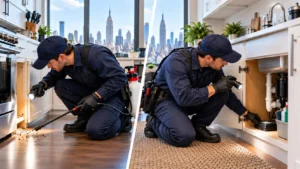
High-rises respond best when treatment happens in organized waves. This reduces reinfestation and improves accountability across the whole building.
Successful coordination usually looks like this:
- Scheduling treatment by vertical stacks, not random units
- Grouping floors together to prevent pests from migrating sideways
- Tracking units that were not accessible for follow-up visits
- Notifying residents early so more people take part
When a building moves together on pest control, results become stable instead of cyclical.
Garbage Chute and Compactor Room Treatments
Ask any experienced NYC pest technician, and they will tell you the same thing: control the trash system, and you control half the battle.
Core treatment steps usually include:
- Degreasing and enzyme treatments that break down organic waste
- Drain control to reduce fly breeding
- Sealing around compactor doors and trash rooms
- Odor management to reduce pest attraction
Reducing pressure from waste systems reduces pest pressure everywhere else in the building.
Preventive Pest Control Strategies for High-Rise Buildings
Preventive work stabilizes a building long before pest problems turn into resident complaints.
A solid high-rise prevention checklist includes:
- Inspecting risers and mechanical floors every quarter
- Sealing gaps around plumbing and wiring
- Maintaining leak detection to control moisture
- Enforcing cleanliness in trash rooms
- Educating residents without placing blame on any one household
Prevention keeps small pest issues from turning into building-wide patterns that are much harder to fix later.
For buildings dealing with seasonal pests near shared outdoor spaces, a Mosquito Control Services NYC plan can help keep courtyards, terraces, and rooftop areas comfortable during warmer months.
Who Benefits from High-Rise Pest Management Programs?
These programs are not just for residents. They support the daily operations of NYC properties as a whole.
Key stakeholders include:
- Building owners and property managers
- Co-op and condo boards
- HOA decision-makers
- Commercial building operators
- Developers of luxury rentals and mixed-use communities
Every one of these groups wants the same outcome: consistent pest control, fewer complaints, and stronger tenant satisfaction.
Some buildings also deal with wood-damaging pests that spread quietly through structural framing. A Termite Control nyc inspection can catch this kind of damage early, before repair costs grow.
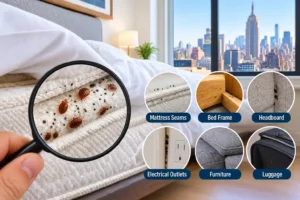
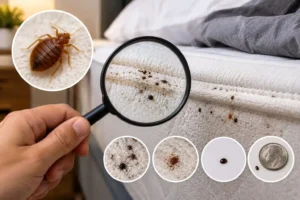
And for units dealing with fast-spreading infestations, a licensed Bed Bug Exterminator NYC team can stop the problem before it reaches neighboring apartments. Outdoor nests near entrances or balconies may also call for a professional Bee Removal NYC visit rather than a quick spray.
Why Diamond Plus for High-Rise Pest Control in NYC
Diamond Plus Pest Control understands how tall buildings behave, from pre-war elevators in the Bronx to new high-rise towers in Long Island City.
Here is what sets Diamond Plus apart:
- Real experience with NYC high-rise environments
- Customized, building-wide treatment plans
- Safe and fully compliant pest control methods
- A focus on prevention, not just reaction
- Deep knowledge of how pests move through tall buildings
If your building needs consistent, building-level results, Diamond Plus Pest Control offers programs built specifically for high-rise structures.
Conclusion
Effective pest control in NYC high-rise buildings depends on treating the entire structure, not just isolated apartments. When floor-by-floor coordination, compactor room maintenance, and preventive exclusion work together, pest pressure drops and infestations stop cycling between units.
If your building is seeing repeated pest activity across multiple floors, the next step is simple. Schedule a building-wide inspection to find the movement pathways and set up a treatment plan that actually holds.
For a structured assessment built around high-rise conditions, call Diamond Plus Pest Control today at (718) 427-6200 or contact us online to schedule your building inspection.
Frequently Asked Questions
How often should high-rise buildings receive pest control?
Monthly service is most common. Buildings with ongoing pest pressure may need bi-weekly visits during peak seasons.
Can pests reach upper floors in tall buildings?
Yes. Stack effect airflow, trash chutes, and utility risers all make vertical movement common, even on high floors.
Why is building-wide treatment necessary?
Because untreated units keep reseeding floors that were already treated, making isolated, unit-only treatments short-lived.
How long until results are noticeable?
Most buildings see a measurable drop in pest activity within 6 to 10 weeks of coordinated, building-wide service.