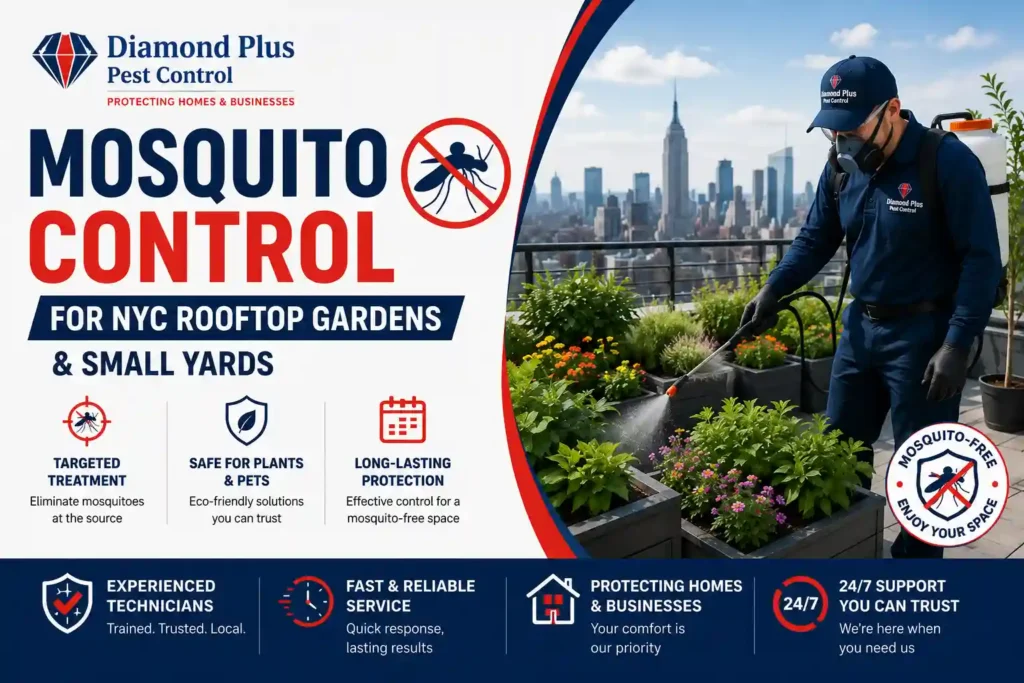
If you own a rooftop garden or a small backyard in New York City, you already know how quickly a peaceful evening outdoors can turn into a losing battle against mosquitoes. Between standing water in planters, humid summer air, and tightly packed buildings that trap moisture, NYC’s outdoor spaces are practically an open invitation for these pests. The good news is that Mosquito Control for NYC Rooftop Gardens & Small Yards doesn’t have to mean giving up your outdoor space. With the right approach, you can enjoy your garden, patio, or rooftop without swatting every five minutes.
In this guide, we’ll walk through why mosquitoes love NYC’s compact outdoor spaces, how to spot early warning signs, and what treatment options actually work without harming your plants, pets, or family.
Why NYC Rooftop Gardens Attract Mosquitoes
Rooftop gardens might feel far removed from ground-level pest problems, but mosquitoes are surprisingly good at finding their way up Mosquitoes in Backyard NYC. They’re drawn to standing water in flower pots, drainage trays, birdbaths, and even clogged gutters. Add in the warmth reflected off rooftop surfaces and the still air created by surrounding buildings, and you’ve got near-perfect breeding conditions.
Rooftop Garden Mosquito Control starts with understanding that even a bottle cap’s worth of stagnant water can support mosquito larvae. Because rooftop spaces are often watered daily and have limited drainage, they need a slightly different treatment approach than a typical backyard.
Small Yard Mosquito Problems in NYC
Small yards come with their own unique challenges. Tight spaces mean less airflow, and NYC yards are frequently bordered by fences, sheds, or neighboring properties that create shaded, damp pockets where mosquitoes love to rest during the day. Compost bins, dog bowls, and even children’s toys left outside can collect just enough rainwater to become a breeding site.
Small Yard Mosquito Treatment needs to be precise. Because these spaces are compact, treatments must be applied carefully to avoid overspray onto play areas, seating, or garden beds, while still reaching the shaded corners where mosquitoes hide.
Signs You Need Mosquito Prevention NYC Homeowners Can Trust
It’s easy to dismiss the occasional bite as bad luck, but there are clear signs that your outdoor space needs professional attention. If you’re noticing bites within minutes of stepping outside, seeing mosquitoes resting on shaded walls or furniture, or finding larvae wriggling in any standing water, it’s time to act.
Mosquito Prevention NYC experts recommend inspecting your space every couple of weeks during warmer months, since mosquito populations can multiply rapidly once conditions are right. Catching the problem early is always easier and cheaper than dealing with a full infestation later in the season.
Effective Mosquito Control Methods for Outdoor Spaces
Not every treatment works the same way in every environment. What works for a sprawling suburban lawn often isn’t practical or even safe for a compact NYC rooftop or yard. Mosquito Control for Outdoor Spaces in the city usually combines a few complementary strategies rather than relying on a single fix.
Common Treatment Approaches Used in NYC
- Source reduction: Identifying and eliminating standing water in planters, trays, and drainage areas
- Larvicide treatments: Targeting mosquito larvae before they mature, especially in areas where water can’t be fully removed
- Barrier sprays: Applied to foliage, fencing, and shaded resting spots to reduce adult mosquito activity
- Misting systems: Automated or manual misting for larger patios or rooftop lounges
- Natural repellent plantings: Incorporating citronella, lavender, or marigolds as a supplementary deterrent
- Routine inspections: Regular check-ins to catch new breeding sites before they become a problem
A combination approach tends to give the longest-lasting results, especially in dense urban environments where mosquitoes can migrate in from neighboring properties.
Backyard Mosquito Control NYC Residents Can Rely On
For traditional backyards, consistency matters more than intensity. A single treatment might knock down the current mosquito population, but without follow-up visits, new mosquitoes will move back in within a couple of weeks. Backyard Mosquito Control NYC services typically work best on a seasonal schedule, with treatments timed around rainfall and temperature changes that trigger new breeding cycles.
This is also where working with Mosquito Control Services NYC professionals makes a real difference, since they understand the specific breeding patterns tied to the city’s climate, building density, and green space layout something a generic, one-size-fits-all treatment plan often misses.
Eco-Friendly and Pet-Safe Mosquito Control NYC Families Want
If you share your outdoor space with pets, children, or edible plants, the products used matter just as much as the results. Harsh chemical treatments can linger on surfaces, affect pollinators, or pose risks to curious pets who spend time outside.
Pet-Safe Mosquito Control NYC options focus on targeted application methods that minimize exposure to areas where animals play or rest. Meanwhile, Eco-Friendly Mosquito Control NYC treatments use plant-based or reduced-toxicity formulas that still disrupt the mosquito life cycle effectively, without leaving behind the strong chemical residue associated with older-generation pesticides. These approaches are especially popular for rooftop gardens where herbs and vegetables are often grown alongside ornamental plants.
Why Hire a Professional Mosquito Exterminator NYC
DIY sprays and citronella candles can offer short-term relief, but they rarely solve the underlying problem. A Mosquito Exterminator NYC homeowners trust will do more than spray they’ll inspect your property to find hidden breeding sites, assess humidity and drainage patterns, and design a treatment plan suited to your specific space.
This is particularly important for Mosquito Control for Residential Properties NYC, where shared walls, close-set buildings, and limited outdoor square footage mean mosquitoes can travel easily between properties. A professional treatment plan accounts for this, targeting not just your yard but the surrounding conditions that keep drawing mosquitoes back.
It’s also worth remembering that mosquito issues rarely show up alone. Many NYC properties dealing with Mosquitoes in Backyard NYC situations are also managing other seasonal pests, which is why pairing mosquito treatment with a broader Pest Control NYC plan often delivers better long-term results than treating mosquitoes in isolation.
NYC Mosquito Treatment Services: What to Expect
When you book NYC Mosquito Treatment Services, the process usually starts with a walkthrough of your rooftop, yard, or patio to identify problem areas. From there, technicians typically apply a combination of larvicide and barrier treatments, focusing on shaded areas, plant beds, and any standing water sources.
Most services recommend a follow-up visit every three to four weeks throughout mosquito season, since new eggs can hatch even after an initial treatment. Many providers also offer seasonal packages, which tend to be more cost-effective than booking single treatments repeatedly throughout the summer.
Simple Habits That Support Long-Term Mosquito Prevention
Professional treatment works best when paired with a few consistent habits on your end. Emptying standing water after rain, keeping gutters clear, trimming back dense foliage, and storing outdoor items that can collect water all reduce the number of places mosquitoes can breed between treatments. Even small rooftop container gardens benefit from a quick weekly check to make sure trays and saucers aren’t holding water longer than necessary.
Conclusion
Whether you’re managing a rooftop container garden or a compact backyard tucked between buildings, mosquito problems in NYC are manageable with the right combination of prevention habits and professional treatment. Regular inspections, eco-friendly product choices, and a treatment schedule tailored to your specific space can make the difference between a summer spent indoors and one spent actually enjoying your outdoor space. If mosquitoes have been taking over your rooftop or yard, reaching out to a local specialist for a tailored treatment plan is often the fastest path back to bite-free evenings outside.
Frequently Asked Questions
1. How often should mosquito control be done for a small NYC yard? Most professionals recommend treatment every three to four weeks during peak mosquito season, typically from late spring through early fall, with adjustments based on rainfall and temperature.
2. Is mosquito treatment safe for rooftop vegetable gardens? Yes, when eco-friendly or targeted formulas are used and applied carefully around edible plants. Always ask your provider about product safety for food-producing plants before treatment.
3. Can mosquito control harm my pets? Reputable services use pet-safe application methods and recommend keeping pets away from treated areas for a short window after spraying, usually a few hours, until the product fully dries.
4. Why do I still see mosquitoes on my rooftop if there’s no pool or pond? Even small amounts of standing water in planters, trays, or clogged drains can support mosquito breeding. Rooftop humidity and still air also make these spaces attractive to adult mosquitoes.
5. How long does one treatment last? Effects typically last two to four weeks depending on weather conditions, rainfall, and the specific product used, which is why regular follow-up visits are recommended.
6. Is DIY mosquito control enough for a small NYC yard? DIY methods like citronella candles or store-bought sprays can offer temporary relief but rarely address hidden breeding sites the way a professional inspection and treatment plan can.