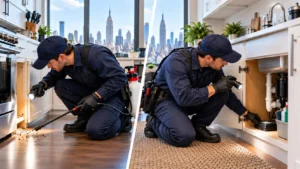

Hearing movement inside a wall can be stressful, especially in a New York City apartment, brownstone, restaurant, office, or mixed-use building. The good news is that mice can be removed, but the job usually takes more than placing one trap near the wall.
If you want to know how to get rid of mice in walls in NYC, start by confirming where the activity is happening. Place traps along likely travel routes, remove food and water sources, locate openings, and seal them after active mice are under control. In multi-unit buildings, the problem may also involve shared walls, pipe chases, utility lines, basements, and neighboring units.
The sooner you respond, the easier it is to limit nesting, contamination, and damage. Early action also gives you a better chance of finding the main travel route before mice spread farther.
Why Mice Get Inside NYC Walls
New York buildings give mice many hidden places to travel. They may move through gaps around pipes, openings behind cabinets, wall voids, ceiling spaces, basements, and areas around heating or electrical lines.
People often ask how mice get into walls when they cannot see an obvious opening. In many cases, the gap is hidden behind an appliance, radiator, sink, baseboard, or utility connection. Older properties may also have cracks around masonry, worn door sweeps, or gaps where building materials meet.
Common mouse entry points include spaces around plumbing, damaged vents, door gaps, utility penetrations, foundation cracks, and openings around cables.
Pre-war buildings can be harder to protect because connected wall cavities and old pipe routes create hidden paths between apartments. When mice in walls stay hidden, the visible activity may appear far from the original entry point.
Common Signs That Mice Are Living Inside the Walls
The first clue is often sound. Residents may hear scratching noises in walls at night because mice are often active when the building becomes quiet. You may also hear light tapping, squeaking, or rustling near baseboards and ceilings.
Other signs of mice in walls include small droppings near cabinets or appliances, gnaw marks on food packaging, grease marks along walls, shredded paper, unusual pet behavior, and a stale odor.
You may also notice mouse droppings in house areas near kitchens, pantries, or utility spaces. Their location can help show where mice are traveling.
If you hear mice scratching in walls in the same area for several nights, do not ignore it. Continued activity can mean mice have found a stable route, food source, or nesting space.
What a Mouse Inside a Wall Can Mean for Your Property
Finding a mouse in wall space does not always mean there is only one mouse.
Mice can damage insulation, stored products, packaging, and building materials. One serious concern is mice chewing wires in walls. Damaged wiring can create an electrical risk if activity continues.
In commercial spaces, mice can affect sanitation, inventory, and daily operations. Restaurants, stores, and offices should respond quickly when signs appear.
Dealing with Mice in Your NYC Walls?
Don’t let pests take over your property. Get a inspection and expert same-day service from our licensed team.
Call (718) 427-6200Step-by-Step Ways to Get Mice Out of Wall Spaces
If you are trying to learn how to get mice out of walls, avoid cutting open the wall right away. A better first step is to intercept mice when they leave the wall to search for food and water.
Check the room where you hear activity. Look along baseboards, behind appliances, inside cabinets, under sinks, near radiators, and around utility lines.
Place suitable traps along likely travel paths. Mice usually move close to walls rather than across open areas. Keep traps away from children and pets.
Next, remove easy food sources. Store dry food in sealed containers, clean crumbs and grease, do not leave pet food out overnight, and keep trash covered.
Monitor the area. Continued activity may point to another route or access from another part of the building.
Removing Wall Mice Without Making the Problem Worse
Many people search for how to remove mice from walls and expect one product to solve the issue. In practice, successful control usually needs both trapping and exclusion.
Do not seal every opening the moment you hear noise. If mice are still active inside a wall cavity, sealing an exit too early can trap them inside or force them to create another route.
Reduce active mice first. Then inspect the property for access points and close them in a planned way with materials that mice cannot easily chew through.
If the problem is in an apartment building, tell the landlord, superintendent, or property manager. Mice may be using shared walls, plumbing lines, trash rooms, or basement spaces that cannot be fixed from one apartment alone.
Seal Mouse Entry Gaps After Active Mice Are Controlled
A common question is how to seal mouse holes after trapping. Check gaps around pipes, cabinets, vents, doors, utility lines, and wall edges. Larger openings may need metal mesh, hardware cloth, flashing, sealant, or building repair.
For NYC properties, exclusion should also include basement utility areas, boiler rooms, refuse areas, loading zones, and exterior wall penetrations where possible.
Why Apartment Mouse Problems Often Need Building-Wide Control
Dealing with mice in apartment walls is often harder than controlling mice in a detached home because apartments share structure.
A mouse may enter through a basement, travel through a pipe chase, move behind several kitchens, and appear far from the original entry point. Shared walls and connected utility spaces can allow activity to continue even after one apartment is treated.
Tenants should report the issue early. Building management may need to inspect common areas, trash storage, basements, utility gaps, and nearby units.
For owners and managers, Rodent Control NYC can support a more complete approach that addresses both active rodents and the conditions that allow repeat entry.
Health and Sanitation Risks From Mouse Activity
Mice can contaminate surfaces and stored food with urine, feces, and nesting material. Areas with droppings should be cleaned carefully. Avoid disturbing dry droppings in a way that sends dust into the air.
Odor can also be a warning sign. A strong smell near a wall or cabinet may come from urine, nesting material, or a dead rodent in a hidden area.
Families, food businesses, and other sensitive locations should treat indoor mouse activity as both a pest problem and a sanitation issue.
For more local warning signs, review Signs of Mice in NYC before the activity spreads.
Why DIY Mouse Control Sometimes Fails
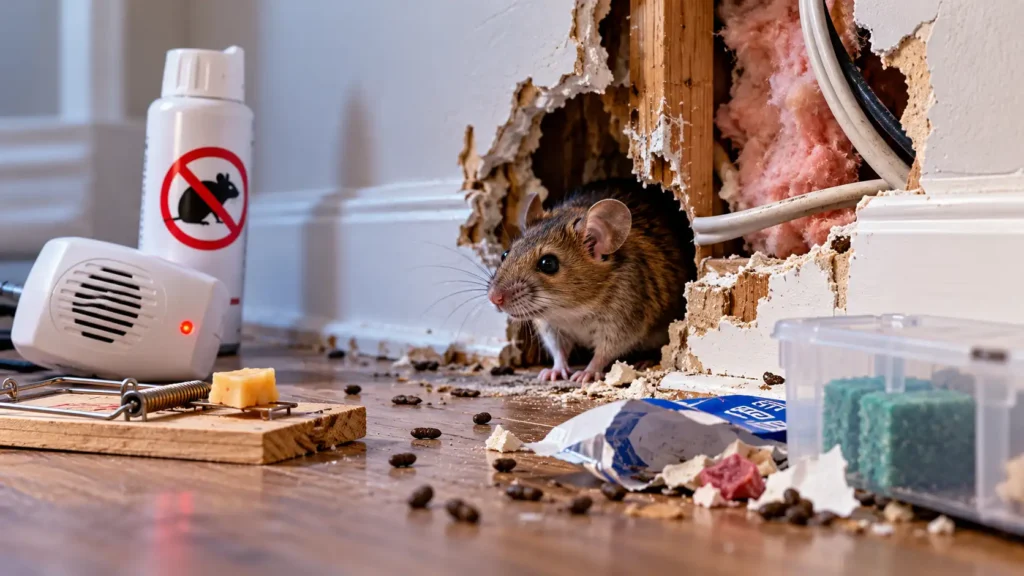
DIY trapping may work when activity is light and the access point is easy to find. It becomes harder when rodents move through hidden wall voids, ceilings, shared utility routes, or several floors.
Trap placement is another common problem. Traps set away from travel paths may miss the mice, while too few traps can slow control.
Indoor rodent poison can create problems if it is used without a clear plan. A mouse may die inside a wall or ceiling and create a strong odor. Products must also be handled with care around children and pets.
If you are not sure whether the problem involves mice or larger rodents, an inspection can help. Rat Control NYC may be the right service when the evidence points to rat activity.
When Professional Mouse Control Makes Sense in NYC
Consider professional mouse removal NYC when activity continues after trapping, entry points are hard to find, or several rooms or units are affected.
A trained technician can inspect kitchens, storage areas, utility lines, basements, wall edges, and exterior access points. The goal is not only to control active mice but also to reduce the chance of another infestation.
If you need broader protection for several pest problems, Pest control nyc may be the better service path. For a mouse-specific issue, Mice Control Service NYC can focus on inspection, trapping, exclusion, and prevention.
If you want to understand the process before booking service, What Is Rodent Control NYC explains how inspection, control, monitoring, and exclusion work together.
What Diamond Plus Pest Control Checks During a Mouse Inspection
A good inspection should focus on both rodent activity and building conditions.
Diamond Plus Pest Control may check for droppings, gnaw marks, grease marks, nesting material, wall gaps, pipe openings, damaged door sweeps, food sources, moisture, and hidden travel routes.
The technician can then recommend trapping, exclusion, sanitation changes, monitoring, or follow-up based on what is found.
This matters because mice behind walls are often only one part of the problem. The real cause may be an exterior gap, an open pipe chase, poor trash control, or another access point elsewhere in the building.
How to Prevent Mice From Returning
After active mice are removed, prevention becomes the priority.
Keep food in sealed containers. Clean under appliances. Repair leaks. Empty indoor trash often. Reduce cardboard and clutter in storage spaces. Check door sweeps and openings around utility lines.
Owners should also inspect basements, exterior walls, trash zones, and shared utility spaces. Older buildings may need regular monitoring as new gaps appear.
A strong prevention plan combines sanitation, maintenance, exclusion, and early action.
Frequently Asked Questions About Mice in NYC Walls
Can mice live inside walls for a long time?
Yes. Wall cavities can provide shelter and hidden travel routes. If food and water are nearby, mice may keep using those spaces.
Should I cut open the wall if I hear mice?
Usually not as a first step. Start with inspection and trapping around likely exit routes. Opening a wall without knowing the exact location may cause unnecessary damage.
Can mice move between NYC apartments?
Yes. They can move through shared walls, ceilings, utility gaps, pipe chases, and common building areas.
Do mice always make noise at night?
No, but nighttime activity is common because the building is quieter and rodents may feel safer moving around.
What if I smell something dead inside the wall?
Try to identify the area and watch for flies or stronger odor. If the source cannot be reached safely, a pest professional may be able to help.
How fast should a business respond to mouse activity?
As soon as possible. Rodents can affect sanitation, stored products, customer trust, and daily operations.
Need Help Getting Mice Out of Your Walls in NYC?
If you keep hearing movement, finding droppings, or seeing new signs after using traps, the issue may be deeper inside the building.
Diamond Plus Pest Control helps NYC homeowners, tenants, landlords, property managers, and businesses find where mice are traveling and what is allowing them inside. An inspection can help determine whether the problem is limited to one room or connected to wall cavities, shared spaces, plumbing lines, or exterior openings.
Call Diamond Plus Pest Control today to schedule a mouse inspection and get a clear plan for removal, exclusion, and prevention. Acting early can help reduce contamination, property damage, and repeat activity.