Bee and wasp infestations create serious safety risks for property owners in urban environments. Many homeowners face sudden nest formation around roofs, walls, and outdoor spaces during warm seasons. These situations often lead to panic due to potential stings and allergic reactions.
Emergency pest situations require immediate professional attention to prevent escalation and structural damage. Skilled technicians use advanced removal methods to safely handle bees, wasps, and hornets. Proper inspection ensures accurate identification and controlled treatment of infestation zones.
Modern pest control services provide fast response solutions designed for residential and commercial properties. These services include safe removal, preventive sealing, and long-term protection strategies. The focus remains on safety, efficiency, and restoring pest-free environments quickly. Stay prepared and informed with our comprehensive 2026 guide to emergency bee & wasp removal in NYC, offering essential tips for fast and safe solutions.”
Signs of Bee & Wasp Infestation
Bee and wasp infestations often start quietly and may go unnoticed until the colony becomes large. Early recognition is critical to prevent dangerous situations.
One of the first signs is consistent insect activity in a specific area of the property. Homeowners may observe bees or wasps repeatedly flying in and out of small openings in walls, roof edges, or vents. This indicates a possible nest inside hidden structural spaces.
Other common warning signs include:
- Continuous buzzing sounds coming from walls, ceilings, or attic areas
- Clusters of insects gathering around outdoor trash bins, food sources, or sweet liquids
- Visible nest formations under roof eaves, balconies, sheds, or air conditioning units
- Increased insect aggression when humans or pets approach the area
In some cases, infestations grow unnoticed for weeks, especially in vacant properties or low-traffic zones. Regular inspection of exterior walls and rooflines can help identify early-stage nests before they expand into full colonies. Discover how professional pest control services ensure effective and safe bee & wasp removal in NYC, especially in emergency situations.
Species Identification Bees Wasps Hornets
Correct identification of stinging insects is essential because treatment methods differ significantly. Each species has unique behavior patterns and risk levels.
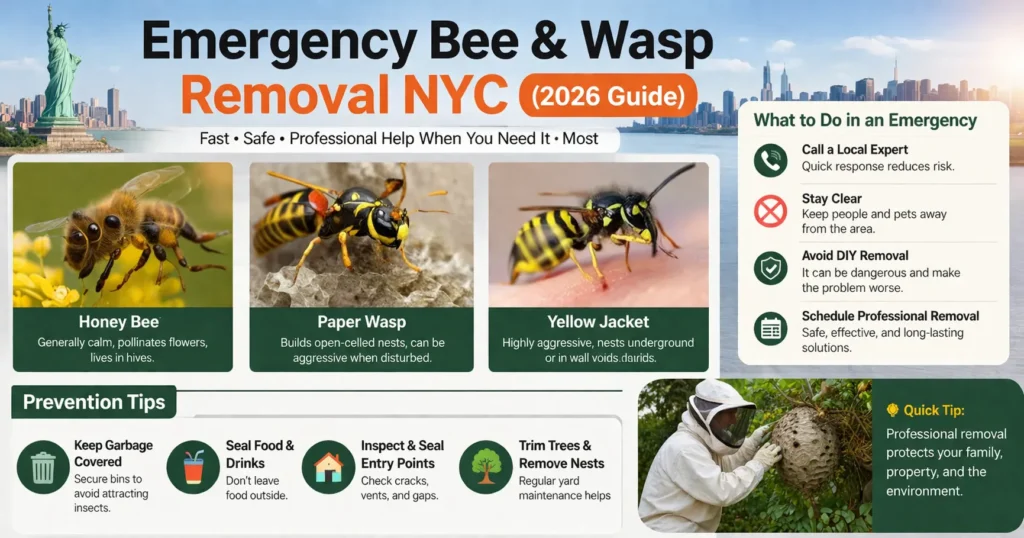
Honey bees are generally less aggressive and primarily focused on pollination. They typically swarm rather than attack unless threatened. Because of their environmental importance, relocation is preferred over extermination.
Wasps, on the other hand, are more territorial and aggressive. They can sting multiple times and often attack in groups when disturbed. Their nests are usually papery and found in sheltered outdoor spaces.
Hornets are a larger and more dangerous subset of wasps. They build aerial nests and defend them aggressively, especially during late summer when colonies peak in size.
Professional exterminators carefully examine:
- Nest structure and material
- Insect behavior patterns
- Entry and exit points
- Location of infestation
Proper identification ensures the safest and most effective removal strategy while minimizing environmental impact. Get an emergency pest inspection today to identify and address potential bee and wasp infestations before they become a problem.”
Let me know if you’d like more variations!
Emergency Removal Process
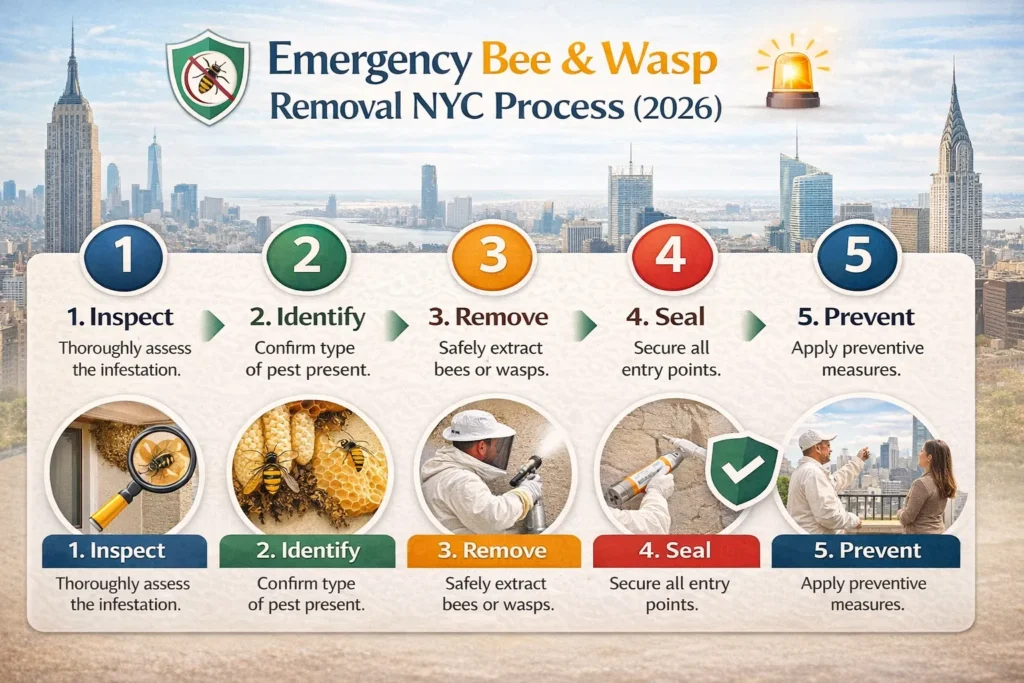
Emergency bee and wasp removal follows a structured and safety-focused procedure designed to control risk and eliminate infestation efficiently.
The process typically begins with a detailed site inspection. Technicians assess the severity of the infestation, locate nests, and identify potential hazards such as electrical wiring or structural damage.
Next, the species is confirmed to determine whether relocation or extermination is required. Protective gear is then used to ensure technician safety during treatment.
Removal steps may include:
- Controlled application of insecticidal dust or foam
- Physical removal of exposed nests
- Vacuum-assisted extraction in sensitive areas
- Sealing of entry points after treatment
After removal, technicians ensure that the area is fully neutralized and safe for occupants. A follow-up inspection may be scheduled to confirm that no remaining activity is present. Trust a licensed pest control company in NYC for reliable, professional bee and wasp removal services during emergencies.”
Safety & Risk Factors
Bee and wasp infestations pose significant health and safety risks, especially in densely populated urban areas.
One of the most serious risks is allergic reaction. Even a single sting can trigger severe symptoms in sensitive individuals, including swelling, breathing difficulty, or anaphylaxis. Multiple stings can become life-threatening.
Other risks include:
- Defensive swarm attacks when nests are disturbed
- Structural damage caused by nests built inside walls or insulation
- Electrical hazards when nests are located near wiring systems
- Panic or injury during uncontrolled DIY removal attempts
Because infestations can escalate quickly, professional intervention is strongly recommended to ensure controlled and safe handling.
Humane Bee Relocation Methods
Modern pest control prioritizes environmental responsibility, especially when dealing with honey bees.
Instead of extermination, professionals often use humane relocation techniques. These methods preserve bee populations while resolving property issues.
Common relocation practices include:
- Careful hive extraction using specialized tools
- Transfer of bees into transport-safe hives
- Relocation to local farms or apiaries
- Minimal disruption techniques to avoid colony stress
This approach supports ecological balance and helps maintain pollination systems that are vital for agriculture and biodiversity.
Nest Removal Techniques
Nest removal methods vary depending on the insect species, nest size, and location.
For exposed nests, technicians may use direct removal combined with protective treatments. Foam-based insecticides are often used to penetrate deep into nest structures, ensuring complete elimination of active insects.
Dust treatments are commonly applied in dry, enclosed spaces where liquid solutions may not be effective. These powders spread through the nest and reach hidden chambers.
In cases of large infestations, mechanical removal may be necessary after insects are neutralized. This ensures that no remaining larvae or eggs continue developing.
Each method is carefully selected based on safety considerations and environmental conditions.
Wall Void & Hidden Nest Removal
Hidden nests inside walls, ceilings, or attics present a higher level of difficulty and risk. These infestations often remain unnoticed until insect activity becomes severe.
Technicians use advanced detection methods such as thermal imaging or acoustic monitoring to locate nest positions accurately.
Once identified, controlled access points may be created to treat the infestation internally. Targeted insecticides are applied directly into voids to eliminate hidden colonies.
After treatment, sealing is extremely important. All entry points are closed to prevent reinfestation and ensure long-term protection.
Prevention & Sealing Entry Points
Prevention plays a critical role in avoiding future infestations after removal.
Key prevention strategies include:
- Sealing cracks, gaps, and roof openings
- Installing fine mesh screens on vents and windows
- Removing food attractants such as exposed garbage or sweet residues
- Maintaining clean outdoor spaces
- Scheduling seasonal inspections
Preventive maintenance significantly reduces the chances of reinfestation, especially during peak insect activity seasons.
Commercial & Residential Services
Bee and wasp infestations affect both residential and commercial properties, often with different risk levels and requirements.
Residential homes typically experience infestations in gardens, attics, and roof spaces. Commercial properties such as restaurants, warehouses, and hotels face higher risks due to food availability and larger structural spaces.
Professional services often include:
- Emergency rapid-response teams
- Scheduled preventive inspections
- Customized pest management plans
- Long-term monitoring and maintenance programs
This ensures continuous protection for both private and business environments.
Seasonal Activity in NYC
Stinging insects in NYC become highly active during warmer months, particularly from late spring through summer.
During this time, colonies grow rapidly, increasing nest size and aggression levels. Urban environments provide ideal nesting conditions due to heat, shelter, and food sources.
Late summer is often the most dangerous period, as colonies reach peak population and insects become more defensive.
Understanding seasonal patterns helps property owners prepare and take preventive measures in advance.
Cost & Pricing Factors
The cost of bee and wasp removal services varies depending on several key factors.
Major pricing influences include:
- Size and maturity of the nest
- Species type and aggression level
- Location of infestation (visible or hidden)
- Emergency or after-hours service requirements
- Structural complexity of the property
Emergency removal services typically cost more due to urgency and risk factors. Hidden nests inside walls or attics may also require specialized equipment, increasing overall cost.
Why Hire Licensed Exterminators
Hiring licensed pest control professionals ensures safe, legal, and effective removal of stinging insect infestations.
Licensed experts follow strict safety protocols and use approved treatment methods. They also carry proper protective equipment and have training in handling aggressive insect species.
Key benefits include:
- Reduced risk of injury or allergic reaction
- Accurate species identification
- Compliance with environmental regulations
- Long-term prevention strategies
- Guaranteed service quality in many cases
DIY removal is strongly discouraged because it can lead to uncontrolled stings, incomplete nest removal, and recurring infestations. Learn how an emergency exterminator in NYC can swiftly handle bee and wasp infestations, ensuring your home is pest-free in no ti me.”
Conclusion
Emergency bee and wasp infestations require immediate attention to protect both health and property. Professional pest control services provide safe, fast, and effective solutions that prevent escalation and long-term damage.
Timely intervention not only eliminates active nests but also reduces the chances of future infestations through proper sealing and prevention techniques.