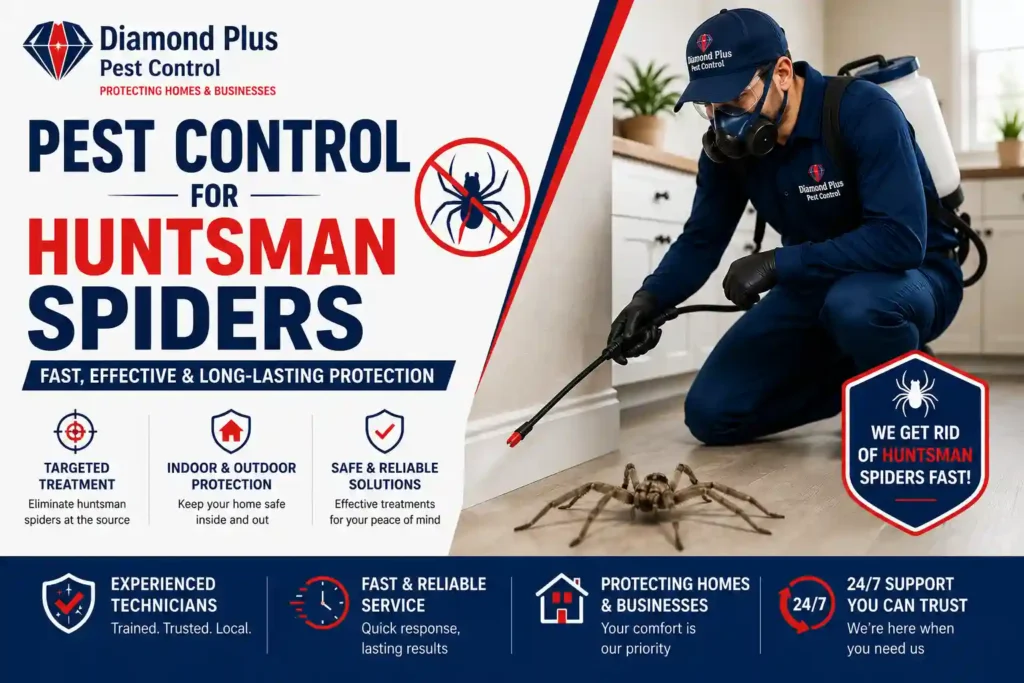
If you’ve spotted a huge, fast-moving spider racing across your wall or ceiling, you’re probably searching for reliable pest control for huntsman spiders right now. These large, crab-like arachnids can grow a leg span of 4 to 8 inches, and while they aren’t typically dangerous, most homeowners still don’t want them sharing their living space. This guide covers what huntsman spiders are, why they show up indoors, and the safest, most effective ways to handle huntsman spider removal — whether you prefer a DIY approach or want to bring in a licensed exterminator.
What Are Huntsman Spiders? Identification Guide
Huntsman spiders belong to the family Sparassidae, sometimes called giant crab spiders because their legs extend sideways instead of straight down like most spiders. Unlike web-building species, they are active hunters that rely on speed and camouflage rather than webs to catch prey. Their flattened bodies allow them to squeeze into narrow gaps behind bark, siding, shutters, and door frames, which is exactly how so many end up inside homes.
In the United States, huntsman spiders are most commonly reported in warm, humid states such as Florida, Texas, Georgia, South Carolina, and California. They thrive in outdoor woodpiles, mulch beds, garages, and sheds before wandering indoors in search of food, shelter, or cooler temperatures. Their coloring — usually brown, gray, or tan — helps them blend into tree bark and shaded corners, so they’re often not noticed until they suddenly dart across a wall.
Are Huntsman Spiders Dangerous to People and Pets?
This is the question most homeowners ask before deciding how urgently they need huntsman spider control treatment. The short answer is no — huntsman spiders are not considered medically dangerous. They do have venom, but it’s mild and used primarily to subdue small insects, not to threaten humans or pets.
Bites are rare, since huntsman spiders prefer fleeing over confrontation, and typically happen only when a spider is trapped against skin or handled directly. When bites do occur, symptoms are usually limited to brief pain, redness, or minor swelling that resolves without medical treatment. Pets that sniff or paw at a huntsman spider may experience mild local irritation, but serious reactions are uncommon. That said, “not dangerous” doesn’t mean “welcome guest” — their size and speed are startling enough that most people still want them out.
Signs You Need Huntsman Spider Removal
A single huntsman spider inside your home isn’t necessarily a sign of infestation, since they’re solitary hunters rather than social insects. However, there are a few signals that it’s time to look into how to get rid of huntsman spiders more seriously:
- Repeated sightings in the same rooms, especially bathrooms, garages, or basements
- Visible egg sacs, which are flat, disc-shaped, and often guarded closely by the female
- A noticeable increase in other insects like cockroaches, moths, or crickets, since huntsman spiders follow their food source indoors
- Spiders appearing in vehicles, sheds, or stacked firewood near the house
Because huntsman spiders feed on other pests, frequent sightings can actually point to a larger underlying insect problem worth addressing with professional pest control services at the same time.
How to Get Rid of Huntsman Spiders: DIY Methods
For homeowners dealing with an occasional spider rather than a recurring problem, several DIY strategies can help with huntsman spider removal without chemicals:
- Catch and release — Place a large cup or container over the spider, slide stiff cardboard underneath, and release it outdoors away from entry points.
- Seal entry points — Caulk gaps around windows, doors, and utility lines, and repair torn window screens where spiders and their prey can slip through.
- Reduce clutter and food sources — Clear woodpiles, leaf litter, and stacked boxes near the foundation, and address any existing insect activity that attracts spiders indoors.
- Use natural deterrents — Essential oils such as peppermint or citrus, diluted and sprayed around entry points, can discourage spiders from settling in without harming them.
These methods work well for isolated encounters, but they rarely solve a persistent indoor population, especially if the home has ongoing insect activity feeding the spiders.
Huntsman Spider Control Treatment: Professional Methods
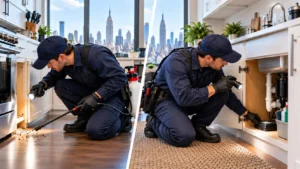
When DIY steps aren’t enough, licensed pest professionals use a more targeted huntsman spider control treatment plan. This typically starts with an inspection to identify entry points, harborage areas, and any secondary pest issues drawing spiders indoors. Technicians then apply targeted, low-toxicity treatments around foundations, eaves, window frames, and other common access points, paired with residual barrier treatments that continue working for weeks after application.
Many companies also treat for the insects huntsman spiders prey on — cockroaches, crickets, and moths — since removing the food supply is often more effective long-term than treating the spiders alone. A thorough plan usually includes follow-up visits to monitor activity and reapply treatment as needed, particularly during warmer months when spider activity peaks.
Why Hire a Professional Huntsman Spider Removal Service
While DIY methods handle minor cases, a professional huntsman spider removal service offers advantages that store-bought sprays simply can’t match. Licensed technicians can correctly identify the spider species, rule out more concerning pests, and apply treatments calibrated to your home’s specific construction and climate conditions.
Professional services also address root causes rather than just visible spiders — sealing structural gaps, treating moisture issues that attract insects, and setting up ongoing monitoring so new spiders don’t move in as soon as the current ones are removed. For homes with recurring sightings, egg sacs, or a nearby insect infestation, this comprehensive approach saves time and prevents the cycle of DIY treatments that only offer short-term relief.
Choosing a Huntsman Spider Exterminator
When comparing a huntsman spider exterminator, look for a company that’s licensed and insured in your state, offers a clear inspection process before recommending treatment, and uses EPA-registered products applied by trained technicians. Ask about their approach to the underlying insect population, since a company that only treats visible spiders is offering a temporary fix rather than a real solution.
Reputable exterminators typically provide a written treatment plan, a guarantee or follow-up visit policy, and transparent pricing before any work begins. Reading recent customer reviews and confirming the company services your specific region is also worth the extra few minutes, since pest pressure and effective treatment methods vary by climate.
FAQs About Huntsman Spider Pest Control
Are huntsman spiders poisonous? No. Huntsman spiders are venomous, not poisonous — venom is injected through a bite, while poison is harmful if touched or ingested. Their venom affects insects far more than humans and rarely causes anything beyond mild, short-lived symptoms.
How can I tell a huntsman spider from a wolf spider? Huntsman spiders have a distinctive crab-like stance, with legs extending sideways rather than forward, and they move noticeably faster and often sideways. Wolf spiders are typically bulkier with legs angled more downward.
Do huntsman spiders lay eggs indoors? Yes, females can lay flat, disc-shaped egg sacs in sheltered indoor spots like garages, closets, or behind furniture, and they guard them closely until the eggs hatch.
Is it safe to relocate a huntsman spider myself? Generally yes, using the container-and-cardboard method. Avoid direct contact, since bites — though mild — are still possible if the spider feels trapped or threatened.
When should I call a professional instead of handling it myself? If you’re seeing multiple spiders regularly, finding egg sacs, or noticing a broader insect problem, a professional treatment plan will address the root cause more effectively than repeated one-off removals.
Conclusion
Huntsman spiders look intimidating, but they’re rarely dangerous and often even beneficial, since they feed on cockroaches, moths, and other household pests. Still, most homeowners understandably want them out of living spaces. Simple DIY steps like sealing entry points and reducing clutter work for occasional sightings, but recurring activity, egg sacs, or an underlying insect problem call for professional pest control for huntsman spiders. A licensed exterminator can identify the cause, apply targeted treatment, and help keep your home spider-free for the long term — giving you real peace of mind instead of a short-term fix.